Stepping into the world of pressure cooking can transform your kitchen experience, saving you time and unlocking incredible flavors. But if you’re new to this game-changing appliance, the array of options and price points can feel daunting. You want efficiency, safety, and delicious results without breaking the bank. As a technician with over a decade of hands-on experience, I understand the practicalities. This guide cuts through the noise to help you discover the best budget-friendly pressure cookers under $100, perfect for novices. Get ready to cook smarter, not harder, and make your first pressure cooker a reliable kitchen companion.
What is a Pressure Cooker?
A pressure cooker is a specialized cooking pot that uses high-pressure steam to cook food more quickly than conventional methods. Unlike a regular pot, its lid forms an airtight seal, trapping steam and increasing the internal pressure and temperature. This elevated environment dramatically reduces cooking times, tenderizing tough cuts of meat and infusing dishes with deeper flavors. Modern electric pressure cookers, often called multi-cookers, extend this functionality with various pre-programmed settings, making them incredibly versatile.
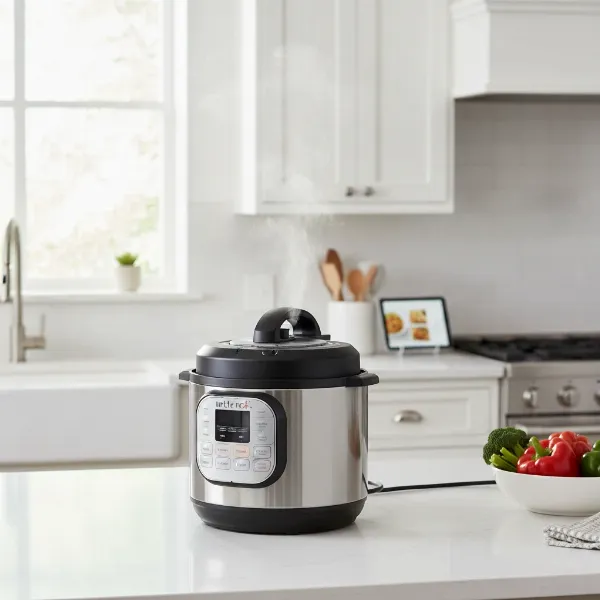 Modern electric pressure cooker on a kitchen counter with steam, ready for cooking
The Evolution of Pressure Cookers
The journey of the pressure cooker spans centuries, originating from simple, robust designs to today’s sophisticated electronic marvels. This evolution reflects a continuous effort to enhance safety, efficiency, and user-friendliness, transforming it from a niche kitchen tool into a household staple.
From Classic Stovetop to Modern Electric Models
|
Our Picks for the Best Pressure cooker in 2026
As an Amazon Associate I earn from qualifying purchases.
|
||
| Num | Product | Action |
|---|---|---|
| 1 | COMFEE' 9-in-1 Electric Pressure Cooker, 14 Presets Instant Multi Cooker Olla de Presion Non-Stick Pot Yogurt Maker Rice Cooker Slow Cooker Sauté Steamer 6 Quarts Black |

|
| 2 | Stove Top 304 Stainless Steel Pressure Cooker, One-hand Easy Handle Lid, 3 PSI Setting, 6 Safety Systems, Dishwasher Safe, Olla de Presion, Works for All Cooktops (8.5 QT) |
|
| 3 | Our Place Dream Cooker - 6 Qt Ceramic Nonstick Multicooker & Pressure Cooker with Touchscreen Controls & Auto Steam Release - 4 Modes: Pressure Cook, Sauté/Sear, Slow Cook & Warm - Spice |
|
| 4 | CHEF iQ Smart Pressure Cooker with WiFi and Built-in Scale - Easy-to-Use 10-in-1 Multicooker with 500+ Guided Recipes - Rice Cooker, Slow Cooker, Instant Meals for Foodies - 6 Quart - Family Size |
|
| 5 | Instant Pot Duo 7-in-1 Electric Pressure Cooker, Slow Cooker, Rice Cooker, Steamer, Sauté, Yogurt Maker, Warmer & Sterilizer, Includes App with Over 800 Recipes, Stainless Steel, 8 Quart |
|
| 6 | Instant Pot Duo 7-in-1 Mini Electric Pressure Cooker, Slow Rice Cooker, Steamer, Sauté, Yogurt Maker, Warmer & Sterilizer, Includes Free App with over 1900 Recipes, Stainless Steel, 3 Quart |
|
| 7 | Our Place Dream Cooker - 6 Qt Ceramic Nonstick Multicooker & Pressure Cooker with Touchscreen Controls & Auto Steam Release - 4 Modes: Pressure Cook, Sauté/Sear, Slow Cook & Warm - Blue Salt |
|
| 8 | Instant Pot Duo 7-in-1 Electric Pressure Cooker, Slow Cooker, Rice, Steamer, Sauté, Yogurt Maker, Warmer & Sterilizer, Includes App With Over 800 Recipes, Stainless Steel, 6 Quart |
|
| 9 | COSORI Pressure Cooker 6QT, Stainless Steel, 9-in-1 Multi Cooker, 12 Safety Features, Ceramic Inner Pot, Rice, Slow Cook, Sous Vide, Saute, 1100W |
|
| 10 | Our Place Dream Cooker - 6 Qt Ceramic Nonstick Multicooker & Pressure Cooker with Touchscreen Controls & Auto Steam Release - 4 Modes: Pressure Cook, Sauté/Sear, Slow Cook & Warm - Steam |
|
The concept of pressure cooking dates back to the 17th century with Denis Papin’s “Digester,” a device designed to extract fat from bones using steam pressure. Early stovetop models were revolutionary but often required careful monitoring and had a reputation for being somewhat intimidating due to safety concerns. These classic stovetop pressure cookers, typically made of aluminum or stainless steel, rely on a weighted jiggle top or a spring valve to regulate pressure, demanding manual heat adjustments.
The late 20th and early 21st centuries ushered in the era of electric pressure cookers, fundamentally changing the appliance’s accessibility. These self-contained units boast internal heating elements, automated pressure control, and numerous safety mechanisms. This shift has made pressure cooking far less intimidating, appealing to a broader audience who seek convenience and consistent results.
Key Milestones in Pressure Cooker History
Significant advancements have marked the development of pressure cookers, each contributing to their modern form. The introduction of multiple safety valves in the mid-20th century drastically improved user confidence. Later, the integration of microprocessors and digital controls in electric models in the 2000s allowed for pre-programmed settings and precise temperature regulation. Innovations like locking lids that prevent opening under pressure and automatic steam release systems have further cemented the electric pressure cooker’s place as a safe and indispensable kitchen appliance.
Popular Types of Pressure Cookers on the Market
Today’s market primarily features two main types of pressure cookers: stovetop and electric. Each offers distinct advantages and disadvantages, catering to different cooking styles, budgets, and kitchen setups. Understanding these differences is key to choosing the right one for your needs.
Stovetop Pressure Cookers
Stovetop pressure cookers are the traditional choice, designed to be used on a gas, electric, or induction stovetop. They typically consist of a heavy-gauge pot with a tight-sealing lid, a gasket, and a pressure-regulating valve.
- Pros: Generally more affordable, durable, and can reach higher pressures than electric models, leading to slightly faster cooking times for some foods. They are also non-electric, making them suitable for camping or areas with unreliable power.
- Cons: Require manual monitoring and adjustment of heat to maintain consistent pressure. The steam release can be less controlled, and they lack the multi-functionality of electric models.
Electric Pressure Cookers
Electric pressure cookers, often referred to as multi-cookers, are self-contained appliances that plug into an outlet. They feature an internal heating element, a control panel, and multiple pre-programmed functions beyond just pressure cooking.
- Pros: Extremely easy to use with “set-it-and-forget-it” convenience, featuring numerous safety mechanisms and pre-programmed settings for various dishes (e.g., rice, stew, yogurt, sauté). They can replace several other kitchen appliances, saving counter space.
- Cons: Generally more expensive than stovetop models (though many budget options exist), take up more counter space, and may not reach pressures as high as some stovetop models.
Distinguishing Between Types and Their Pros & Cons
The primary distinction lies in automation and versatility. Stovetop models offer raw power and simplicity, relying on your stovetop for heat and your attention for control. Electric models, conversely, prioritize convenience and multi-functionality, automating most of the cooking process with built-in safety features. For beginners, the ease of use and integrated safety features of electric pressure cookers often make them the preferred choice, especially when working within a budget.
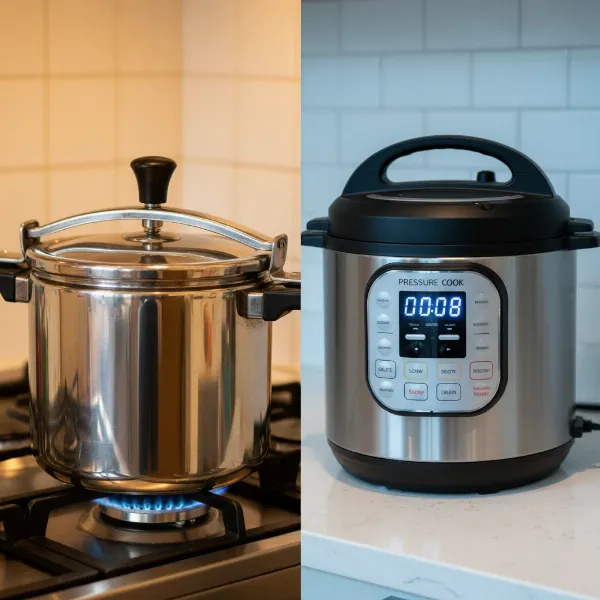 Stovetop and electric pressure cookers side-by-side highlighting their differences
Pressure Cookers vs. Other Cooking Methods
Pressure cookers offer compelling advantages over traditional cooking methods, particularly when it comes to speed, nutrition, and energy efficiency. These benefits make them a valuable addition to any kitchen, especially for those with busy schedules or a desire for healthier meals.
Faster Cooking Times
The most significant advantage of pressure cooking is its speed. By elevating the boiling point of water and increasing internal pressure, food cooks much faster. A dish that might take hours to simmer on a stovetop, like a hearty beef stew, can be ready in under an hour in a pressure cooker. This is a game-changer for weeknight meals, allowing you to prepare nutritious, home-cooked food in a fraction of the time.
Better Nutrient Retention
Because pressure cooking significantly reduces cooking time and uses less liquid, it helps to preserve heat-sensitive vitamins and minerals that might otherwise be lost through prolonged boiling or steaming. The sealed environment also prevents evaporation, keeping more nutrients locked within the food. This means your vegetables retain more of their vibrant color and essential goodness, and meats stay exceptionally juicy.
Energy Efficiency
Cooking faster also means using less energy. Pressure cookers are highly energy-efficient compared to conventional ovens or stovetop cooking methods that require longer cooking periods. By trapping heat and steam, they minimize heat loss, reducing the overall energy consumption and potentially lowering your utility bills.
Top 5 Budget Pressure Cookers Under $100 for Beginners
Finding a reliable, easy-to-use pressure cooker that won’t strain your wallet is entirely possible. For beginners, models that offer intuitive controls, essential safety features, and decent capacity are paramount. Here are five excellent budget-friendly options that typically retail for under $100, making them perfect entry points into the world of pressure cooking.
| Product Name | Capacity | Key Features | Price (Approx.) | Ideal For |
|---|---|---|---|---|
| Cosori Electric Pressure Cooker | 6-Quart | 13 cooking functions, nonstick inner pot, easy to clean, value pick | $81 – $90 | Beginners, value seekers |
| Instant Pot Duo 7-in-1 | 6-Quart | Bestseller, 7 functions (pressure cook, slow cook, rice, yogurt, steam, sauté, keep warm), intuitive controls, high/low pressure settings | $99 – $100 | First-time users, versatile cooking |
| Instant Pot Duo Mini | 3-Quart | Compact design, 7 functions, 13 presets, ideal for small spaces | $80 – $90 | Singles, couples, small kitchens |
| Presto 02141 Electric Pressure Cooker Plus | 6-Quart | 19 programmed settings, 12 pressure cooking presets, 8 safety features, digital LED display, removable nonstick pot | $99 – $119 | Feature-rich cooking on a budget |
| Instant Pot RIO 7-in-1 Electric Multi-Cooker | 6-Quart | 7 functions (pressure cook, slow cook, rice, yogurt, steam, sauté, keep warm), good cooking results | $100 | Beginners, essential functions |
Note: Prices are approximate and can fluctuate based on retailers and sales.
Cosori Electric Pressure Cooker (6-Quart)
Often lauded as a “Best Value Pressure Cooker,” the Cosori 6-Quart model delivers impressive performance for its price. It boasts 13 cooking functions, including essential modes like pressure cook, slow cook, rice, steam, and sauté, making it a versatile choice for any beginner. The nonstick inner pot is a significant plus for easy cleanup. While some testers noted that the material quality “felt cheap,” its ability to tenderize meats as effectively as pricier counterparts makes it a strong contender for budget-conscious cooks.
Instant Pot Duo 7-in-1 (6-Quart)
The Instant Pot Duo 7-in-1 is an undeniable bestseller and a favorite among beginners for good reason. Its intuitive controls and 7-in-1 functionality (pressure cooker, slow cooker, rice cooker, steamer, sauté, yogurt maker, and warmer) make it incredibly adaptable. This model offers both high- and low-pressure settings, crucial for cooking a variety of dishes to perfection. While it might take a bit longer for natural pressure release, its overall reliability and user-friendly design make it an excellent choice for those new to pressure cooking.
Instant Pot Duo Mini (3-Quart)
For individuals, couples, or those with limited kitchen space, the Instant Pot Duo Mini is a fantastic option. This compact 3-quart pressure cooker retains all the core functionalities of its larger siblings, including pressure cook, slow cook, rice, yogurt, steam, and sauté settings, along with 13 handy presets. Its smaller footprint doesn’t compromise on performance, making it perfect for preparing smaller meals or side dishes without cluttering your countertop. A minor inconvenience noted by users is the screen flashing an “on” indicator instead of consistently showing the remaining time.
Presto 02141 Electric Pressure Cooker Plus (6-Quart)
The Presto 02141 Electric Pressure Cooker Plus is a feature-rich option that often falls within or very close to the $100 budget. This 6-quart electric model comes with 19 programmed settings, including 12 dedicated pressure cooking presets for a wide range of foods, from meats and fish to desserts. It incorporates eight built-in safety features, such as a cover lock system, ensuring peace of mind for beginners. The removable nonstick pot is also dishwasher safe, simplifying the cleaning process after your culinary adventures.
Instant Pot RIO 7-in-1 Electric Multi-Cooker (6-Quart)
Another Instant Pot model that often hits the sub-$100 mark, the Instant Pot RIO offers a reliable entry point into multi-cooking. It includes the essential 7 functions that make Instant Pots so popular, providing good cooking results once it reaches pressure. However, some reviews mention that it can take a longer time to come to pressure compared to other models. Despite this, for its price point, it’s a capable appliance for beginners seeking core pressure cooking functionalities.
How to Choose the Right Pressure Cooker for You (Buying Guide)
Selecting your first pressure cooker involves more than just picking a popular model. It’s about aligning the appliance with your unique cooking habits, kitchen space, and safety priorities. A thoughtful choice ensures that your pressure cooker becomes a beloved tool rather than a forgotten gadget.
Determine Your Usage Needs (Number of People, Type of Dishes)
Before diving into features, consider how you’ll typically use the pressure cooker. Are you cooking for a single person, a couple, or a large family? Do you plan to make large batches for meal prepping, or just quick weeknight dinners?
- 1-2 people: A 3-quart or 4-quart mini pressure cooker is usually sufficient.
- 3-4 people: A 6-quart model offers the best balance for everyday meals and some entertaining.
- 5+ people or serious meal prep: An 8-quart or larger may be more suitable, though these often exceed the $100 budget.
Also, think about the types of dishes you’ll prepare. If you primarily want to cook rice, soups, and stews, a basic model will suffice. If you’re interested in sautéing, yogurt making, or sous vide, an electric multi-cooker with diverse presets is ideal.
Choose the Right Capacity
Capacity directly relates to your usage needs. While a larger pot offers more versatility, it also takes up more storage space.
- 3-Quart: Excellent for single servings, side dishes, or small appetizers.
- 6-Quart: The most popular and versatile size, great for most families and a wide range of recipes. All the budget picks above are around this size, offering good value.
- 8-Quart+: Generally beyond our $100 budget, these are for very large families or extensive meal prep.
Material of the Pot (Stainless Steel, Aluminum)
The material of the inner pot significantly impacts durability, heat distribution, and ease of cleaning.
- Stainless Steel: Highly durable, non-reactive, and often dishwasher-safe. It’s excellent for browning and searing. Many electric pressure cookers feature stainless steel inner pots.
- Aluminum: Lighter and heats up quickly, but can be reactive with acidic foods and may stain or warp over time. Some budget stovetop models use aluminum.
- Nonstick Coatings: Common in electric models like the Cosori. While convenient for cleaning, the durability of these coatings can vary, especially in budget models.
Essential Safety Features
Modern pressure cookers are far safer than their predecessors, thanks to advanced safety mechanisms. For beginners, prioritizing these features is crucial. Look for:
- Lid Lock System: Prevents the lid from opening when the pot is pressurized.
- Pressure Release Valve: Automatically releases excess pressure.
- Anti-Block Shield: Prevents food particles from blocking the steam release valve.
- Temperature Monitoring: Automatic shut-off in case of overheating.
- Gasket/Sealing Ring: A durable silicone gasket ensures an airtight seal.
- Clear Display: An LED or digital display that clearly indicates pressure status and remaining cooking time.
Reputable Brands and Warranty Policy
While shopping on a budget, it’s still wise to choose brands known for their reliability and customer support. Brands like Instant Pot and Presto have established reputations in the pressure cooker market. Check for a reasonable warranty period, typically one year, which indicates the manufacturer’s confidence in their product. Good customer service can be invaluable if you encounter any issues.
How to Use a Pressure Cooker Safely and Effectively
Using a pressure cooker, especially for the first time, can seem intimidating, but modern appliances are designed with safety and ease of use in mind. Following a few simple steps will ensure delicious results and a safe cooking experience.
Pre-Cooking Preparation Steps
- Read the Manual: Always start by reading your specific model’s instruction manual. Procedures can vary slightly between brands and models.
- Add Liquid: A pressure cooker requires liquid to generate steam. Always ensure you add the minimum amount of liquid specified in your recipe or manual. Too little liquid is one of the most dangerous things that can happen in a pressure cooker.
- Do Not Overfill: Never fill the pressure cooker beyond its maximum fill line (usually 2/3 full for most foods, and 1/2 full for foods that expand like beans or grains).
- Inspect Components: Before each use, check the lid, sealing ring, and valves for any debris, cracks, or wear. A clean, properly seated sealing ring is crucial for an airtight seal.
- Secure the Lid: Place the lid on the pot and lock it securely according to your model’s instructions. Ensure the steam release handle (if applicable) is in the “Sealing” position.
Adjusting Pressure and Cooking Time
Electric pressure cookers simplify this process significantly with pre-programmed settings.
- Select a Program: For beginners, start with the pre-programmed settings (e.g., “Meat/Stew,” “Rice,” “Beans”) that match your dish.
- Adjust Time: Most programs allow you to adjust the cooking time. Follow your recipe for recommended times. Remember, the timer only starts once the cooker reaches full pressure, which can take 10-20 minutes or more.
- Manual Setting: As you gain confidence, you can use the manual pressure cook setting to set your desired pressure level (high or low) and time.
Safe Pressure Release Methods
Releasing pressure is the most common point of apprehension for new users. Modern pressure cookers have made this much safer.
- Natural Pressure Release (NPR): The cooker slowly releases pressure on its own once the cooking cycle is complete. This is ideal for foamy foods (like soups or grains) or large cuts of meat, as it prevents sudden overflow and further tenderizes the food. It takes longer (10-30 minutes, depending on volume).
- Quick Pressure Release (QPR): You manually open the steam release valve to quickly vent the steam. This is suitable for delicate foods like vegetables or fish to prevent overcooking. Always keep your hands and face away from the steam vent to avoid burns. Never force the lid open before the steam has fully dissipated. Many electric models feature automated pressure release or a valve far from controls for added safety.
Cleaning and Maintenance
Proper cleaning extends the life of your pressure cooker and ensures safe operation.
- Always Unplug: Before cleaning, ensure the unit is unplugged and completely cooled.
- Handwash Inner Pot: If your inner pot is nonstick, handwashing is usually recommended to preserve the coating, even if listed as dishwasher-safe. Stainless steel pots are often dishwasher-safe.
- Clean Lid Components: Remove the sealing ring and wash it, along with the steam release valve and anti-block shield. Ensure these are free of food particles. A small brush can be helpful for intricate parts.
- Wipe Exterior: Wipe the exterior of the cooker body with a damp cloth. Never immerse the main unit in water.
- Storage: Store the sealing ring upside down on the lid to prolong its life, and ensure all parts are completely dry before reassembly and storage.
Delicious and Easy Pressure Cooker Recipes
One of the greatest joys of owning a pressure cooker is the ability to create comforting and complex dishes with minimal effort and time. From tender meats to flavorful grains, the possibilities are vast.
Hearty Stews
Pressure cookers excel at transforming tough cuts of meat and hardy vegetables into rich, fall-apart stews in a fraction of the time. Think beef stew, lamb tagine, or even a hearty chicken and vegetable stew. The high pressure infuses flavors deeply and tenderizes ingredients beautifully.
Comforting Soups
From classic chicken noodle to creamy tomato or a robust lentil soup, pressure cookers can significantly reduce the simmering time for soups. They are perfect for extracting maximum flavor from bones for broths or quickly cooking dried beans and legumes right in the pot.
Savory Porridges
Making perfect porridge or congee can be a lengthy process on the stovetop, requiring constant stirring. In a pressure cooker, you can achieve wonderfully creamy and perfectly cooked rice or grain porridges with minimal effort and in a much shorter period.
Braised Dishes
Braising, a slow cooking method known for yielding incredibly tender meats, becomes a quick weeknight option with a pressure cooker. Recipes like succulent pulled pork, short ribs, or even tender pot roast can be prepared in under an hour, tasting as if they’ve simmered all day.
Common Pressure Cooker Problems and How to Fix Them
While modern pressure cookers are remarkably reliable, occasional issues can arise. Knowing how to troubleshoot common problems can save you frustration and keep your cooking experience smooth.
- Pressure Not Building:
- Cause: The lid is not properly sealed, the sealing ring is not correctly seated or is damaged, or the steam release valve is open.
- Fix: Ensure the lid is securely locked and the steam release handle is in the “Sealing” position. Check the sealing ring for proper placement and condition. If damaged, replace it.
- Steam Leaking from the Lid:
- Cause: Similar to pressure not building – a misplaced or damaged sealing ring, or food debris preventing a proper seal.
- Fix: Release pressure, open the lid, clean the sealing ring and rim of the pot, and re-seat the ring. Inspect for damage.
- Food is Undercooked:
- Cause: Insufficient cooking time, not enough liquid, or the cooker didn’t reach full pressure.
- Fix: Add more cooking time (manually or via a program). Ensure adequate liquid. If pressure didn’t build, troubleshoot as above.
- Burning Smell/Burn Notice:
- Cause: Not enough liquid in the pot, food stuck to the bottom, or too much thick sauce.
- Fix: Immediately turn off and unplug. If safe, check for burned food and add more liquid. Avoid dense sauces directly on the bottom; thin them or use a trivet.
- Lid Stuck After Cooking:
- Cause: Residual pressure inside.
- Fix: Do not force the lid. Allow for a natural pressure release. If still stuck, wait 10-20 minutes for it to cool down completely, or gently try a quick release if your model allows and it’s safe to do so.
“Understanding your pressure cooker’s safety features and basic troubleshooting can turn potential frustrations into quick solutions, ensuring a rewarding cooking journey.” – Admin, pressurecookerguides.com
Conclusion
Embarking on your pressure cooking journey doesn’t require a hefty investment. The market offers fantastic budget-friendly pressure cookers under $100 that provide safety, convenience, and excellent cooking performance for beginners. From the versatile Cosori Electric Pressure Cooker to the compact Instant Pot Duo Mini, these appliances are designed to simplify meal preparation, allowing you to enjoy flavorful, home-cooked dishes in significantly less time.
By considering your needs, understanding key features, and practicing safe usage, you’ll quickly master your new kitchen companion. So, which budget-friendly pressure cooker will be your first step towards effortless culinary adventures?
Frequently Asked Questions
Can I really get a good quality pressure cooker for under $100?
Absolutely! While top-tier models can be expensive, several reputable brands offer high-performing pressure cookers, particularly electric multi-cookers, for under $100. These often include essential functions, multiple safety features, and sufficient capacity for most beginner cooks.
Are budget pressure cookers safe to use?
Yes, modern budget pressure cookers, especially electric models, come equipped with multiple built-in safety features like lid locks, automatic pressure release, and temperature monitoring. Always read the instruction manual for your specific model to understand and utilize all safety precautions.
What is the ideal size for a beginner’s pressure cooker?
A 6-quart pressure cooker is generally recommended for beginners as it offers a versatile capacity suitable for cooking for 3-4 people or preparing a modest amount of meal prep. For individuals or couples, a 3-quart mini pressure cooker is also an excellent compact option.
What kind of recipes can I make in a budget pressure cooker?
Budget pressure cookers are versatile and can handle a wide array of recipes. You can prepare hearty stews, tender meats, flavorful soups, perfectly cooked rice and grains, and even some desserts. Many models also include sauté and slow cook functions.
How do electric pressure cookers compare to stovetop models in the budget category?
In the under $100 category, electric pressure cookers tend to offer more convenience, automation, and integrated safety features, making them more beginner-friendly. Stovetop models might be cheaper but require more manual monitoring and often lack multi-functionality.
What are common beginner mistakes to avoid with a pressure cooker?
Common mistakes include not adding enough liquid, overfilling the pot, failing to properly seal the lid, and attempting to force open a pressurized lid. Always ensure sufficient liquid, adhere to fill lines, secure the lid correctly, and allow pressure to release safely before opening.