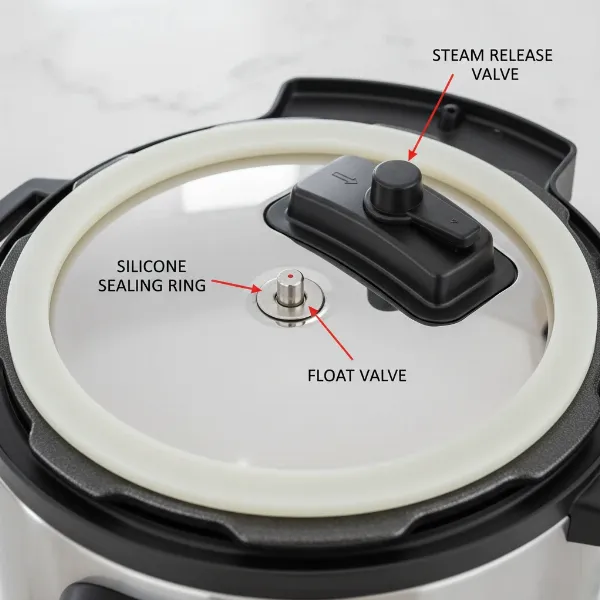
Have you ever considered how a single kitchen appliance could revolutionize your cooking, making once-daunting recipes a weeknight reality? Pressure cookers, whether traditional stovetop models or their modern electric counterparts, are culinary workhorses designed to slash cooking times and lock in flavor. But with both options readily available, choosing the right pressure cooker can feel like navigating a complex recipe without instructions. This comprehensive guide will explore the intricacies, benefits, and drawbacks of stovetop and electric pressure cookers, empowering you to select the perfect cooking companion for your home.
What is a Pressure Cooker?
A pressure cooker is a sealed pot that cooks food faster than conventional methods by trapping steam, which increases the internal pressure and, consequently, the boiling point of water. This superheated steam forces liquid into the food, cooking it quickly and efficiently while retaining nutrients and intensifying flavors. The magic lies in the elevated pressure, allowing temperatures inside the pot to climb well beyond the standard boiling point of 212°F (100°C), drastically reducing the time needed for dishes like stews, roasts, and legumes.
The Evolution of Pressure Cookers
The concept of pressure cooking dates back centuries, a testament to humanity’s continuous quest for more efficient food preparation.
From Classic to Modern Pressure Cookers
|
Our Picks for the Best Pressure cooker in 2026
As an Amazon Associate I earn from qualifying purchases.
|
||
| Num | Product | Action |
|---|---|---|
| 1 | Instant Pot Duo 7-in-1 Mini Electric Pressure Cooker, Slow Rice Cooker, Steamer, Sauté, Yogurt Maker, Warmer & Sterilizer, Includes Free App with over 1900 Recipes, Stainless Steel, 3 Quart |

|
| 2 | COMFEE' 9-in-1 Electric Pressure Cooker, 14 Presets Instant Multi Cooker Olla de Presion Non-Stick Pot Yogurt Maker Rice Cooker Slow Cooker Sauté Steamer 6 Quarts Black |
|
| 3 | Instant Pot Duo 7-in-1 Electric Pressure Cooker, Slow Cooker, Rice, Steamer, Sauté, Yogurt Maker, Warmer & Sterilizer, Includes App With Over 800 Recipes, Stainless Steel, 6 Quart |
|
| 4 | Our Place Dream Cooker - 6 Qt Ceramic Nonstick Multicooker & Pressure Cooker with Touchscreen Controls & Auto Steam Release - 4 Modes: Pressure Cook, Sauté/Sear, Slow Cook & Warm - Steam |
|
| 5 | CHEF iQ Smart Pressure Cooker with WiFi and Built-in Scale - Easy-to-Use 10-in-1 Multicooker with 500+ Guided Recipes - Rice Cooker, Slow Cooker, Instant Meals for Foodies - 6 Quart - Family Size |
|
| 6 | COSORI Pressure Cooker 6QT, Stainless Steel, 9-in-1 Multi Cooker, 12 Safety Features, Ceramic Inner Pot, Rice, Slow Cook, Sous Vide, Saute, 1100W |
|
| 7 | Our Place Dream Cooker - 6 Qt Ceramic Nonstick Multicooker & Pressure Cooker with Touchscreen Controls & Auto Steam Release - 4 Modes: Pressure Cook, Sauté/Sear, Slow Cook & Warm - Spice |
|
| 8 | Stove Top 304 Stainless Steel Pressure Cooker, One-hand Easy Handle Lid, 3 PSI Setting, 6 Safety Systems, Dishwasher Safe, Olla de Presion, Works for All Cooktops (8.5 QT) |
|
| 9 | Our Place Dream Cooker - 6 Qt Ceramic Nonstick Multicooker & Pressure Cooker with Touchscreen Controls & Auto Steam Release - 4 Modes: Pressure Cook, Sauté/Sear, Slow Cook & Warm - Blue Salt |
|
| 10 | Instant Pot Duo 7-in-1 Electric Pressure Cooker, Slow Cooker, Rice Cooker, Steamer, Sauté, Yogurt Maker, Warmer & Sterilizer, Includes App with Over 800 Recipes, Stainless Steel, 8 Quart |
|
The first rudimentary pressure cooker, known as the “Digester,” was invented by French physicist Denis Papin in 1679. His device used steam pressure to soften bones, showcasing the revolutionary potential of high-pressure cooking. Early models were often heavy, cumbersome, and, notoriously, prone to mishaps leading to a reputation for danger. However, over time, engineering advancements transformed these simple pots into sophisticated kitchen tools.
Key Milestones
The 20th century brought significant innovations. In the 1930s, the first commercial domestic pressure cookers appeared, making the technology accessible to home cooks. The 1970s saw a major revival with the introduction of new safety features, such as multiple redundant pressure release valves and improved sealing mechanisms, effectively dispelling the old fears of “exploding” pots. The most recent leap has been the advent of the electric pressure cooker in the 21st century, combining pressure cooking with smart technology and multi-functional capabilities, further enhancing convenience and safety.
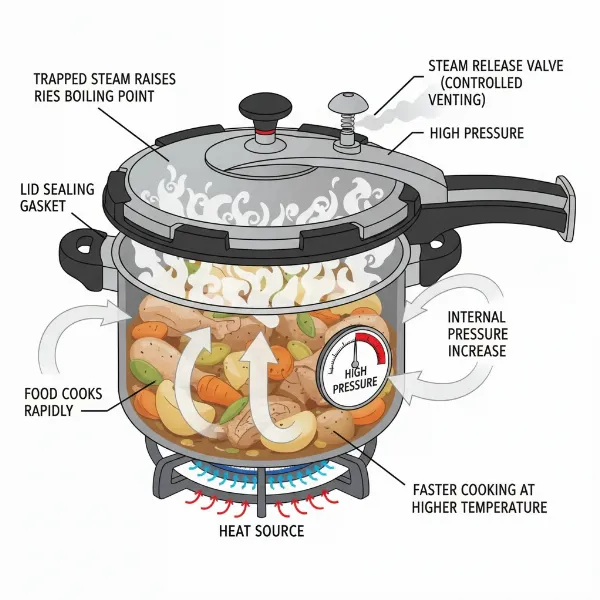 Diagram illustrating the mechanism of a pressure cooker, showing steam, pressure, and heat
Popular Types of Pressure Cookers on the Market
Today, the market is primarily dominated by two distinct types of pressure cookers, each with its own set of characteristics catering to different cooking styles and preferences.
Stovetop Pressure Cookers (Induction, Gas)
Stovetop pressure cookers are the traditional choice, designed to be used on a gas, electric, or induction stovetop burner. They consist of a heavy-gauge pot, a tightly fitting lid with a gasket, and a pressure regulating valve. These models rely on the external heat source of your stove to build pressure.
Electric Pressure Cookers
Electric pressure cookers are self-contained units with their own heating element and a built-in microprocessor. Often referred to as “multi-cookers,” these appliances typically offer various preset programs beyond just pressure cooking, such as slow cooking, sautéing, rice cooking, and yogurt making, all within a single pot. The most well-known brand in this category is the Instant Pot.
Distinguishing Features, Pros, and Cons of Each Type
Understanding the core differences between stovetop and electric pressure cookers is crucial for making an informed decision. Here’s a detailed breakdown of their advantages and disadvantages:
| Feature | Stovetop Pressure Cookers | Electric Pressure Cookers |
|---|---|---|
| Pressure & Temp. | Higher (up to 15 PSI), faster cooking | Lower (11-12 PSI), slightly slower cooking |
| Cooking Speed | Generally faster due to higher pressure and temperature | A little slower to reach and maintain pressure |
| Control | Manual control over heat, more precise pressure adjustment | Automated, pre-set programs, “set-it-and-forget-it” |
| Browning/Searing | Superior browning power with powerful stovetop burners | Adequate searing, but less powerful than a stovetop burner |
| Durability | Lasts for decades, simple design, fewer parts to malfunction | Electronic components may limit lifespan (often cited as ~5 years) |
| Versatility | Can be used as a regular pot, some models can do canning | Multi-functional (slow cook, sauté, yogurt, etc.), generally cannot do canning |
| Safety | Modern models have multiple safety features, very safe when used correctly | Built-in safety mechanisms, automated pressure release |
| Cost | Generally more affordable upfront | More expensive upfront due to integrated electronics and features |
| Space | Can be stored with other cookware, less counter space needed | Bulky appliance, requires dedicated counter/storage space |
| Noise | Can be noisy during pressure release | Quieter operation, especially with newer models |
| Cleaning | Pot is often dishwasher safe, simpler components | Pot is often dishwasher safe, but lid and base require careful cleaning |
| Learning Curve | Requires some monitoring, manual heat adjustment | Easier for beginners due to automation, digital interface |
“While electric pressure cookers offer unparalleled convenience, experienced cooks often prefer stovetop models for their higher pressure and superior browning capabilities, leading to results that are often indistinguishable from traditional cooking methods, but in a fraction of the time.” – Chef Elena Rodriguez, Culinary Institute Instructor
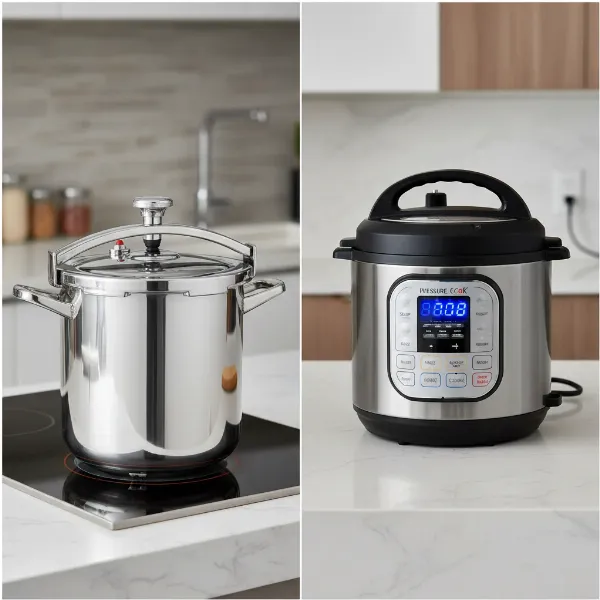 Side-by-side comparison of a stovetop and an electric pressure cooker showcasing their differences
Comparing Pressure Cookers with Other Cooking Methods
Beyond the choice between stovetop and electric, pressure cooking itself stands out from other cooking methods for several compelling reasons.
Nấu nhanh hơn (Faster Cooking)
The primary advantage of pressure cooking is its incredible speed. By increasing the boiling point of water, pressure cookers can reduce cooking times by up to 70% compared to conventional boiling, steaming, or simmering. This makes them ideal for busy weeknights or for preparing dishes that traditionally require hours, like tough cuts of meat or dried beans, in a fraction of the time.
Giữ lại dinh dưỡng tốt hơn (Better Nutrient Retention)
Because pressure cooking requires less liquid and shorter cooking times, more water-soluble vitamins and minerals are retained in your food. The enclosed environment also minimizes the oxidation of nutrients, resulting in healthier and more flavorful meals.
Tiết kiệm năng lượng (Energy Saving)
The efficiency of pressure cooking translates directly to energy savings. By cooking faster and requiring less heat overall, pressure cookers consume significantly less energy than stovetop or oven cooking for the same dishes, making them an environmentally friendly and cost-effective choice.
Comparison Table of the Best Pressure Cooker Models Today
Choosing a pressure cooker can be overwhelming given the variety. Here’s a general guide to help you compare popular options. Please note: Prices and features are estimates and can vary by retailer and model year.
| Product Name | Type | Capacity (Quarts) | Power (Watts) | Key Features | Estimated Price | Rating (out of 5) |
|---|---|---|---|---|---|---|
| Instant Pot Duo Evo Plus | Electric | 6 | 1200 | 48 smart programs, sous vide, LCD display | $$$ | 4.7 |
| Fissler Vitaquick | Stovetop | 6 | N/A | German-engineered, conical pot, auto-locking handle | $$$$ | 4.8 |
| Presto 01781 | Stovetop | 23 | N/A | Large capacity, ideal for canning | $$ | 4.5 |
| Ninja Foodi Max | Electric | 8 | 1760 | Pressure cook, air fry, dehydrate, steam | $$$$ | 4.6 |
| T-fal ClipsoMinut Easy | Stovetop | 7.5 | N/A | One-hand opening, 5 safety systems | $$$ | 4.6 |
| Cuisinart CPC-600 | Electric | 6 | 1000 | Push-button controls, 8 functions | $$ | 4.4 |
Hướng dẫn chọn mua Pressure Cooker phù hợp (How to Choose the Right Pressure Cooker)
Selecting the perfect pressure cooker involves considering several factors tailored to your specific kitchen needs and cooking habits.
Xác định nhu cầu sử dụng (Determine Your Usage Needs)
First, assess how you plan to use your pressure cooker. Do you primarily cook for one or two people, or a large family? Are you interested in canning, or just everyday meals? Your answers will guide your choices regarding size, type, and features. If you need maximum speed and durability, a stovetop model might be best. If convenience and multi-functionality are priorities, an electric one shines.
Chọn dung tích phù hợp (Choose the Right Capacity)
Pressure cookers are available in various sizes, typically ranging from 3 to 23 quarts.
- 3-4 quarts: Ideal for individuals or couples.
- 6-8 quarts: The most popular size for families of 3-5 people, versatile for most recipes.
- 10-12+ quarts: Best for large families, batch cooking, or those interested in pressure canning.
Remember that pressure cookers should never be filled beyond two-thirds full (or half full for foamy foods like beans), so always account for this usable capacity.
Chất liệu nồi (Pot Material)
The material of your pressure cooker affects its performance, durability, and price.
- Stainless Steel: Durable, non-reactive, and aesthetically pleasing. It’s excellent for browning and maintaining consistent heat. Often more expensive but lasts longer.
- Aluminum: Lighter and heats up quickly, making it more energy-efficient. However, it can react with acidic foods and may stain over time. Usually more affordable.
- Cast Iron: Rarely used for modern pressure cookers but offers excellent heat retention and durability if found. Very heavy.
Các tính năng an toàn cần thiết (Essential Safety Features)
Modern pressure cookers are exceptionally safe, thanks to advanced safety mechanisms. Look for:
- Multiple Pressure Release Valves: Redundant systems ensure that excess pressure can escape safely.
- Lid Lock Mechanism: Prevents the lid from being opened when the pot is under pressure.
- Gasket/Sealing Ring: Creates an airtight seal. Ensure it’s made from food-grade silicone and is replaceable.
- Pressure Indicator: Visually shows when the cooker is pressurized.
- Anti-Clog Vent: Prevents food particles from blocking the pressure release.
Thương hiệu uy tín và chính sách bảo hành (Reputable Brands and Warranty Policy)
Investing in a reputable brand often means better quality, customer support, and warranty coverage. Brands like Instant Pot, Fissler, Presto, WMF, and Cuisinart are well-regarded. Always check the warranty duration and what it covers, especially for electronic components in electric models.
Hướng dẫn sử dụng Pressure Cooker an toàn và hiệu quả (Guide to Safe and Effective Pressure Cooker Use)
Even with modern safety features, proper usage is key to safe and delicious results with your pressure cooker.
Các bước chuẩn bị trước khi nấu (Preparation Steps Before Cooking)
- Read the Manual: Each model is slightly different; always consult your specific pressure cooker’s manual.
- Inspect: Before each use, check the lid, gasket, and valves for any damage or food debris. Ensure the gasket is properly seated.
- Add Liquid: Always add the minimum required amount of liquid (usually at least 1 cup) to create steam and build pressure. Without liquid, food will burn, and pressure won’t build.
- Do Not Overfill: Never fill the pressure cooker more than two-thirds full, or half full for foods that expand (like beans, grains) or foam (like soups).
Điều chỉnh áp suất và thời gian nấu phù hợp (Adjusting Pressure and Cooking Time Appropriately)
- Bring to Pressure: Place the lid securely, ensure the steam release valve is closed (or set to “sealing”). For stovetop models, turn the heat to high until pressure is reached (indicated by the pressure indicator or rattling weight). For electric models, select your program and it will automatically build pressure.
- Maintain Pressure: Once at pressure, reduce the heat for stovetop models to the lowest setting that maintains pressure. Electric models regulate this automatically.
- Set Timer: Use a timer for the recommended cooking duration.
Cách xả áp an toàn (Safe Pressure Release Methods)
After cooking, pressure must be released before opening the lid. There are three main methods:
- Natural Release (NR): Allow the pressure cooker to cool down naturally, slowly releasing pressure. This is best for foamy foods, large cuts of meat, or dishes that benefit from continued cooking.
- Quick Release (QR): Manually open the steam release valve to quickly release pressure. Use caution, as a strong jet of steam will erupt. Best for delicate foods like vegetables that can overcook quickly.
- Interrupted Quick Release (IQR): A method where you let it naturally release for a few minutes, then quick release the rest. This helps prevent foamy liquids from spewing out.
Never force open a lid when the pressure indicator is up.
Vệ sinh và bảo quản nồi (Cleaning and Maintenance)
- Clean Immediately: Wash the pot, lid, and gasket after each use.
- Gasket Care: Remove the gasket for thorough cleaning. Hand washing with warm, soapy water is usually recommended. Allow it to air dry completely before storing to prevent odors. Gaskets should be replaced annually or if they show signs of cracking or damage.
- Valve Cleaning: Ensure all valves and vents are clear of food debris. Use a small brush or toothpick if necessary.
- Storage: Store your pressure cooker with the lid inverted or slightly ajar to allow air circulation and prevent gasket compression and odors.
Các món ăn ngon và dễ làm với Pressure Cooker (Delicious and Easy Recipes with a Pressure Cooker)
The pressure cooker is a versatile tool capable of producing a vast array of delicious dishes with minimal effort.
Các món hầm (Stews)
From rich beef stews to hearty lamb tagines, pressure cookers tenderize tough cuts of meat and meld flavors beautifully in a fraction of the traditional time. Think succulent short ribs or a comforting pot roast ready in under an hour.
Các món súp (Soups)
Quickly create deeply flavorful broths and soups. Chicken noodle soup, creamy tomato soup, or a robust lentil soup can go from prep to table much faster, often in less than 30 minutes.
Các món cháo (Porridges)
Perfectly cooked grains like congee, oatmeal, or risottos become incredibly creamy and tender in a pressure cooker without constant stirring. Risotto, typically a labor-intensive dish, can be ready in just 6-8 minutes under pressure.
Các món kho (Braised Dishes)
Braising meat until it falls off the bone is a pressure cooker specialty. Dishes like pulled pork, coq au vin, or beef bourguignon achieve incredible tenderness and depth of flavor in a fraction of the time, making them suitable for weeknight indulgence.
Các lỗi thường gặp và cách khắc phục khi sử dụng Pressure Cooker (Common Problems and Troubleshooting When Using a Pressure Cooker)
Even seasoned cooks encounter occasional pressure cooker hiccups. Here are some common issues and their solutions:
- Pressure Not Building:
- Cause: Lid not sealed properly, gasket is worn or missing, steam release valve is open, not enough liquid.
- Fix: Ensure lid is locked, check gasket and replace if needed, close valve, add more liquid.
- Food Burning at the Bottom:
- Cause: Not enough liquid, too high heat on stovetop models, not enough liquid for sautéing before pressure cooking.
- Fix: Always use sufficient liquid. For electric models, ensure you deglaze the pot after sautéing to remove any stuck-on bits.
- Lid Won’t Open:
- Cause: Residual pressure inside the pot.
- Fix: Do not force it. Ensure the pressure indicator is fully down. If not, perform a quick release if safe, or let it naturally release longer.
- Hissing/Excessive Steam Loss:
- Cause: Worn gasket, faulty valve, food debris blocking seal.
- Fix: Check gasket for damage and replace. Clean valves thoroughly. Ensure nothing is obstructing the lid’s seal.
- Food is Undercooked:
- Cause: Not enough cooking time, pressure not reached or maintained.
- Fix: Increase cooking time slightly. Ensure cooker reached full pressure and maintained it throughout the cooking cycle.
Conclusion
The choice between a stovetop and an electric pressure cooker ultimately boils down to your personal cooking style, priorities, and budget. Stovetop models offer faster cooking, superior browning, and unparalleled durability, making them a favorite for those who value tradition and maximum performance. Electric pressure cookers, with their “set-it-and-forget-it” convenience and multi-functional capabilities, are perfect for beginners or anyone seeking a versatile, automated kitchen appliance. Both types deliver tender, flavorful meals in record time, transforming your culinary experience. Whichever pressure cooker you choose, you’re investing in a tool that will open up a world of faster, healthier, and more delicious home-cooked meals. Which features are most important to you in your ideal pressure cooking companion?
Frequently Asked Questions
What is the main difference in cooking speed between stovetop and electric pressure cookers?
Stovetop pressure cookers typically cook faster because they can reach higher pressures (around 15 PSI) compared to electric models (11-12 PSI). This higher pressure translates to higher cooking temperatures, significantly reducing the overall cooking time, sometimes by as much as 25% for a given recipe.
Are electric pressure cookers safer than stovetop models?
Modern stovetop and electric pressure cookers are both very safe. Stovetop models have advanced safety features that prevent over-pressurization, similar to electric models which feature automated safety mechanisms. The perception of stovetop cookers being less safe is largely due to older models lacking these modern safeguards.
Can I use an electric pressure cooker for canning?
Generally, most electric pressure cookers are not suitable for pressure canning. The reason is that they often cannot maintain the precise, consistent high pressure (typically 15 PSI for canning) required by USDA guidelines for safe food preservation. Stovetop pressure canners are specifically designed for this purpose.
How long do stovetop and electric pressure cookers typically last?
A good quality stovetop pressure cooker, with its simpler mechanical design, can last for decades, often becoming a cherished family heirloom. Electric pressure cookers, containing electronic components and heating elements, generally have a shorter lifespan, often cited around 5 years, though this can vary with usage and brand quality.
Is it true that stovetop pressure cookers offer better browning?
Yes, stovetop pressure cookers generally offer superior browning and searing capabilities. They utilize the direct, powerful heat of your stovetop burner, which can reach much higher temperatures than the internal heating element of an electric pressure cooker, allowing for more effective Maillard reactions and richer flavors.