Few kitchen frustrations compare to the moment your pressure cooker lid refuses to budge after a delicious meal. That stubborn seal can turn anticipation into aggravation, leaving you wondering how to access your perfectly cooked dish. But before you resort to wrestling with your appliance, understand that a stuck pressure cooker lid is often a common issue with straightforward, safe solutions. This comprehensive guide, crafted from over a decade of hands-on experience with everything from classic stovetop models to modern electric multicookers, will walk you through the reasons behind a stuck lid and provide expert techniques to safely open it, ensuring you can continue to enjoy the benefits of pressure cooking without the headache.
Understanding Why Your Pressure Cooker Lid Gets Stuck
A pressure cooker works by trapping steam, which raises the internal pressure and temperature, cooking food faster. When this process is complete, a combination of factors can lead to a lid that seems welded shut.
The Science Behind a Stuck Lid: The Vacuum Seal
|
Our Picks for the Best Pressure cooker in 2026
As an Amazon Associate I earn from qualifying purchases.
|
||
| Num | Product | Action |
|---|---|---|
| 1 | Our Place Dream Cooker - 6 Qt Ceramic Nonstick Multicooker & Pressure Cooker with Touchscreen Controls & Auto Steam Release - 4 Modes: Pressure Cook, Sauté/Sear, Slow Cook & Warm - Spice |

|
| 2 | CHEF iQ Smart Pressure Cooker with WiFi and Built-in Scale - Easy-to-Use 10-in-1 Multicooker with 500+ Guided Recipes - Rice Cooker, Slow Cooker, Instant Meals for Foodies - 6 Quart - Family Size |
|
| 3 | Instant Pot Duo 7-in-1 Mini Electric Pressure Cooker, Slow Rice Cooker, Steamer, Sauté, Yogurt Maker, Warmer & Sterilizer, Includes Free App with over 1900 Recipes, Stainless Steel, 3 Quart |
|
| 4 | COMFEE' 9-in-1 Electric Pressure Cooker, 14 Presets Instant Multi Cooker Olla de Presion Non-Stick Pot Yogurt Maker Rice Cooker Slow Cooker Sauté Steamer 6 Quarts Black |
|
| 5 | Our Place Dream Cooker - 6 Qt Ceramic Nonstick Multicooker & Pressure Cooker with Touchscreen Controls & Auto Steam Release - 4 Modes: Pressure Cook, Sauté/Sear, Slow Cook & Warm - Steam |
|
| 6 | COSORI Pressure Cooker 6QT, Stainless Steel, 9-in-1 Multi Cooker, 12 Safety Features, Ceramic Inner Pot, Rice, Slow Cook, Sous Vide, Saute, 1100W |
|
| 7 | Our Place Dream Cooker - 6 Qt Ceramic Nonstick Multicooker & Pressure Cooker with Touchscreen Controls & Auto Steam Release - 4 Modes: Pressure Cook, Sauté/Sear, Slow Cook & Warm - Blue Salt |
|
| 8 | Stove Top 304 Stainless Steel Pressure Cooker, One-hand Easy Handle Lid, 3 PSI Setting, 6 Safety Systems, Dishwasher Safe, Olla de Presion, Works for All Cooktops (8.5 QT) |
|
| 9 | Instant Pot Duo 7-in-1 Electric Pressure Cooker, Slow Cooker, Rice, Steamer, Sauté, Yogurt Maker, Warmer & Sterilizer, Includes App With Over 800 Recipes, Stainless Steel, 6 Quart |
|
| 10 | Instant Pot Duo 7-in-1 Electric Pressure Cooker, Slow Cooker, Rice Cooker, Steamer, Sauté, Yogurt Maker, Warmer & Sterilizer, Includes App with Over 800 Recipes, Stainless Steel, 8 Quart |
|
The most common reason for a stuck lid is a vacuum seal. After cooking, as the pressure cooker cools, the steam inside condenses back into water, creating a vacuum. This vacuum pulls the lid tightly against the pot’s rim, making it difficult to open. This is a natural safety feature, indicating that the pressure inside has dropped significantly.
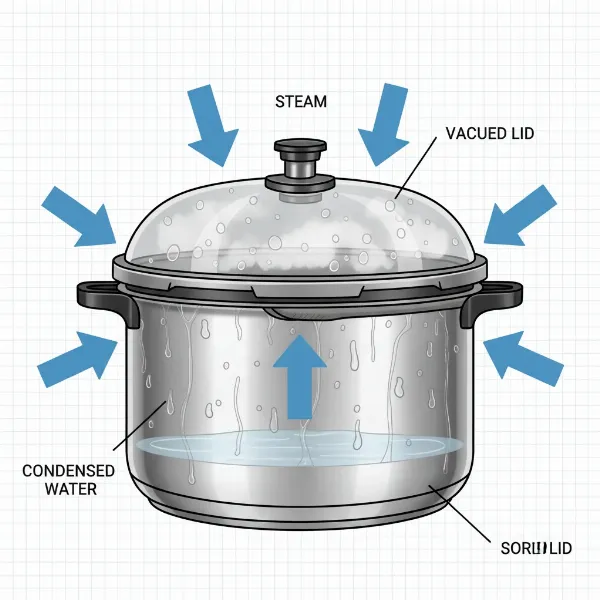 Diagram illustrating how a vacuum seal forms in a pressure cooker after cooling, pulling the lid down.
Common Causes: Beyond the Vacuum Seal
While a vacuum seal is primary, other factors can contribute:
- Food Debris: Small food particles, especially starches, can get lodged between the lid and the pot rim, or around the gasket, essentially gluing the lid in place.
- Gasket Issues: The rubber or silicone sealing gasket can become dry, stiff, or slightly out of place, causing it to stick to the pot once a vacuum forms. An old or damaged gasket is more prone to this.
- Incomplete Pressure Release: Although rare, if a small amount of residual pressure remains, the lid’s safety lock might still be engaged, preventing it from opening.
- Overfilling: Overfilling the cooker can sometimes lead to food expanding and creating a tighter seal, or even clogging the pressure release mechanisms.
- Manufacturer Design: Some pressure cookers have tighter-fitting lids or sealing mechanisms than others, making them more prone to sticking if not properly maintained.
Immediate Steps When Your Pressure Cooker Lid Won’t Open
When faced with a stuck lid, the first rule is always safety. Panic or brute force can damage your cooker or, worse, cause injury if residual pressure is still present.
Prioritizing Safety: Never Force It
Do not attempt to wrench the lid open forcefully. If there’s any internal pressure, forcing the lid could lead to a sudden release of hot steam and food, which is extremely dangerous. Always prioritize safety over speed.
Verifying Zero Pressure: Essential Safety Check
Before attempting any troubleshooting, you must confirm that all internal pressure has been released.
- Check the Pressure Indicator Pin: On most modern pressure cookers (especially electric models like Instant Pots), there’s a float valve or pressure indicator pin that rises when the cooker is pressurized and drops when the pressure is fully released. Ensure this pin is completely down. If it’s still up, even slightly, do not proceed.
- Listen for Hissing: There should be no hissing sound emanating from the pressure release valve.
- Wait: If in doubt, simply wait longer. Natural pressure release can take a considerable amount of time, especially with larger quantities of food.
Safe Methods to Release a Stuck Pressure Cooker Lid
Once you’ve confirmed there’s no remaining pressure, you can try these safe and effective methods to release the stuck lid.
The Cold Water Bath Method (for Stovetop Models)
This technique is primarily for stovetop pressure cookers:
- Run Cold Water: Place the entire pressure cooker (or just the lid, if safely detachable) under cold running water in your sink.
- Focus on the Lid: Direct the stream of cold water over the top of the lid. The cold water will cool the metal of the lid, causing it to contract slightly.
- Attempt to Open: After a minute or two, try to gently twist and lift the lid. The contraction can break the vacuum seal and release the lid.
Natural Release and Extended Cooling
Patience is often the simplest solution.
- Unplug (Electric) or Remove from Heat (Stovetop): Ensure the cooker is completely off and away from any heat source.
- Allow to Cool Naturally: Let the pressure cooker sit undisturbed for an extended period, even several hours. As the pot cools, the vacuum seal naturally weakens, and the lid should eventually become easier to open.
Gentle Tapping and Wiggling
Sometimes, a gentle nudge is all that’s needed to break the seal or dislodge debris.
- Tap Around the Rim: Use the handle of a wooden spoon or a rubber mallet to gently tap around the perimeter of the lid and the pot’s rim. This can help dislodge any sticky food particles or break the vacuum seal.
- Gently Wiggle: While tapping, try to gently wiggle or twist the lid back and forth. Avoid excessive force.
- Tap the Pressure Release Button: On electric pressure cookers, if the pressure indicator pin is down but the lid still won’t turn, gently tap the pressure release button (or float valve) with a non-metal utensil. Sometimes, the mechanism itself can be slightly stuck, preventing the lid from unlocking.
Cleaning the Vent (If Blocked)
If food particles have clogged the vent, it might contribute to a minor vacuum issue or a stuck release pin.
- Inspect the Vent: Carefully check the pressure release vent or steam valve for any visible food blockages.
- Clear Debris: Use a toothpick, small brush, or cotton swab to gently clear any debris from the vent. Ensure the vent is clear before attempting to open the lid.
Troubleshooting Specific Scenarios
Different situations call for slightly different approaches.
If the Pressure Indicator Pin is Still Up
This is a critical safety signal. If the pressure indicator pin is still up, it means there is residual pressure inside the cooker.
- Do Not Force: Absolutely do not attempt to open the lid.
- Perform Natural Release: Allow the cooker to sit undisturbed for a much longer period. The pin should drop on its own as the pressure dissipates.
- Check for Blocked Vent: Ensure the pressure release valve is completely clear of any food debris that might be preventing the last bit of steam from escaping.
When the Gasket is the Culprit
A sticky or misaligned gasket can be a common reason.
- Cool Completely: Ensure the pot is fully cooled.
- Gentle Prying (Last Resort): If all other methods fail and you are absolutely certain there is no pressure, you can try to very gently pry the edge of the gasket near the lid’s rim with a thin, non-metal utensil (like a plastic spatula). The goal is to slightly break the seal without damaging the gasket. This should only be attempted as a last resort and with extreme caution.
Dealing with Food Jammed Around the Lid
Thick sauces or starchy foods can sometimes create a sticky bond.
- Cooling: Allow maximum cooling time, as this will cause the food to contract and potentially release its grip.
- Gentle Heating (Stovetop Only): For stovetop models, very gently and briefly place the cooker back on low heat for a minute or two. The slight expansion of air inside might break the seal. Use extreme caution and only if you are certain there is no pressure.
Prevention is Key: Avoiding a Stuck Pressure Cooker Lid
An ounce of prevention is worth a pound of cure, especially when it comes to pressure cooker safety and convenience.
Proper Cleaning and Maintenance of the Gasket and Lid
Regular cleaning is paramount:
- Wash Gasket Separately: Always remove and thoroughly wash the sealing gasket after each use. Food particles or oil residue can cause it to stick.
- Inspect for Damage: Routinely check the gasket for cracks, tears, or brittleness. A damaged gasket will not seal properly and can lead to issues. Replace gaskets annually or as needed.
- Clean Lid Rim: Pay attention to the grooves and channels on the underside of the lid where the gasket sits. Ensure these areas are free of any dried food or residue.
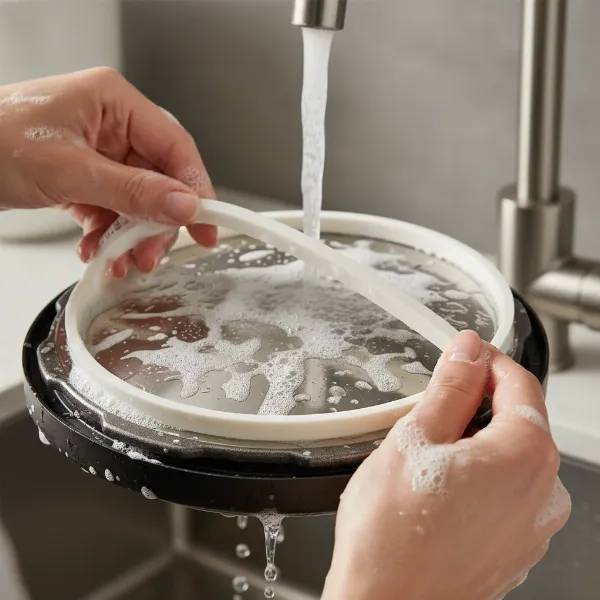 Hands cleaning a rubber sealing gasket from a pressure cooker lid, emphasizing maintenance.
Not Overfilling Your Pressure Cooker
Overfilling can lead to food boiling up and clogging the pressure release valve or getting into the lid’s sealing mechanism, contributing to sticking. Always adhere to the maximum fill lines indicated on your specific pressure cooker model.
Ensuring Proper Sealing Before Cooking
Before starting the cooking process, ensure the lid is properly aligned and seated on the pot. Give it a gentle twist to confirm it’s locked into place according to your cooker’s design. A proper seal from the beginning minimizes issues later.
Always Allowing Full Natural Release or Safe Quick Release
Understand your pressure cooker’s release methods:
- Natural Release (NPR): This involves letting the cooker cool down naturally until all pressure dissipates. This is generally the safest method and helps prevent vacuum seals.
- Quick Release (QR): This involves manually opening the steam release valve to quickly vent steam. While faster, it can sometimes create a stronger vacuum effect as the temperature drops rapidly. Always follow your manufacturer’s instructions for safe quick release.
When to Seek Professional Help or Replace Your Pressure Cooker
If you’ve tried all the safe troubleshooting methods and your pressure cooker lid remains stubbornly stuck, or if you suspect damage to the pressure release mechanisms, it might be time to consider professional help or replacement. Never risk forcing a potentially compromised appliance. If your pressure cooker is old, shows signs of wear and tear, or has recurring issues, investing in a new one is often the safest and most practical choice.
Frequently Asked Questions About Pressure Cooker Lid Issues
Why does my Instant Pot lid get stuck even after the pressure release pin drops?
Even after the pressure pin drops, a strong vacuum seal can form as the pot cools, or food particles might be preventing the lid from turning freely. Allow more cooling time, or gently tap the pressure release button to ensure no residual air is trapped.
Is it dangerous if my pressure cooker lid is stuck?
It can be dangerous if there is still pressure inside the cooker. Always ensure the pressure indicator pin is fully down before attempting any methods to open the lid. Never force a lid open if you suspect internal pressure.
How often should I replace my pressure cooker’s sealing gasket?
It’s generally recommended to replace the sealing gasket every 6-12 months, or sooner if you notice any signs of wear, cracking, or if it’s no longer sealing properly. Regular replacement helps maintain efficiency and prevents sticking.
Can old food residue cause the lid to stick?
Yes, absolutely. Dried food particles or sticky residue around the lid’s rim or on the gasket can act like glue, making the lid very difficult to open even after the pressure has been released. Thorough cleaning after each use is crucial.
My electric pressure cooker lid says “Lid” on the display and won’t open. What does that mean?
The “Lid” error often indicates that the lid is not properly closed or is misaligned, or in some cases, a sensor issue. Ensure the lid is correctly positioned and twisted to the locked position. If it’s stuck after cooking, it could be a vacuum issue, but if it’s a pre-cooking error, check alignment and sensors.
Conclusion
Dealing with a stuck pressure cooker lid can be a momentary inconvenience, but with the right knowledge and a commitment to safety, it’s a problem you can confidently resolve. By understanding the causes, implementing safe release methods, and embracing preventative maintenance, you empower yourself to keep your pressure cooker operating smoothly and efficiently. Always remember that patience and caution are your best allies in the kitchen.
What steps do you take to keep your pressure cooker lid moving freely, ensuring hassle-free cooking every time?