Stepping into the world of pressure cooking can transform your kitchen experience, offering unparalleled speed and efficiency for delicious meals. Yet, to truly unlock its potential, understanding the nuances of pressure release is crucial. The two primary methods—Natural Release (NPR) and Quick Release (QR)—are not interchangeable. Choosing wisely impacts everything from food texture to safety. Let’s demystify these techniques, guiding you to perfect results every time.
Understanding Pressure Cooker Basics
A pressure cooker fundamentally works by trapping steam inside a sealed pot, which elevates the internal pressure and, consequently, the boiling point of water. This superheated, high-pressure environment drastically reduces cooking times compared to conventional methods. Once the cooking cycle is complete, the pressure must be safely released before the lid can be opened, and how you choose to release that pressure is a critical step in the cooking process.
What is Natural Release (NPR) in Pressure Cooking?
Natural Release (NPR), often abbreviated as NR, is the most passive of the pressure release methods. Once your pressure cooker finishes its programmed cooking time, it simply turns off the heat, allowing the pressure to dissipate gradually on its own. The float valve, a small indicator on the lid, will drop when the internal pressure has normalized and it’s safe to open.
The Gentle Descent: How NPR Works
|
Our Picks for the Best Pressure cooker in 2026
As an Amazon Associate I earn from qualifying purchases.
|
||
| Num | Product | Action |
|---|---|---|
| 1 | Our Place Dream Cooker - 6 Qt Ceramic Nonstick Multicooker & Pressure Cooker with Touchscreen Controls & Auto Steam Release - 4 Modes: Pressure Cook, Sauté/Sear, Slow Cook & Warm - Blue Salt |

|
| 2 | Stove Top 304 Stainless Steel Pressure Cooker, One-hand Easy Handle Lid, 3 PSI Setting, 6 Safety Systems, Dishwasher Safe, Olla de Presion, Works for All Cooktops (8.5 QT) |
|
| 3 | COSORI Pressure Cooker 6QT, Stainless Steel, 9-in-1 Multi Cooker, 12 Safety Features, Ceramic Inner Pot, Rice, Slow Cook, Sous Vide, Saute, 1100W |
|
| 4 | COMFEE' 9-in-1 Electric Pressure Cooker, 14 Presets Instant Multi Cooker Olla de Presion Non-Stick Pot Yogurt Maker Rice Cooker Slow Cooker Sauté Steamer 6 Quarts Black |
|
| 5 | Instant Pot Duo 7-in-1 Mini Electric Pressure Cooker, Slow Rice Cooker, Steamer, Sauté, Yogurt Maker, Warmer & Sterilizer, Includes Free App with over 1900 Recipes, Stainless Steel, 3 Quart |
|
| 6 | Instant Pot Duo 7-in-1 Electric Pressure Cooker, Slow Cooker, Rice, Steamer, Sauté, Yogurt Maker, Warmer & Sterilizer, Includes App With Over 800 Recipes, Stainless Steel, 6 Quart |
|
| 7 | Our Place Dream Cooker - 6 Qt Ceramic Nonstick Multicooker & Pressure Cooker with Touchscreen Controls & Auto Steam Release - 4 Modes: Pressure Cook, Sauté/Sear, Slow Cook & Warm - Steam |
|
| 8 | Instant Pot Duo 7-in-1 Electric Pressure Cooker, Slow Cooker, Rice Cooker, Steamer, Sauté, Yogurt Maker, Warmer & Sterilizer, Includes App with Over 800 Recipes, Stainless Steel, 8 Quart |
|
| 9 | Our Place Dream Cooker - 6 Qt Ceramic Nonstick Multicooker & Pressure Cooker with Touchscreen Controls & Auto Steam Release - 4 Modes: Pressure Cook, Sauté/Sear, Slow Cook & Warm - Spice |
|
| 10 | CHEF iQ Smart Pressure Cooker with WiFi and Built-in Scale - Easy-to-Use 10-in-1 Multicooker with 500+ Guided Recipes - Rice Cooker, Slow Cooker, Instant Meals for Foodies - 6 Quart - Family Size |
|
During a Natural Release, the pressure cooker’s heating element is disengaged, but the food inside continues to cook gently with the residual heat. This process is akin to letting a roast “rest” after it’s removed from the oven, allowing juices to redistribute and the internal temperature to stabilize. The time it takes for a full natural release can vary significantly, from 5 minutes to over 40 minutes, depending on the volume of food and liquid in the pot.
Why Choose Natural Release?
Natural Release offers several distinct advantages, primarily contributing to food quality and safety. It ensures a gradual stop to the cooking, which is vital for certain dishes. This method prevents the violent boiling that can occur with a rapid pressure drop, preserving the integrity of delicate ingredients. Furthermore, it helps prevent frothy or liquid-heavy contents from spewing out of the steam release valve, keeping your kitchen cleaner and you safer. For larger cuts of meat, the slow pressure reduction often results in more tender and juicier outcomes.
Foods Best Suited for Natural Release
Natural Release is your go-to method for foods that benefit from continued, gentle cooking or those with a high liquid or starch content that could cause a mess with a quick release. These include:
- Large Cuts of Meat: Roasts, briskets, ribs, and whole chickens become incredibly tender as the pressure slowly drops and the meat rests in its own juices.
- Soups, Stews, and Chili: Dishes with significant liquid volume are ideal for NPR, preventing splattering and ensuring a rich, well-integrated flavor.
- Beans and Legumes: Natural release helps prevent foaming, keeps beans whole, and ensures a creamy, tender texture without bursting.
- Starchy Foods: Items like oatmeal, grits, polenta, and brown rice benefit from the gradual pressure drop, preventing them from becoming mushy or shooting out through the valve.
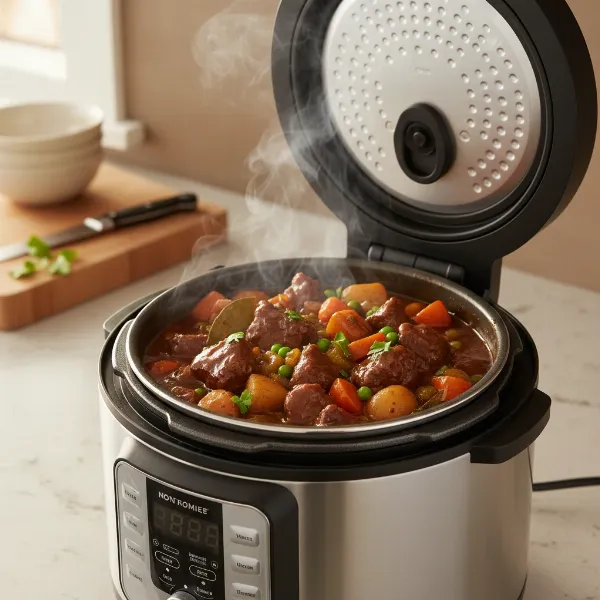 A pressure cooker with steam gently dissipating, showcasing tender meat or a stew inside.
What is Quick Release (QR) in Pressure Cooking?
Quick Release (QR), also known as Manual Release or Rapid Release, involves manually opening the steam release valve to rapidly vent all the steam from the pressure cooker immediately after the cooking cycle is complete. This method brings the pressure down swiftly, typically in 1 to 5 minutes.
The Rapid Release: How QR Works
To perform a Quick Release, you’ll typically turn or press the steam release valve from the “Sealing” to the “Venting” position. A strong, loud jet of steam will erupt from the valve. It is crucial to keep your hands and face away from this steam to avoid burns. Once the float valve drops, indicating the pressure has fully dissipated, it is safe to open the lid.
When Speed Matters: Benefits of Quick Release
The primary benefit of Quick Release is its ability to halt the cooking process almost immediately. This is particularly advantageous when you want to prevent delicate foods from overcooking. If you need to add ingredients midway through cooking or check the doneness of a dish, QR allows for quick access to the pot’s contents.
Foods Ideal for Quick Release
Quick Release is best reserved for delicate ingredients that can quickly turn to mush if left to continue cooking in the residual heat.
- Delicate Vegetables: Green beans, broccoli, asparagus, and other tender vegetables maintain their crispness and vibrant color.
- Seafood and Fish: These items cook very quickly, and a rapid pressure release ensures they don’t become rubbery or dry.
- Pasta: Quick release prevents pasta from becoming overcooked and gummy.
- Eggs: For perfectly cooked eggs, quick release immediately stops the cooking process.
Important Safety Considerations for Quick Release
While efficient, Quick Release requires careful handling. The burst of hot steam can cause severe burns if not handled properly. Always ensure your face and hands are clear of the steam vent. Furthermore, avoid using QR with foamy, frothy, or thick liquids, as the rapid release can cause the contents to sputter and spray out of the valve, creating a messy and potentially dangerous situation.
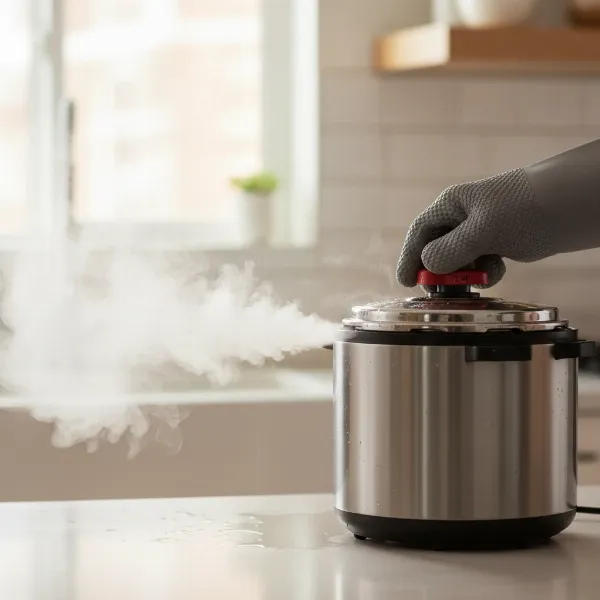 A pressure cooker releasing a strong jet of steam, with a hand carefully operating the valve.
“Understanding your pressure cooker’s release mechanisms is as important as knowing your cook times. It’s the final flourish that dictates the texture and safety of your meal.” – Chef Maria Sanchez, Pressure Cooking Specialist
Natural Release vs. Quick Release: A Comparative Look
Here’s a quick comparison to help you visualize the differences:
| Feature | Natural Release (NPR) | Quick Release (QR) |
|---|---|---|
| Time Taken | Longer (5-40+ minutes) | Shorter (1-5 minutes) |
| Cooking Continues | Yes, with residual heat | No, cooking stops immediately |
| Steam Vent | Stays sealed; pressure drops naturally | Manually opened to vent steam |
| Foaming/Splattering Risk | Low | High, with certain foods |
| Best For | Large meats, soups, stews, beans, starchy foods | Delicate vegetables, fish, pasta, eggs |
| Texture Impact | More tender, juicy meats; helps prevent mushy starches | Preserves crispness/firmness, prevents overcooking |
| Safety | Generally safer, less direct steam exposure | Requires caution due to direct, hot steam release |
The Hybrid Approach: Partial Natural Release
Sometimes, recipes call for a “partial natural release,” such as a “10-minute natural release” followed by a quick release. This hybrid method offers the best of both worlds. It allows for some gentle continued cooking and settling of foamy liquids, reducing the risk of sputtering, while still saving time compared to a full natural release. This is often recommended for slightly starchy foods or meats that benefit from a brief resting period without extending the total cook time excessively.
Tips for Confidently Choosing Your Release Method
- Always Follow the Recipe: The most reliable guide is almost always the recipe you’re using. Reputable pressure cooker recipes will specify the recommended release method for optimal results.
- Consider the Food Type: Think about how the food will react to continued cooking or sudden temperature changes. Delicate foods need a quick stop; tough cuts or foamy dishes need a gentle cooldown.
- Prioritize Safety: If you’re cooking something prone to foaming or splattering, opt for natural release or a partial natural release to prevent a messy and potentially dangerous eruption.
- Practice Makes Perfect: Don’t be afraid to experiment with different release methods (always within safe guidelines) for familiar recipes to discover your preferred textures.
Conclusion
Mastering the difference between Natural Release and Quick Release is a cornerstone of becoming a confident pressure cooker chef. By understanding when and why to use each technique, you can ensure your meals are cooked to perfection—whether you’re tenderizing a hearty stew or preserving the crispness of fresh vegetables. Remember, the pressure cooker is a powerful tool, and with the right release method, you’re always in control of delicious outcomes. What will you create next with your newfound pressure release mastery?
Frequently Asked Questions
Can I convert a Quick Release recipe to Natural Release?
Yes, generally you can, but you may need to reduce the initial pressure cooking time. Since Natural Release allows for continued cooking, failing to adjust the cooking time can lead to overcooked food. Always monitor the food’s doneness and make notes for future adjustments.
What happens if I Quick Release a foamy or liquid-heavy food?
Quickly releasing pressure from foamy foods like oatmeal, beans, or highly liquid dishes like soups can cause the contents to vigorously boil and sputter out of the steam release valve. This can create a significant mess and poses a scalding risk. It’s best to use Natural Release for such foods.
How long does a full Natural Release typically take?
A full Natural Release can take anywhere from 5 to 40 minutes or even longer, depending on the volume of food and liquid inside the pressure cooker. The more contents there are, the longer it will take for the pressure to dissipate naturally. You’ll know it’s complete when the float valve drops.