Every home chef cherishes the speed and efficiency a pressure cooker brings to their kitchen. From tender stews to perfectly cooked grains, this versatile appliance is a game-changer. However, like any precision tool, it requires proper care and maintenance to operate safely and effectively. Two critical, yet often overlooked, components are the floating valve and the anti-block shield. These small parts play a monumental role in your pressure cooker’s safety and performance, and ensuring they are meticulously clean is paramount. Neglecting these areas can lead to operational issues, compromised safety, and even premature wear. This guide will walk you through a thorough deep cleaning process for these vital components, transforming a seemingly daunting task into a simple, routine step in your kitchen maintenance.
Understanding Your Pressure Cooker’s Safety Components
Before diving into the cleaning process, it’s beneficial to understand the function of each component. Knowing their purpose underscores the importance of keeping them pristine.
What is the Floating Valve?
|
Our Picks for the Best Pressure cooker in 2026
As an Amazon Associate I earn from qualifying purchases.
|
||
| Num | Product | Action |
|---|---|---|
| 1 | COMFEE' 9-in-1 Electric Pressure Cooker, 14 Presets Instant Multi Cooker Olla de Presion Non-Stick Pot Yogurt Maker Rice Cooker Slow Cooker Sauté Steamer 6 Quarts Black |

|
| 2 | COSORI Pressure Cooker 6QT, Stainless Steel, 9-in-1 Multi Cooker, 12 Safety Features, Ceramic Inner Pot, Rice, Slow Cook, Sous Vide, Saute, 1100W |
|
| 3 | Instant Pot Duo 7-in-1 Electric Pressure Cooker, Slow Cooker, Rice, Steamer, Sauté, Yogurt Maker, Warmer & Sterilizer, Includes App With Over 800 Recipes, Stainless Steel, 6 Quart |
|
| 4 | Our Place Dream Cooker - 6 Qt Ceramic Nonstick Multicooker & Pressure Cooker with Touchscreen Controls & Auto Steam Release - 4 Modes: Pressure Cook, Sauté/Sear, Slow Cook & Warm - Steam |
|
| 5 | Instant Pot Duo 7-in-1 Mini Electric Pressure Cooker, Slow Rice Cooker, Steamer, Sauté, Yogurt Maker, Warmer & Sterilizer, Includes Free App with over 1900 Recipes, Stainless Steel, 3 Quart |
|
| 6 | CHEF iQ Smart Pressure Cooker with WiFi and Built-in Scale - Easy-to-Use 10-in-1 Multicooker with 500+ Guided Recipes - Rice Cooker, Slow Cooker, Instant Meals for Foodies - 6 Quart - Family Size |
|
| 7 | Stove Top 304 Stainless Steel Pressure Cooker, One-hand Easy Handle Lid, 3 PSI Setting, 6 Safety Systems, Dishwasher Safe, Olla de Presion, Works for All Cooktops (8.5 QT) |
|
| 8 | Our Place Dream Cooker - 6 Qt Ceramic Nonstick Multicooker & Pressure Cooker with Touchscreen Controls & Auto Steam Release - 4 Modes: Pressure Cook, Sauté/Sear, Slow Cook & Warm - Spice |
|
| 9 | Our Place Dream Cooker - 6 Qt Ceramic Nonstick Multicooker & Pressure Cooker with Touchscreen Controls & Auto Steam Release - 4 Modes: Pressure Cook, Sauté/Sear, Slow Cook & Warm - Blue Salt |
|
| 10 | Instant Pot Duo 7-in-1 Electric Pressure Cooker, Slow Cooker, Rice Cooker, Steamer, Sauté, Yogurt Maker, Warmer & Sterilizer, Includes App with Over 800 Recipes, Stainless Steel, 8 Quart |
|
The floating valve is a small, usually metallic or plastic, pin-like mechanism on the underside of your pressure cooker lid. When the cooker builds pressure, this valve “floats” upwards, sealing off a small opening and indicating that the unit is pressurized. It’s held in place by a tiny silicone cap or gasket on the inside of the lid. A properly functioning float valve is essential for the cooker to achieve and maintain pressure. If it’s blocked by food particles or residue, it may not float up correctly, preventing the cooker from sealing and reaching pressure.
What is the Anti-Block Shield?
The anti-block shield is typically a small, perforated metal cover or mesh screen located on the underside of the lid, usually over the steam release pipe. Its primary function is to prevent food particles from entering and clogging the steam release valve. Without this shield, thicker ingredients like starchy foods or frothy liquids could block the steam vent, leading to a potentially unsafe buildup of pressure or an inability to release steam properly. Keeping it clear ensures a smooth and safe steam release every time.
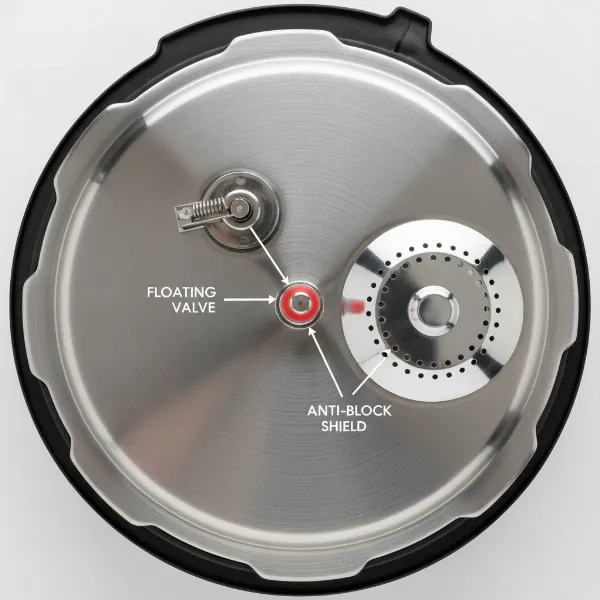 Underside of a pressure cooker lid, highlighting the floating valve and anti-block shield.
Why Deep Cleaning is Essential for Safety and Performance
The integrity of your pressure cooker hinges on the proper function of its safety mechanisms. Regular deep cleaning of the floating valve and anti-block shield directly impacts:
- Safety: Blockages in these parts can prevent proper pressure regulation, leading to potential steam leaks, an inability to build pressure, or in rare cases, an unsafe pressure buildup if the steam release is completely obstructed.
- Efficiency: A clean float valve ensures your cooker seals quickly and efficiently, saving cooking time and energy. A clear anti-block shield guarantees the steam release functions as intended, whether for natural or quick release.
- Longevity: Preventing the buildup of grime and food residue extends the lifespan of these critical components and, by extension, your entire appliance.
- Food Quality: Lingering food particles can harbor bacteria and impart unwanted odors or flavors to your next meal.
“These small components are the unsung heroes of pressure cooking. Their proper maintenance isn’t just about performance; it’s fundamentally about kitchen safety.” – Chef Elena Rodriguez, Culinary Safety Expert
Step-by-Step Guide: Deep Cleaning the Floating Valve
Cleaning the floating valve is straightforward once you know how to safely remove and reassemble it.
Gathering Your Cleaning Supplies
Before you begin, gather these simple items:
- Warm water
- Mild dish soap
- A soft cloth or sponge
- A small brush (an old toothbrush or a bottle brush works well)
Safely Removing the Floating Valve
- Ensure the cooker is cool and depressurized: Never attempt to clean a hot or pressurized unit.
- Open the lid: Flip the lid over so the underside is facing you.
- Locate the floating valve: It’s usually a small, silver or black pin protruding through a hole in the lid. On the inside of the lid, you’ll see a tiny silicone cap securing it.
- Remove the silicone cap: Gently pull off the small silicone cap from the inside of the lid. Store it safely so you don’t lose it.
- Remove the floating valve: Once the silicone cap is off, the floating valve pin should easily slide out from the top of the lid.
Thoroughly Cleaning the Valve and Silicone Cap
- Wash with warm, soapy water: Use warm water and a few drops of mild dish soap to clean both the metal (or plastic) float valve and its silicone cap.
- Scrub gently: Use your small brush to dislodge any food particles or grease that might be clinging to the valve stem or inside the silicone cap. Pay special attention to any crevices.
- Rinse thoroughly: Rinse both parts under clear running water to remove all soap residue.
- Inspect: Ensure both the valve and the cap are free of debris and able to move smoothly. The silicone cap should be pliable and free of cracks.
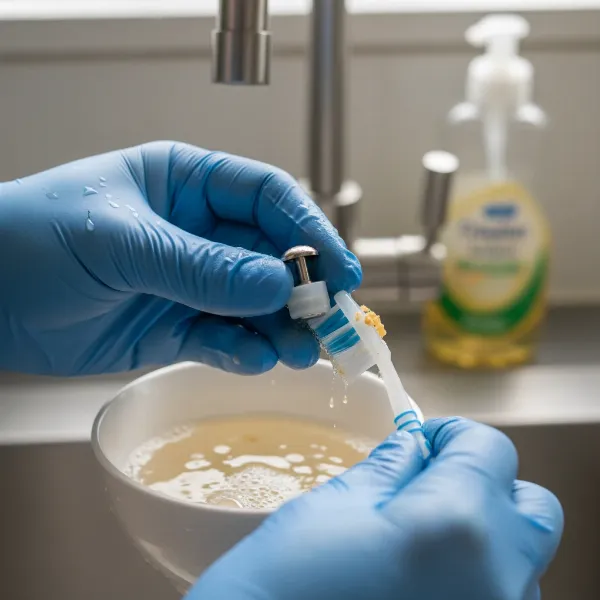 Hands cleaning a pressure cooker's floating valve and silicone cap with a brush and soapy water.
Reassembling the Floating Valve
- Insert the float valve: From the outside of the lid, insert the float valve back into its designated hole.
- Attach the silicone cap: From the inside of the lid, push the small silicone cap onto the end of the float valve, securing it in place.
- Test for movement: Gently push the float valve up and down with your finger to ensure it moves freely without sticking. This confirms it’s correctly reassembled and ready to function.
Step-by-Step Guide: Deep Cleaning the Anti-Block Shield
Cleaning the anti-block shield is equally important for maintaining a clear steam path.
Removing the Anti-Block Shield
- Locate the anti-block shield: This is typically a small, often oval-shaped, metal piece covering a vent on the underside of your lid, usually near the steam release valve.
- Gently pry or unscrew: Most anti-block shields can be gently pried off with your finger, or in some models, a quarter turn will allow them to be removed. Consult your pressure cooker’s manual if you’re unsure. Be careful not to bend or damage it.
Cleaning the Shield and Steam Release Vent
- Wash with warm, soapy water: Clean the anti-block shield thoroughly with warm, soapy water and your small brush. Ensure all perforations or mesh openings are clear of food residue.
- Clean the vent opening: Use the brush to clean the area of the lid where the anti-block shield was attached. Make sure the steam release pipe itself is clear and unobstructed.
- Rinse and dry: Rinse the shield completely and allow it to air dry or wipe it with a clean cloth.
Reattaching the Anti-Block Shield
- Align and secure: Place the anti-block shield back over its designated vent. It should snap firmly into place or be twisted to lock, depending on your model.
- Confirm stability: Gently tug on the shield to ensure it is securely attached and won’t dislodge during operation.
Important Tips for Pressure Cooker Maintenance
Beyond the floating valve and anti-block shield, a comprehensive approach to pressure cooker care will ensure its longevity and performance.
Frequency of Cleaning
While a general rinse after each use is good practice, a deep clean of the floating valve and anti-block shield should be performed regularly, ideally:
- After every few uses: Especially if cooking starchy foods, frothy soups, or anything prone to leaving residue.
- Monthly: As a minimum routine for average usage.
- Whenever issues arise: If your cooker struggles to reach pressure, leaks steam, or if you notice unusual odors, these parts should be the first to check and clean.
What to Look For (Wear and Tear)
During cleaning, take the opportunity to inspect these components:
- Float Valve: Ensure it’s straight, not bent, and the silicone cap is not torn, cracked, or hardened. Replace if damaged.
- Anti-Block Shield: Check for any deformities or blockages that cannot be cleaned.
- Sealing Ring (Gasket): While not the focus here, always inspect the main silicone sealing ring. It should be pliable and free of cracks or tears. Replace it every 6-12 months, or sooner if showing signs of wear or retaining strong odors.
General Lid Cleaning
Remember to clean other lid components regularly:
- Steam Release Valve/Handle: Remove and clean this according to your manual.
- Underside of the Lid: Wipe down the entire underside of the lid, removing any splashes or condensation.
- Sealing Ring: Remove the sealing ring and wash it with warm, soapy water, or even run it through the dishwasher (if safe for your model) to remove food odors.
Common Issues Prevented by Deep Cleaning
Understanding the problems that meticulous cleaning can avert can motivate consistent maintenance.
Valve Sticking or Not Sealing
A dirty float valve is the primary culprit behind a pressure cooker failing to seal. Food debris prevents the valve from rising fully, allowing steam to escape and pressure to build incorrectly. Regular cleaning ensures smooth operation, preventing frustrating cooking delays and undercooked meals.
Food Particle Buildup
Over time, tiny food particles can accumulate in the intricate parts of the lid, even in areas not directly in contact with food. This buildup can create unsanitary conditions and eventually lead to blockages or unpleasant smells. Deep cleaning eliminates these hidden reservoirs of grime.
Foul Odors
Silicone parts, like the float valve’s cap and the main sealing ring, are prone to absorbing food odors. While a deep clean won’t always eliminate ingrained smells from a well-used sealing ring (which often requires replacement), it significantly reduces the accumulation of new odors from food residue on all components.
Conclusion
The floating valve and anti-block shield are small but mighty guardians of your pressure cooker’s safety and efficiency. By dedicating a few minutes to their deep cleaning, you’re not just performing a chore; you’re investing in the longevity of your appliance, the safety of your kitchen, and the consistent quality of your meals. Make this essential maintenance a regular part of your cooking routine, and your pressure cooker will continue to be a reliable partner, delivering delicious results for years to come.
What other overlooked parts of kitchen appliances do you think deserve more attention in regular cleaning?
Frequently Asked Questions
How often should I deep clean my pressure cooker’s floating valve and anti-block shield?
It’s recommended to deep clean these components every 1-2 months, or more frequently if you often cook starchy, frothy, or sticky foods. Always perform a quick visual inspection after each use and clean immediately if you notice any food residue. Consistent cleaning prevents blockages and ensures optimal performance and safety.