Home canning is a wonderfully rewarding skill, transforming fresh produce into shelf-stable goodness and extending the bounty of your harvest. Imagine savoring homemade peach jam in winter or enjoying garden-fresh green beans long after the season ends. However, for newcomers and seasoned enthusiasts alike, the choice between pressure canning and water bath canning can sometimes be a source of confusion. Understanding the fundamental differences between these two vital preservation methods is not just about technique; it’s about ensuring the safety and quality of your cherished home-canned foods.
This comprehensive guide will demystify the world of canning, clarifying when and why to use each method, detailing the equipment you’ll need, and equipping you with the knowledge to preserve your favorite foods safely and effectively. We’ll explore the critical role of food acidity and temperature in preventing spoilage and deadly bacteria, empowering you to become a confident home canner.
What is Canning? A Brief Overview
Canning is a food preservation technique that involves processing food, typically in glass jars, to create an airtight seal and inhibit the growth of microorganisms. The primary goals are to destroy spoilage-causing bacteria, yeasts, and molds, deactivate enzymes that can degrade food quality, and establish a vacuum seal that keeps the food safe for extended periods. This heat-processing method allows you to store foods for one to five years, locking in flavor and nutrients.
The Historical Roots of Food Preservation
The desire to preserve food has been a driving force throughout human history. Ancient civilizations utilized natural elements, drying foods under the sun or freezing them in ice to extend their shelf life. While these early methods were effective for their time, modern food science has refined preservation techniques, making them safer and more reliable. Today’s canning methods, particularly water bath and pressure canning, represent the pinnacle of this evolution, offering precise control over the conditions needed to keep food safe.
Water Bath Canning: The Basics for High-Acid Foods
Water bath canning is a traditional method used for preserving foods that are naturally high in acid, or those to which acid has been added. This technique involves submerging sealed jars of food in boiling water (212°F or 100°C at sea level) for a specified duration. The intense heat from the boiling water is sufficient to destroy yeasts, molds, and certain bacteria that cause spoilage in high-acid environments. As the jars cool, a vacuum seal forms, preventing recontamination.
Suitable Foods for Water Bath Canning
High-acid foods are defined as those with a pH level of 4.6 or lower. These include a wide array of delicious items perfect for water bath processing:
- Fruits: Peaches, berries, apples, pears, cherries, apricots.
- Jams, Jellies, and Marmalades: Fruit spreads, preserves, fruit butters.
- Pickles and Relishes: Pickled cucumbers, green beans, dilly beans, sauerkraut.
- Tomato Products: Tomatoes often require added acid (lemon juice or vinegar) to ensure their pH falls below 4.6, as some modern varieties can be borderline.
|
Our Picks for the Best Pressure cooker in 2026
As an Amazon Associate I earn from qualifying purchases.
|
||
| Num | Product | Action |
|---|---|---|
| 1 | Instant Pot Duo 7-in-1 Electric Pressure Cooker, Slow Cooker, Rice, Steamer, Sauté, Yogurt Maker, Warmer & Sterilizer, Includes App With Over 800 Recipes, Stainless Steel, 6 Quart |

|
| 2 | Instant Pot Duo 7-in-1 Mini Electric Pressure Cooker, Slow Rice Cooker, Steamer, Sauté, Yogurt Maker, Warmer & Sterilizer, Includes Free App with over 1900 Recipes, Stainless Steel, 3 Quart |
|
| 3 | Stove Top 304 Stainless Steel Pressure Cooker, One-hand Easy Handle Lid, 3 PSI Setting, 6 Safety Systems, Dishwasher Safe, Olla de Presion, Works for All Cooktops (8.5 QT) |
|
| 4 | Our Place Dream Cooker - 6 Qt Ceramic Nonstick Multicooker & Pressure Cooker with Touchscreen Controls & Auto Steam Release - 4 Modes: Pressure Cook, Sauté/Sear, Slow Cook & Warm - Steam |
|
| 5 | Our Place Dream Cooker - 6 Qt Ceramic Nonstick Multicooker & Pressure Cooker with Touchscreen Controls & Auto Steam Release - 4 Modes: Pressure Cook, Sauté/Sear, Slow Cook & Warm - Spice |
|
| 6 | CHEF iQ Smart Pressure Cooker with WiFi and Built-in Scale - Easy-to-Use 10-in-1 Multicooker with 500+ Guided Recipes - Rice Cooker, Slow Cooker, Instant Meals for Foodies - 6 Quart - Family Size |
|
| 7 | COSORI Pressure Cooker 6QT, Stainless Steel, 9-in-1 Multi Cooker, 12 Safety Features, Ceramic Inner Pot, Rice, Slow Cook, Sous Vide, Saute, 1100W |
|
| 8 | Instant Pot Duo 7-in-1 Electric Pressure Cooker, Slow Cooker, Rice Cooker, Steamer, Sauté, Yogurt Maker, Warmer & Sterilizer, Includes App with Over 800 Recipes, Stainless Steel, 8 Quart |
|
| 9 | Our Place Dream Cooker - 6 Qt Ceramic Nonstick Multicooker & Pressure Cooker with Touchscreen Controls & Auto Steam Release - 4 Modes: Pressure Cook, Sauté/Sear, Slow Cook & Warm - Blue Salt |
|
| 10 | COMFEE' 9-in-1 Electric Pressure Cooker, 14 Presets Instant Multi Cooker Olla de Presion Non-Stick Pot Yogurt Maker Rice Cooker Slow Cooker Sauté Steamer 6 Quarts Black |
|
Essential Water Bath Canning Equipment
The beauty of water bath canning lies in its simplicity and relatively low equipment cost. You’ll need:
- Water Bath Canner: A large, deep pot with a fitted lid and a rack to keep jars off the bottom and allow water circulation.
- Canning Jars, Lids, and Bands: Standard glass canning jars with two-piece self-sealing lids.
- Basic Tools: A jar lifter (to safely move hot jars), a canning funnel (to fill jars cleanly), a bubble remover/headspace tool, and a kitchen timer.
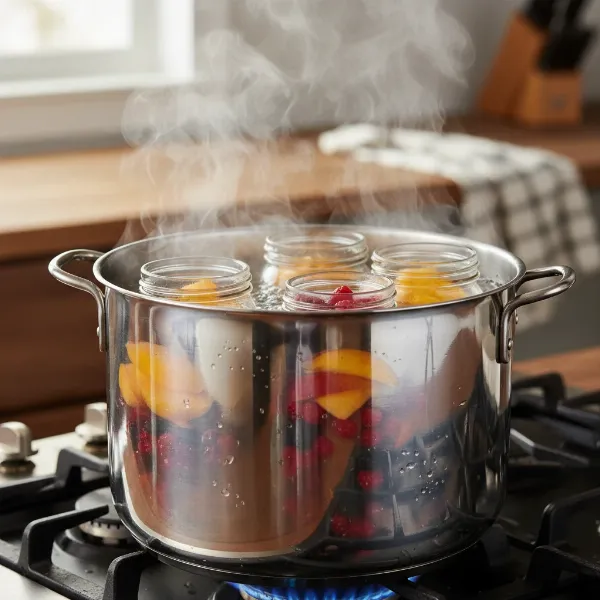 Glass jars of various fruits being processed in a large water bath canner on a stove.
Advantages and Limitations
Advantages:
- Ease of Use: Generally considered simpler and less intimidating for canning beginners.
- Lower Cost: Requires less specialized and expensive equipment compared to pressure canning.
- Accessibility: Most kitchens are already equipped with a large stockpot that can double as a water bath canner.
Limitations:
- Food Type Restriction: Can only be used for high-acid foods.
- Inability to Kill Botulism Spores: The boiling temperature is not high enough to destroy the spores of Clostridium botulinum, the bacteria responsible for deadly botulism, making it unsafe for low-acid foods.
Pressure Canning: Essential for Low-Acid Foods
Pressure canning is a non-negotiable method for safely preserving low-acid foods. These foods, which have a pH higher than 4.6, lack the natural acidity to prevent the growth of Clostridium botulinum spores at boiling water temperatures. To eliminate this risk, a pressure canner creates an environment of high steam pressure, elevating the internal temperature to 240°F to 250°F (116°C to 121°C). These higher temperatures are crucial for destroying botulism spores, which can survive boiling water and thrive in oxygen-free, low-acid environments like sealed canning jars. The United States Department of Agriculture (USDA) endorses pressure canning as the only safe method for low-acid foods.
Suitable Foods for Pressure Canning
Any food with a pH above 4.6 must be processed in a pressure canner for safety. This broad category includes:
- Vegetables: Green beans, corn, potatoes, carrots, peas, spinach, okra, asparagus, most root vegetables.
- Meats: Beef, pork, venison, lamb.
- Poultry: Chicken, turkey.
- Seafood: Fish, shellfish.
- Soups and Stews: Any combination recipe containing low-acid ingredients.
- Dried Beans: Rehydrated dried beans.
Pressure Canner Equipment
A pressure canner is a specialized piece of equipment distinct from a pressure cooker. While both use pressure, canners are designed to hold specific, consistent pressure for extended periods required for sterilization, and typically have larger capacities and more robust safety features. You’ll need:
- Pressure Canner: A heavy-duty pot with a robust, locking lid, a vent pipe, and a method for indicating and controlling pressure (either a dial gauge or weighted gauge).
- Canning Jars, Lids, and Bands: The same standard jars and lids used in water bath canning.
- Basic Tools: Jar lifter, canning funnel, bubble remover/headspace tool, and a kitchen timer.
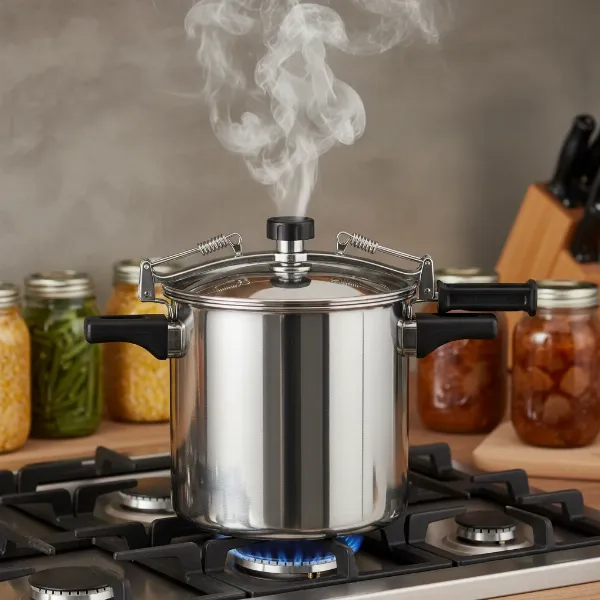 Modern pressure canner safely processing jars of vegetables and meat, indicating high temperature.
Advantages and Limitations
Advantages:
- Absolute Safety for Low-Acid Foods: It is the only safe method for preserving vegetables, meats, and other low-acid items.
- Versatility: Can be used to process both low-acid and high-acid foods (though water bathing is often simpler for high-acid).
- Efficiency for Certain Foods: Often results in shorter processing times compared to water bathing for some foods, even if they could be water-bathed. For example, canning applesauce in a pressure canner can be faster.
Limitations:
- Complexity and Learning Curve: More steps and careful monitoring are required, which can be intimidating for beginners.
- Higher Equipment Cost: Pressure canners are a more significant upfront investment.
- Maintenance: Dial gauges require annual testing to ensure accuracy.
Water Bath vs. Pressure Canning: A Direct Comparison
Understanding the key differences side-by-side can help solidify your canning knowledge and guide your preservation choices.
| Feature | Water Bath Canning | Pressure Canning |
|---|---|---|
| Heat Source | Boiling water (ambient pressure) | Steam under pressure |
| Maximum Temperature | 212°F (100°C) at sea level | 240°F – 250°F (116°C – 121°C) |
| Food Acidity | High-acid (pH 4.6 or lower) | Low-acid (pH higher than 4.6) |
| Primary Safety Target | Molds, yeasts, enzymes, some bacteria | Clostridium botulinum spores |
| Typical Foods | Fruits, jams, pickles, acidified tomatoes | Vegetables, meats, poultry, seafood, soups |
| Equipment Cost | Lower | Higher |
| Complexity | Simpler, beginner-friendly | More complex, requires monitoring and practice |
| Altitude Adjustment | Minor adjustments to processing time for extreme altitudes (generally not critical for safety) | Critical adjustments to PSI for safe processing |
Essential Safety Guidelines for Home Canning
Safety is paramount in home canning. Always adhere to these guidelines:
- Use Tested Recipes: Only use recipes from reliable sources such as the USDA or the National Center for Home Food Preservation (NCHFP). These recipes are scientifically tested to ensure safe processing times and methods.
- Altitude Adjustments: Atmospheric pressure decreases at higher altitudes, causing water to boil at lower temperatures. This is especially critical for pressure canning, where higher pounds per square inch (PSI) are required to reach the necessary sterilizing temperatures. For weighted-gauge canners, you might increase the weight from 10 to 15 PSI above 1,000 feet. For dial-gauge canners, consult a chart for specific PSI adjustments based on your altitude.
- Proper Headspace: Leave the recommended amount of space between the food and the jar lid (headspace) to allow for proper sealing and prevent food from boiling out.
- Check Seals: After jars cool completely (12-24 hours), check that the lids are concave and don’t flex when pressed. Remove bands for storage.
- Storage: Store sealed jars in a cool, dark, dry place.
- Discard Safely: Never taste or consume food from jars that are unsealed, have a bulging lid, show signs of mold, or have an unusual odor or appearance.
Common Canning Misconceptions and Troubleshooting
Despite the scientific basis of canning, certain myths and common issues persist.
“Many people mistakenly believe that if their grandmother water-bathed green beans without issues, it’s safe. However, modern food science and increased awareness of Clostridium botulinum risks confirm that low-acid foods must be pressure canned. It’s a risk not worth taking with your family’s health.” – Melissa Norris, Homesteading Expert and Author
- “A pressure cooker is the same as a pressure canner.” This is false. Pressure cookers are designed for cooking food quickly, while pressure canners are built to hold specific, consistent pressure for extended periods required for sterilization, and typically have larger capacities and more robust safety features.
- Water Bathing Low-Acid Foods for Longer: Boiling low-acid foods for an extended time in a water bath does not make them safe. The temperature simply never reaches the point necessary to kill botulism spores.
- Inverting Jars After Processing: Turning jars upside down after processing is an outdated and unsafe practice that can interfere with proper sealing and contaminate the lid. Always allow jars to cool upright.
- Canning Certain Foods: Some foods, like broccoli, are not recommended for canning due to texture issues (they become mushy) and a lack of scientifically tested safe processing times. Consider freezing or dehydrating these instead.
Choosing the Right Canning Method for Your Kitchen
The choice between water bath and pressure canning ultimately depends on the types of foods you wish to preserve. If your passion lies with fruits, jams, and pickles, a water bath canner will be your primary tool. However, if you envision preserving savory vegetables, meats, or hearty stews, a pressure canner is an indispensable and essential investment for safety. Consider your budget, storage space, and comfort level with the equipment as you embark on your canning journey.
Conclusion
The world of home canning offers immense satisfaction, allowing you to control ingredients, reduce waste, and enjoy wholesome food year-round. By understanding the critical distinction between pressure canning and water bath canning—a distinction rooted in food acidity and the temperatures required to ensure safety—you can confidently preserve a wide variety of foods. Always prioritize safety by following tested recipes and guidelines, especially regarding altitude adjustments and equipment maintenance. With the right knowledge and tools, you can master these preservation techniques and provide delicious, safe, home-canned provisions for your family.
Are you ready to stock your pantry with the taste of homemade goodness?
Frequently Asked Questions
What is the primary factor determining whether to water bath or pressure can?
The primary factor is the food’s acidity, measured by its pH level. High-acid foods (pH 4.6 or lower) can be safely water bath canned, while low-acid foods (pH higher than 4.6) require the higher temperatures of pressure canning to destroy dangerous botulism spores.
Can I use a regular stockpot for water bath canning?
Yes, a large stockpot can be used for water bath canning as long as it’s deep enough for water to cover your jars by at least an inch and allows for a rack at the bottom to prevent direct contact with heat.
What happens if I water bath can low-acid foods?
Water bathing low-acid foods is unsafe because the boiling temperature (212°F/100°C) is not high enough to kill Clostridium botulinum spores, which can produce a deadly toxin in sealed, oxygen-free environments.
Do I need to add acid to tomatoes before canning?
It is strongly recommended to add acid (lemon juice, vinegar, or citric acid) to tomatoes before both water bath and pressure canning. This is because some modern tomato varieties have a pH level that can be borderline, making them potentially unsafe without the added acidity.
How does altitude affect canning?
At higher altitudes, water boils at lower temperatures. For water bath canning, this may require slight increases in processing time. For pressure canning, it’s crucial to increase the pressure (PSI) to reach the necessary sterilizing temperatures, as specified by altitude charts for your type of canner.