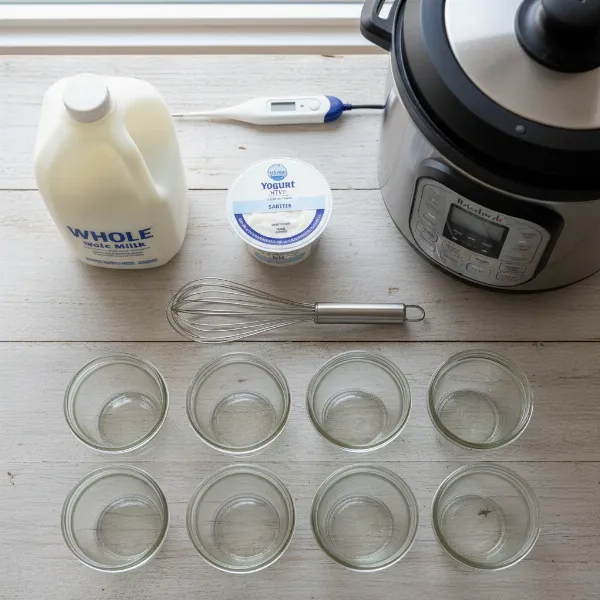
In today’s fast-paced world, kitchen appliances promise to simplify our lives, making cooking quicker and more convenient. Among the most popular contenders for a spot on your countertop are the Instant Pot and the humble rice cooker. Both boast a “set it and forget it” appeal, but when it comes to preparing meals, are they interchangeable? Do you really need both, or can one gadget masterfully handle all your culinary demands? Let’s dive deep into the functions, advantages, and limitations of each to help you decide which appliance truly belongs in your kitchen.
What is an Instant Pot?
The Instant Pot is far more than just a single appliance; it’s a multi-functional kitchen powerhouse that has revolutionized how many home cooks approach meal preparation. At its core, it’s an electric pressure cooker, but its capabilities extend far beyond that.
More Than Just a Pressure Cooker: Multi-cooker Functions
|
Our Picks for the Best Pressure cooker in 2026
As an Amazon Associate I earn from qualifying purchases.
|
||
| Num | Product | Action |
|---|---|---|
| 1 | Our Place Dream Cooker - 6 Qt Ceramic Nonstick Multicooker & Pressure Cooker with Touchscreen Controls & Auto Steam Release - 4 Modes: Pressure Cook, Sauté/Sear, Slow Cook & Warm - Steam |

|
| 2 | Our Place Dream Cooker - 6 Qt Ceramic Nonstick Multicooker & Pressure Cooker with Touchscreen Controls & Auto Steam Release - 4 Modes: Pressure Cook, Sauté/Sear, Slow Cook & Warm - Spice |
|
| 3 | Instant Pot Duo 7-in-1 Electric Pressure Cooker, Slow Cooker, Rice Cooker, Steamer, Sauté, Yogurt Maker, Warmer & Sterilizer, Includes App with Over 800 Recipes, Stainless Steel, 8 Quart |
|
| 4 | Our Place Dream Cooker - 6 Qt Ceramic Nonstick Multicooker & Pressure Cooker with Touchscreen Controls & Auto Steam Release - 4 Modes: Pressure Cook, Sauté/Sear, Slow Cook & Warm - Blue Salt |
|
| 5 | COSORI Pressure Cooker 6QT, Stainless Steel, 9-in-1 Multi Cooker, 12 Safety Features, Ceramic Inner Pot, Rice, Slow Cook, Sous Vide, Saute, 1100W |
|
| 6 | Instant Pot Duo 7-in-1 Mini Electric Pressure Cooker, Slow Rice Cooker, Steamer, Sauté, Yogurt Maker, Warmer & Sterilizer, Includes Free App with over 1900 Recipes, Stainless Steel, 3 Quart |
|
| 7 | Stove Top 304 Stainless Steel Pressure Cooker, One-hand Easy Handle Lid, 3 PSI Setting, 6 Safety Systems, Dishwasher Safe, Olla de Presion, Works for All Cooktops (8.5 QT) |
|
| 8 | Instant Pot Duo 7-in-1 Electric Pressure Cooker, Slow Cooker, Rice, Steamer, Sauté, Yogurt Maker, Warmer & Sterilizer, Includes App With Over 800 Recipes, Stainless Steel, 6 Quart |
|
| 9 | CHEF iQ Smart Pressure Cooker with WiFi and Built-in Scale - Easy-to-Use 10-in-1 Multicooker with 500+ Guided Recipes - Rice Cooker, Slow Cooker, Instant Meals for Foodies - 6 Quart - Family Size |
|
| 10 | COMFEE' 9-in-1 Electric Pressure Cooker, 14 Presets Instant Multi Cooker Olla de Presion Non-Stick Pot Yogurt Maker Rice Cooker Slow Cooker Sauté Steamer 6 Quarts Black |
|
An Instant Pot combines the functionalities of several kitchen appliances into one sleek unit. Depending on the model, it can act as a pressure cooker, slow cooker, rice cooker, steamer, sauté pan, yogurt maker, and food warmer. Some advanced versions even include air frying or sous vide capabilities. This versatility is its main draw, allowing you to prepare a wide array of dishes from soups and stews to perfectly cooked grains and even desserts, all within a single pot.
Key Features and Benefits
The primary advantage of an Instant Pot is its speed, especially when utilizing its pressure cooking function. By creating a sealed, high-pressure environment, it drastically reduces cooking times for many foods compared to traditional methods. This sealed environment also helps retain nutrients and flavors, resulting in delicious and healthy meals. It’s designed with numerous safety features, a significant improvement over older, potentially dangerous stovetop pressure cookers. For those with limited kitchen space, an Instant Pot can be a game-changer, replacing multiple gadgets and decluttering countertops. Its one-touch LED control panels are generally user-friendly, simplifying complex recipes.
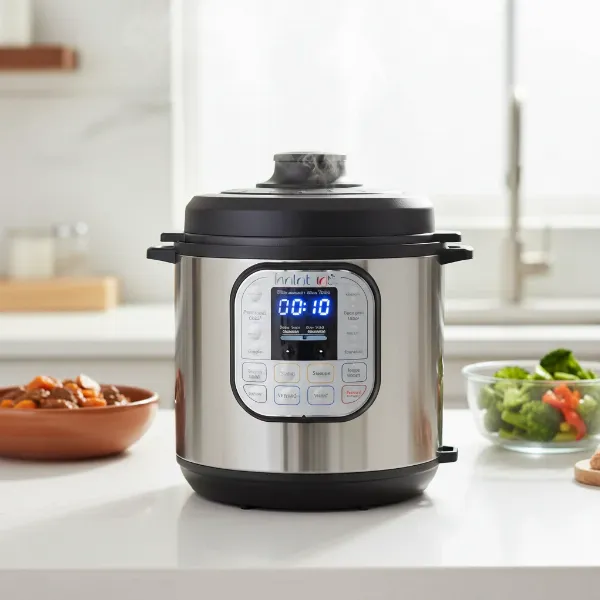 Instant Pot on a modern kitchen counter illustrating its various multi-cooker functions for diverse meals.
What is a Rice Cooker?
While the Instant Pot aims for versatility, the rice cooker dedicates itself to one specific task: cooking rice. This specialized focus is precisely where its strength lies, ensuring consistent, perfectly cooked grains every time.
The Dedicated Rice Master
A rice cooker is an automated appliance engineered to boil and steam rice to perfection. It employs an electric heating element, sensors, and a thermostat to precisely monitor and regulate temperature throughout the cooking process. As water heats and boils, it creates steam which is then absorbed by the grains. Once the rice has absorbed all the water, the cooker often switches to a “keep warm” setting, maintaining an ideal temperature without overcooking or drying out the rice.
Key Features and Benefits
The standout benefit of a dedicated rice cooker is its unwavering consistency. You simply add your desired ratio of rice and water, press a button, and trust that you’ll get fluffy, evenly cooked rice without any guesswork or babysitting. This precision prevents common issues like scorching, sticking, or undercooked grains. Many modern rice cookers offer specialized settings for different types of rice, such as white, brown, sushi, or mixed grain, fine-tuning the cooking process for optimal texture and flavor. Beyond rice, some models can also steam vegetables or even cook porridge and cake. Their simplicity of operation and ease of cleaning often make them a go-to for daily rice preparation.
Instant Pot’s Rice Cooking Capabilities
Given its multi-functional nature, the Instant Pot includes a “Rice” program, leading many to wonder if it can fully replace a dedicated rice cooker. The answer, as with many things in the kitchen, is nuanced.
How Well Does It Cook Rice?
An Instant Pot can indeed cook rice, and for many users, the results are perfectly satisfactory. Its pressure cooking method significantly speeds up the active cooking time for rice. For instance, white rice might cook in as little as 3-6 minutes under pressure. However, this doesn’t account for the time it takes for the pot to come to pressure (5-10 minutes) and then naturally release pressure, which can add substantial time to the overall process. While some users report “fluffy and flavorful” results, others find the texture can be less consistent, less fluffy, or even lacking the aromatic flavor compared to rice made in a dedicated rice cooker. The sealed environment of an Instant Pot creates a different texture than the gentle steaming of a traditional rice cooker. For smaller batches, some experts suggest stovetop cooking might even yield better results than an Instant Pot.
Tips for Cooking Rice in an Instant Pot
Achieving optimal rice in an Instant Pot often requires a bit of experimentation to find the perfect water-to-rice ratio for your specific type of rice and desired texture. A common ratio is 1:1 for many white rice varieties, cooked on high pressure for 3-5 minutes, followed by a natural pressure release. Rinsing the rice thoroughly before cooking is always recommended to remove excess starch and prevent clumping. You can also enhance flavor by using broth instead of water or adding a pat of butter or a drizzle of olive oil.
Rice Cooker’s Superiority for Perfect Rice
For those who view rice as a staple or who appreciate precise texture and flavor, the dedicated rice cooker often emerges as the undisputed champion.
Why Dedicated is Often Better
Rice cookers are purpose-built for one job, and they excel at it. Their design focuses on precisely regulating temperature and steam to produce consistently perfect grains. This careful temperature control helps the rice retain its aromatic flavor, resulting in tastier rice. The gentle steaming process also contributes to a notably softer texture compared to pressure-cooked rice. Unlike an Instant Pot, which might offer inconsistent results for rice across different models, a dedicated rice cooker provides reliability, handling various grain types—from sticky sushi rice to fluffy jasmine—with specialized settings that optimize each batch.
Different Types of Rice and Settings
Modern rice cookers come equipped with a variety of preset functions tailored to specific rice types. These can include settings for:
- White Rice: For consistently fluffy long-grain, medium-grain, or short-grain white rice.
- Brown Rice: Uses a longer cooking cycle and often a pre-soak phase to fully hydrate the tougher grains.
- Sushi Rice: Aims for the ideal sticky yet separated texture crucial for sushi preparation.
- Mixed Grain/Porridge: Accommodates other grains or transforms rice into creamy porridge.
- Quick Cook: Speeds up the process when you’re in a hurry, though sometimes at a slight compromise to texture.
These specialized programs ensure that no matter your preference, your rice comes out exactly how it should, every single time.
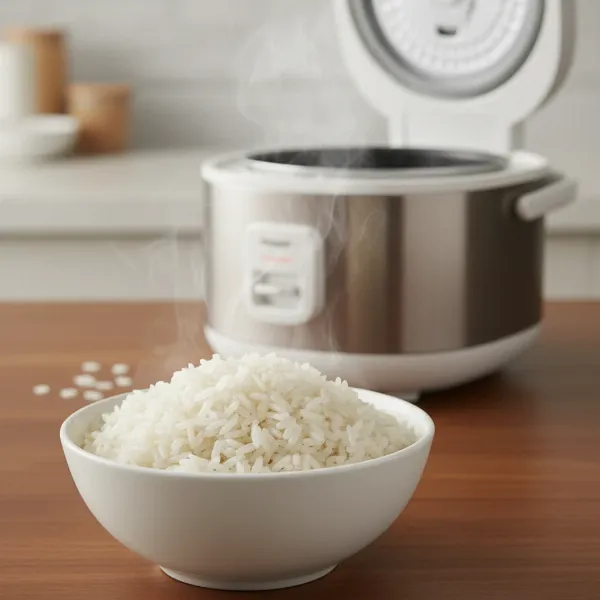 A close-up of perfectly cooked, fluffy white rice in a ceramic bowl, with a modern rice cooker in the background.
Beyond Rice: Versatility vs. Specialization
The true divergence between these two appliances lies in their scope beyond cooking rice.
Instant Pot’s Multi-functional Advantage
The Instant Pot shines brightest in its remarkable versatility. It’s truly a multi-tasker that can tackle a vast array of cooking methods and recipes.
- Pressure Cooking: Ideal for quickly preparing tough cuts of meat, stews, chilis, and even baked potatoes, dramatically cutting down on cooking time.
- Slow Cooking: Perfect for tenderizing ingredients over several hours, great for comfort food classics.
- Sautéing: Allows you to brown meats and vegetables directly in the pot before pressure cooking, adding depth of flavor and reducing the need for extra pans.
- Steaming: Efficiently steams vegetables, fish, and dumplings.
- Yogurt Maker: For homemade yogurt with precise temperature control.
- Sterilizer: Useful for baby bottles and canning jars.
This breadth of functionality makes the Instant Pot an invaluable tool for preparing diverse meals with minimal effort and cleanup. It’s particularly well-suited for one-pot meals, making it a favorite for busy individuals and families.
Rice Cooker’s Limited Scope
While some advanced rice cookers have expanded their capabilities to include steaming baskets or settings for other grains, their primary function remains rice. While some creative cooks use them for tasks like polenta or lentil bolognese, their design is optimized for rice cooking. This specialization means they occupy countertop space for a singular, albeit important, purpose. If your cooking needs rarely extend beyond perfectly cooked rice and perhaps a few steamed vegetables, a rice cooker might be sufficient. However, for a broader culinary repertoire, its limitations become apparent.
Comparing Key Aspects: Instant Pot vs. Rice Cooker
To make an informed decision, let’s break down the key differentiating factors between these two popular kitchen companions.
| Feature | Instant Pot | Rice Cooker |
|---|---|---|
| Versatility | High (Pressure cook, slow cook, sauté, steam, yogurt, etc.) | Low (Primarily rice, some steaming/porridge) |
| Rice Quality | Good, but can be inconsistent; texture may vary from traditional rice cooker | Excellent, consistently perfect, fluffy, aromatic rice |
| Speed (Rice) | Fast cooking under pressure (3-6 min white rice), but total time includes pressure build-up/release | Moderate (20-50 min), consistent. Often faster total time than Instant Pot for rice. |
| Cost | Generally more expensive ($89 – $200+ for advanced models) | More affordable ($16 – $200 for advanced models) |
| Counter Space | Can be cumbersome; replaces multiple appliances, thus potentially saving space overall | Varies; smaller footprint for basic models; dedicated space for one function |
| Ease of Cleaning | Generally easy, but may have more parts to clean due to multi-functionality | Very easy, often just an inner pot and lid |
| Learning Curve | Moderate (understanding pressure settings, different functions) | Low (simple operation) |
| Energy Use | Higher wattage, shorter active cooking time; may be more efficient for multiple functions | Lower wattage, longer cooking time; some suggest less overall energy for just rice |
Do You Need Both? Making the Right Decision
The ultimate decision boils down to your personal cooking habits, budget, and kitchen space. There’s no one-size-fits-all answer, but understanding your priorities will guide you.
When an Instant Pot is Enough
If you prioritize versatility, have limited kitchen space, or are looking to consolidate appliances, an Instant Pot is likely your best bet. It can capably handle your rice cooking needs alongside preparing a myriad of other dishes like soups, stews, meats, and even homemade yogurt. If you’re “not so fussy” about getting absolutely perfect rice every single time and appreciate the convenience of an all-in-one gadget, the Instant Pot offers excellent value. It’s a fantastic choice for those who want to experiment with various cooking methods without investing in multiple appliances.
When a Rice Cooker is a Must-Have
For rice enthusiasts, families who consume rice daily, or those from cultures where rice is a central staple, a dedicated rice cooker is a non-negotiable kitchen essential. If you demand consistent, perfectly textured, and aromatic rice every single time, and you’re willing to dedicate counter space to this specialized appliance, then a rice cooker is the superior choice. It offers unparalleled precision for various rice types and often includes a “keep warm” function that maintains ideal rice quality for extended periods, far surpassing the Instant Pot’s rice-keeping capabilities.
When Owning Both Makes Sense
Surprisingly, for many home cooks, owning both an Instant Pot and a rice cooker isn’t redundant; it’s a strategic advantage. Consider having both if:
- You frequently cook rice but also prepare diverse, multi-component meals.
- You often need to cook rice as a side dish while your Instant Pot is busy preparing a main course.
- You appreciate the convenience and speed of the Instant Pot for pressure cooking but are also a stickler for consistently perfect rice.
- You have ample kitchen space and your budget allows for both investments.
“If you have the room and the budget, there’s no need to choose!” In these scenarios, the two appliances complement each other, offering maximum flexibility and efficiency in the kitchen.
Expert Tips for Maximizing Your Choice
Whether you choose one or both, a few expert insights can elevate your cooking experience.
For Instant Pot Owners
- Experiment with Ratios: Don’t be afraid to adjust the water-to-rice ratio slightly to find what works best for your preferred rice texture and Instant Pot model.
- Natural Release is Key: For fluffier rice, allow a natural pressure release (NPR) for at least 10-15 minutes, or even a full NPR, instead of a quick release, as this helps the grains steam perfectly.
- Utilize All Functions: Don’t just use it for pressure cooking. Explore its slow cook, sauté, and steam functions to get the most out of your investment.
For Rice Cooker Enthusiasts
- Rinse Your Rice: Always rinse your rice thoroughly until the water runs clear to remove excess starch and prevent sticky, gummy results.
- Measure Precisely: Use the measuring cup provided with your rice cooker for accurate water-to-rice ratios, as these cups are often smaller than standard U.S. measuring cups.
- Explore Settings: Don’t stick to just the white rice setting. Experiment with brown rice, sushi rice, or porridge settings to discover new possibilities.
Common Misconceptions & Clarifications
One common misconception is that the Instant Pot is always faster for everything. While its active pressure cooking time is short, the total time for pressure build-up and release can make dishes, including rice, take longer than expected. Another myth is that Instant Pot rice is inherently inferior; while a dedicated rice cooker often wins on consistency and texture for connoisseurs, an Instant Pot can still produce very good rice for the average user with the right technique.
Conclusion
The debate between the Instant Pot and the rice cooker isn’t about one being definitively “better” than the other, but rather about which appliance aligns more closely with your culinary needs and lifestyle. The Instant Pot is a marvel of multi-functionality, a versatile workhorse capable of simplifying a vast range of recipes and saving precious counter space. However, for those who seek uncompromising perfection in every grain of rice, the dedicated rice cooker stands as the master, delivering consistent, perfectly textured results that are hard to beat.
Ultimately, your kitchen should reflect your cooking style. If you crave diverse meals and appreciate efficiency, an Instant Pot might be your all-in-one solution. But if perfectly fluffy, aromatic rice is a daily ritual, a specialized rice cooker might be the cherished gadget you reach for first. For many, the ideal kitchen features both, allowing for the best of both worlds. Which appliance will find its permanent home on your countertop?
Frequently Asked Questions
Can an Instant Pot truly replace a traditional rice cooker?
An Instant Pot can cook rice adequately for most everyday needs, offering acceptable results for many users. However, for consistently perfect texture, superior aroma, and specialized rice types, a dedicated rice cooker often outperforms the Instant Pot.
Is rice cooked in an Instant Pot as good as rice from a Zojirushi or high-end rice cooker?
While an Instant Pot makes good rice, high-end rice cookers like Zojirushi are specifically engineered for optimal rice cooking, often producing a more consistent, superior texture and flavor that serious rice enthusiasts and those from rice-centric cultures typically prefer.
Which appliance is more energy-efficient for cooking rice?
While Instant Pots have higher wattage and shorter active cooking times, dedicated rice cookers sometimes use less energy overall for cooking rice, partly because they don’t have the energy consumption required for pressure build-up.
How do cooking times for rice compare between the two?
The active pressure cooking time for rice in an Instant Pot is very short (e.g., 3-6 minutes), but the total time including pressure build-up and natural release can make it comparable to, or sometimes longer than, the 20-50 minutes a rice cooker takes for a batch.
What are the main downsides of cooking rice in an Instant Pot?
Potential downsides include inconsistent results across different Instant Pot models, a learning curve to find the right water ratios, and the fact that the texture might not be as fluffy or aromatic as rice produced by a dedicated rice cooker. It can also be harder to clean.