As an essential kitchen appliance, your pressure cooker brings efficiency and delicious meals to your table. But its bulky size can quickly become a challenge, especially in smaller kitchens where every inch of counter and cabinet space is precious. Finding a smart, space-saving storage solution for your pressure cooker not only helps maintain a clutter-free kitchen but also protects your valuable appliance, ensuring it’s ready for your next culinary adventure. We all want a kitchen that feels spacious and organized, a place where cooking is a joy, not a battle against clutter.
Why Smart Pressure Cooker Storage Matters
Effective storage is more than just tucking away an appliance; it’s about optimizing your kitchen’s functionality and longevity of your tools. A well-thought-out storage plan for your pressure cooker can transform your kitchen experience, turning potential frustration into seamless preparation. It extends beyond simply tidying up, impacting your daily routine in significant ways.
Maximizing Kitchen Space
|
Our Picks for the Best Pressure cooker in 2026
As an Amazon Associate I earn from qualifying purchases.
|
||
| Num | Product | Action |
|---|---|---|
| 1 | COSORI Pressure Cooker 6QT, Stainless Steel, 9-in-1 Multi Cooker, 12 Safety Features, Ceramic Inner Pot, Rice, Slow Cook, Sous Vide, Saute, 1100W |

|
| 2 | COMFEE' 9-in-1 Electric Pressure Cooker, 14 Presets Instant Multi Cooker Olla de Presion Non-Stick Pot Yogurt Maker Rice Cooker Slow Cooker Sauté Steamer 6 Quarts Black |
|
| 3 | Our Place Dream Cooker - 6 Qt Ceramic Nonstick Multicooker & Pressure Cooker with Touchscreen Controls & Auto Steam Release - 4 Modes: Pressure Cook, Sauté/Sear, Slow Cook & Warm - Steam |
|
| 4 | CHEF iQ Smart Pressure Cooker with WiFi and Built-in Scale - Easy-to-Use 10-in-1 Multicooker with 500+ Guided Recipes - Rice Cooker, Slow Cooker, Instant Meals for Foodies - 6 Quart - Family Size |
|
| 5 | Our Place Dream Cooker - 6 Qt Ceramic Nonstick Multicooker & Pressure Cooker with Touchscreen Controls & Auto Steam Release - 4 Modes: Pressure Cook, Sauté/Sear, Slow Cook & Warm - Blue Salt |
|
| 6 | Our Place Dream Cooker - 6 Qt Ceramic Nonstick Multicooker & Pressure Cooker with Touchscreen Controls & Auto Steam Release - 4 Modes: Pressure Cook, Sauté/Sear, Slow Cook & Warm - Spice |
|
| 7 | Instant Pot Duo 7-in-1 Mini Electric Pressure Cooker, Slow Rice Cooker, Steamer, Sauté, Yogurt Maker, Warmer & Sterilizer, Includes Free App with over 1900 Recipes, Stainless Steel, 3 Quart |
|
| 8 | Stove Top 304 Stainless Steel Pressure Cooker, One-hand Easy Handle Lid, 3 PSI Setting, 6 Safety Systems, Dishwasher Safe, Olla de Presion, Works for All Cooktops (8.5 QT) |
|
| 9 | Instant Pot Duo 7-in-1 Electric Pressure Cooker, Slow Cooker, Rice, Steamer, Sauté, Yogurt Maker, Warmer & Sterilizer, Includes App With Over 800 Recipes, Stainless Steel, 6 Quart |
|
| 10 | Instant Pot Duo 7-in-1 Electric Pressure Cooker, Slow Cooker, Rice Cooker, Steamer, Sauté, Yogurt Maker, Warmer & Sterilizer, Includes App with Over 800 Recipes, Stainless Steel, 8 Quart |
|
In many homes, kitchen counter space is a luxury. A pressure cooker, by its nature, demands a considerable footprint. Smart storage solutions reclaim this valuable real estate, making your kitchen feel larger and more functional. It allows you to utilize every available surface for prep work or other appliances, rather than having your pressure cooker permanently claiming a spot.
Protecting Your Investment
Pressure cookers are significant kitchen investments. Improper storage, such as leaving it exposed to dust, moisture, or accidental knocks, can lead to damage over time. Protecting your appliance from everyday wear and tear ensures it remains in top condition, extending its lifespan and preserving its cooking efficiency. Proper care translates directly into continued performance.
Ensuring Easy Access
While saving space is key, convenience is equally important. A good storage solution means your pressure cooker is easily accessible when needed, yet neatly out of sight when not in use. There’s no point in saving space if retrieving your appliance becomes a cumbersome chore. The goal is a balance between invisibility and readiness.
Assessing Your Pressure Cooker’s Components
Before diving into specific storage ideas, take a moment to understand all the parts of your pressure cooker. Each component—from the main pot to the smallest accessory—has unique storage needs and can contribute to or alleviate your space challenges. Identifying these parts helps you create a comprehensive and efficient storage strategy.
Main Pot and Lid Considerations
The main pot and lid are the largest and most critical components. Many pressure cooker lids can be inverted and placed on top of the main pot for storage, which helps save vertical space and protects the interior. This technique also allows for better air circulation inside the pot, preventing stale odors. For models with non-detachable lids or unique shapes, you might need a dedicated spot.
Inner Pot, Accessories, and Cords
Don’t forget the inner pot, steamer baskets, trivets, sealing rings, measuring cups, and power cords. These smaller items can easily get lost or create clutter if not organized properly. The inner pot often nests perfectly inside the main pressure cooker, while accessories can be grouped together. The power cord should be neatly wrapped and secured to prevent tangles and damage.
Creative Storage Locations for Your Pressure Cooker
Finding the perfect spot for your pressure cooker often requires a bit of creativity and an understanding of your kitchen’s existing layout. Different homes offer different possibilities, from hidden nooks to repurposed spaces. Consider these options to find the best fit for your home and lifestyle.
Inside Kitchen Cabinets: Maximizing Vertical Space
Cabinets are a natural home for kitchen appliances. For pressure cookers, aim for larger, deeper lower cabinets, ideally near where you do most of your cooking. To maximize vertical space, use pull-out shelves or shelf risers. If possible, store the inner pot inside the main cooker and invert the lid on top, allowing the gasket to breathe while minimizing height. This configuration can often fit snugly into an unused corner or a cabinet below a countertop.
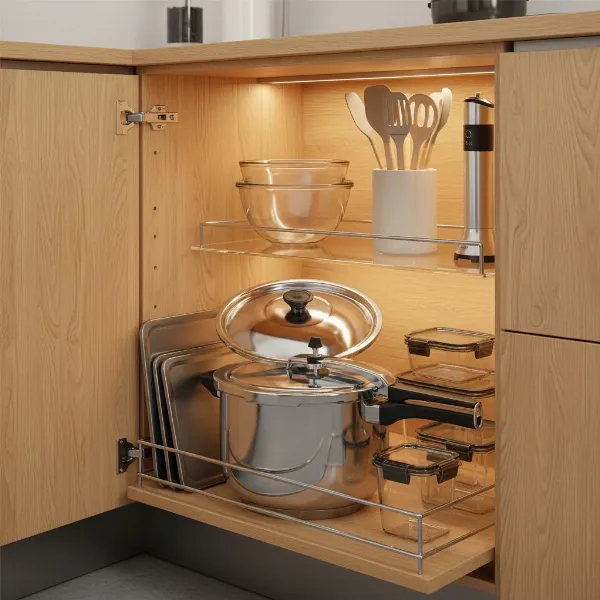 Pressure cooker stored in a deep kitchen cabinet with pull-out shelves, lid inverted.
Pantry Perfection: Utilizing Shelves and Baskets
If you have a pantry, it can be an excellent location, especially for larger pressure cookers or those used less frequently. Utilize sturdy, deep shelves to hold the main unit. For accessories, consider clear storage bins or baskets to keep them together and easily visible. Labeling these containers can save time and frustration. A well-organized pantry ensures everything has a designated place.
Countertop Strategies: When to Keep it Out
For those who use their pressure cooker daily, keeping it on the countertop might be the most practical solution. To minimize visual clutter, designate a specific corner or less-used section of your counter. Consider an appliance garage or a stylish cover to hide it when not in use. Some users also place their pressure cooker on a sturdy, dedicated rolling cart that can be moved out of the way when extra counter space is needed.
Alternative Spots: Under the Sink, Utility Closets, or Garage
When kitchen space is extremely limited, unconventional spots can be lifesavers. An under-the-sink cabinet can work if it’s dry and provides enough clearance, though ensure no cleaning chemicals are stored near it. Utility closets or even a clean, dry section of the garage or basement can offer viable long-term storage for infrequently used pressure cookers. If storing in a garage or basement, consider using the original box or a protective tote to shield it from dust and potential damage.
Space-Saving Techniques for Pressure Cooker Storage
Beyond just finding a location, employing clever techniques can dramatically reduce the space your pressure cooker occupies. These methods focus on optimizing the form factor of the appliance and its accessories. Thoughtful arrangement can make a big difference in a compact kitchen.
Stacking and Nesting Components
The most common and effective space-saving technique is to store the inner pot inside the main pressure cooker. For the lid, placing it upside down on the main pot prevents the sealing ring from compressing and allows air circulation, which helps prevent odors and extends the life of the gasket. If you have multiple pressure cookers, sometimes smaller ones can be nested inside larger ones if their designs allow for it.
Vertical Storage Solutions
Vertical space is often underutilized. Shelf risers or pull-out cabinet organizers can create additional levels within cabinets, allowing you to store other items above or beside your pressure cooker. Some specialized appliance carts are designed with multiple shelves, providing dedicated spots for the pressure cooker, its inner pot, and accessories. Vertical pot lid organizers can also free up cabinet space, ensuring lids are neatly stacked rather than haphazardly spread.
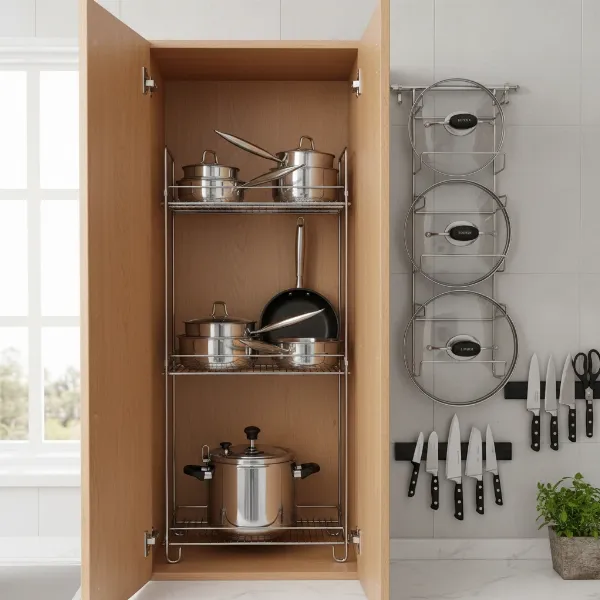 Various vertical storage solutions for kitchen appliances, including shelf risers and pot lid holders.
Wall-Mounted Options and Pegboards
For the truly space-constrained, wall-mounted solutions can be ingenious. A sturdy wall shelf can hold the pressure cooker itself. Pegboards, popular in workshops, are increasingly finding their way into kitchens. You can hang hooks for cords, smaller accessories, or even a lightweight lid on a pegboard, keeping them off counters and out of drawers.
Appliance Lifts and Dedicated Kitchen Stations
For a more integrated solution, consider an appliance lift built into a base cabinet. These mechanisms allow heavy appliances to be raised to counter height for use and then lowered back into the cabinet for discreet storage. Alternatively, a dedicated kitchen cart or island with built-in shelves or a small cabinet can serve as an “appliance station,” providing both storage and a dedicated workspace. Many users find rolling kitchen carts to be versatile solutions, offering both storage and mobile counter space.
Organizing Pressure Cooker Accessories
Pressure cooker accessories, from sealing rings to steamer baskets, are crucial but can quickly become disorganized. Keeping them tidy and readily available is key to a smooth cooking experience. These strategies help manage the smaller pieces of your pressure cooker ecosystem.
Keeping Lids and Gaskets Together
The lid is a significant part of your pressure cooker and often has a removable gasket (sealing ring). Store the lid inverted on the pot to allow the gasket to air out and prevent it from deforming, which is crucial for proper sealing. Some lid holders are available that attach to cabinet doors, freeing up internal cabinet space. Store extra gaskets in a small zip-lock bag or a dedicated drawer to protect them from dust and damage.
Managing Cords and Small Parts
Loose power cords are a trip hazard and can get damaged. Wrap the cord neatly around its base or secure it with a cable tie or velcro strap. Small parts like trivets, steamer baskets, and measuring cups can be gathered in a small, clear container or a mesh bag and placed inside the main pressure cooker pot when stored, or in an adjacent drawer. This prevents them from scattering and makes them easy to find.
Using Bins, Dividers, and Ziploc Bags
For all other small accessories, investing in small storage bins, drawer dividers, or even heavy-duty Ziploc bags can make a world of difference. Group similar items together – for example, all silicone accessories in one bin, all metal parts in another. Clear containers are particularly useful as they allow you to see the contents at a glance, eliminating the need to rummage.
Essential Safety and Maintenance Tips for Stored Pressure Cookers
Proper storage isn’t just about saving space; it’s also critical for the safety and longevity of your pressure cooker. A few simple habits can prevent potential hazards and keep your appliance performing optimally. Always prioritize these steps before putting your pressure cooker away.
Ensuring Cleanliness Before Storage
Always clean your pressure cooker thoroughly after each use, removing all food residue from the pot, lid, and sealing ring. Make sure all parts are completely dry before storing, as any moisture can lead to mold, mildew, unpleasant odors, or even rust. Air-drying is often recommended before reassembling for storage.
Proper Ventilation to Prevent Odors
Storing the pressure cooker with the lid slightly ajar or inverted allows air to circulate, preventing musty odors from developing inside the pot. This is especially important for the silicone sealing ring, which can absorb food smells. Never store the lid locked tightly in place, as this can compress the gasket prematurely and trap odors.
Protecting Against Dust and Damage
Regardless of where you store your pressure cooker, protect it from dust and potential damage. If kept in a cabinet or pantry, a simple kitchen towel or a specialized appliance cover can provide a protective layer. If stored in a garage or basement, using the original packaging or a sturdy plastic tote will shield it from environmental elements.
Regular Checks for Stored Appliances
Even when stored, it’s good practice to periodically inspect your pressure cooker. Check the sealing ring for cracks or signs of wear, and ensure the steam release valve and float valve are clear and move freely. These quick checks ensure your appliance is always safe and ready for use.
Common Pressure Cooker Storage Mistakes to Avoid
While the goal is efficient storage, certain practices can inadvertently harm your pressure cooker or create safety risks. Being aware of these common pitfalls can help you maintain your appliance and a well-organized kitchen. A little foresight goes a long way.
Storing Wet or Dirty Components
A leading cause of unpleasant smells and potential damage is storing a pressure cooker before it’s completely dry and clean. Residual food particles can attract pests, and moisture encourages mold or rust, especially on metal parts. Always allow all components to air dry completely after washing.
Overcrowding Storage Spaces
Stuffing your pressure cooker into an already crammed cabinet or shelf can lead to scratches, dents, or damage to delicate components like the sealing ring or pressure release valve. It also makes it difficult to retrieve without causing a cascade of other items. Ensure there’s adequate space around the appliance.
Ignoring Safety Precautions
One crucial mistake is storing the pressure cooker with the lid locked on. This compresses the sealing ring unnecessarily, potentially deforming it over time and compromising its ability to create a proper seal during cooking. Always store the lid inverted or loosely placed on top. Also, avoid storing it directly on a stove burner, even if unused, due to the risk of accidental activation and melting.
Forgetting About Accessibility
While deep storage might save space, if your pressure cooker is used frequently, storing it in a hard-to-reach spot will only deter you from using it. Balance the need for space-saving with ease of access. If you find yourself consistently avoiding your pressure cooker because it’s a hassle to retrieve, it’s time to re-evaluate its storage location.
Conclusion
Storing your pressure cooker effectively to save space is a blend of smart planning, creative solutions, and careful maintenance. By understanding your appliance’s components, exploring various storage locations like cabinets, pantries, or rolling carts, and employing space-saving techniques such as nesting and vertical organization, you can transform your kitchen. Remember to always prioritize cleanliness and safety, ensuring your pressure cooker is dry, well-ventilated, and protected when not in use. A decluttered kitchen not only enhances efficiency but also brings a sense of calm and order to your home.
What creative ways have you found to store your pressure cooker, making your kitchen both functional and beautiful?
Frequently Asked Questions
How can I store my Instant Pot lid to save space?
To save space and protect the lid, store it upside down on the main Instant Pot pot. This allows air to circulate, preventing odors and keeping the sealing ring from compressing. You can also use a wall-mounted lid holder or a small dedicated shelf.
What’s the best way to store a pressure cooker in a small kitchen?
In a small kitchen, consider a rolling kitchen cart that can double as extra counter space and be moved away when not in use. Deep lower cabinets with pull-out shelves or a dedicated section of your pantry with vertical organizers also work well.
Should I store my pressure cooker with the lid on or off?
It’s generally recommended to store your pressure cooker with the lid inverted or off but resting loosely on the pot. This prevents the sealing gasket from becoming compressed and allows air to circulate, which is crucial for preventing mold, mildew, and lingering food odors.