Even the most reliable kitchen companions eventually reach the end of their culinary journey. For over a decade, as an Admin at pressurecookerguides.com and a dedicated technician, I’ve seen countless pressure cookers, from classic stovetop models to advanced electric units, that have served their last meal. When your trusted pressure cooker finally gives out, the question isn’t just about replacing it, but how to dispose of it responsibly. Simply tossing it in the trash contributes to landfill waste and environmental harm. This guide will walk you through the essential steps for recycling your old broken pressure cooker safely and effectively, transforming a potential waste item into a valuable resource.
Understanding the Components of Your Pressure Cooker for Recycling
To effectively recycle a broken pressure cooker, it’s crucial to understand its constituent materials. A typical pressure cooker is a complex assembly of various elements, each requiring a specific disposal approach. Recognizing these components is the first step towards ensuring proper recycling.
Modern pressure cookers are primarily composed of metals such as stainless steel and aluminum, which form the main pot and lid, along with heat-resistant plastics for handles, bases, and external casings. Electric models, in particular, integrate sophisticated electronic components, including circuit boards, wiring (often copper), heating elements, and sometimes even batteries for digital displays or internal clocks. Separating these materials is key, as curbside recycling programs are generally not equipped to process such mixed items efficiently, often leading to contamination of recyclable streams.
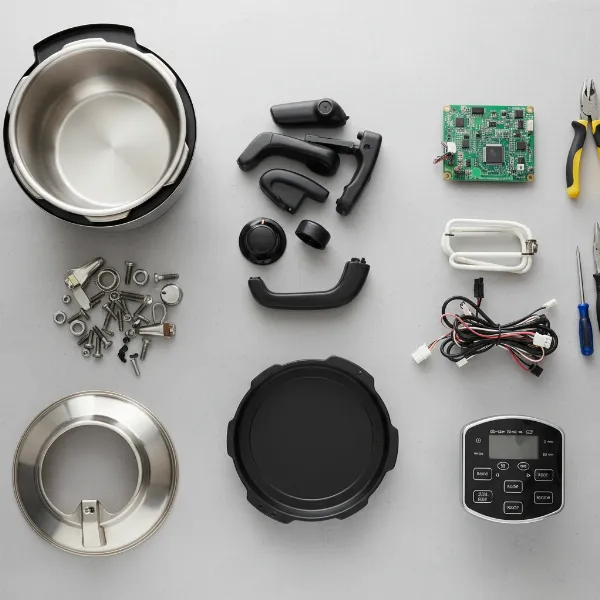 Disassembled pressure cooker showing metal, plastic, and electronic parts separated for recycling
The Evolution of Pressure Cooker Materials and Their Impact on Recycling
The journey of the pressure cooker, from its 17th-century inception to the high-tech models of today, has seen significant material advancements, directly influencing current recycling practices. Early designs largely consisted of heavy-gauge metals, primarily cast iron or thick aluminum, which were robust but limited in features. The focus was on fundamental pressure containment and heat distribution.
As technology advanced, stainless steel became prevalent due to its durability, non-reactivity, and aesthetic appeal. The introduction of electric pressure cookers marked a pivotal shift, incorporating plastics, complex circuit boards, sensors, and power cords. These electronic components, while enhancing functionality and convenience, introduce new challenges for recycling. They transform what was once a simple metal item into electronic waste (e-waste), demanding specialized recycling processes to safely extract valuable materials like copper and gold, and to properly handle potentially hazardous substances. The evolution of these materials means that a “one-size-fits-all” approach to disposal is no longer viable.
Identifying Pressure Cooker Types for Responsible Disposal
The approach to recycling your broken pressure cooker largely depends on its type: manual (stovetop) or electric. Each category presents distinct materials and disposal requirements.
Manual Pressure Cookers (Stovetop, Induction)
|
Our Picks for the Best Pressure cooker in 2026
As an Amazon Associate I earn from qualifying purchases.
|
||
| Num | Product | Action |
|---|---|---|
| 1 | COMFEE' 9-in-1 Electric Pressure Cooker, 14 Presets Instant Multi Cooker Olla de Presion Non-Stick Pot Yogurt Maker Rice Cooker Slow Cooker Sauté Steamer 6 Quarts Black |

|
| 2 | Instant Pot Duo 7-in-1 Mini Electric Pressure Cooker, Slow Rice Cooker, Steamer, Sauté, Yogurt Maker, Warmer & Sterilizer, Includes Free App with over 1900 Recipes, Stainless Steel, 3 Quart |
|
| 3 | COSORI Pressure Cooker 6QT, Stainless Steel, 9-in-1 Multi Cooker, 12 Safety Features, Ceramic Inner Pot, Rice, Slow Cook, Sous Vide, Saute, 1100W |
|
| 4 | CHEF iQ Smart Pressure Cooker with WiFi and Built-in Scale - Easy-to-Use 10-in-1 Multicooker with 500+ Guided Recipes - Rice Cooker, Slow Cooker, Instant Meals for Foodies - 6 Quart - Family Size |
|
| 5 | Our Place Dream Cooker - 6 Qt Ceramic Nonstick Multicooker & Pressure Cooker with Touchscreen Controls & Auto Steam Release - 4 Modes: Pressure Cook, Sauté/Sear, Slow Cook & Warm - Steam |
|
| 6 | Our Place Dream Cooker - 6 Qt Ceramic Nonstick Multicooker & Pressure Cooker with Touchscreen Controls & Auto Steam Release - 4 Modes: Pressure Cook, Sauté/Sear, Slow Cook & Warm - Spice |
|
| 7 | Instant Pot Duo 7-in-1 Electric Pressure Cooker, Slow Cooker, Rice Cooker, Steamer, Sauté, Yogurt Maker, Warmer & Sterilizer, Includes App with Over 800 Recipes, Stainless Steel, 8 Quart |
|
| 8 | Stove Top 304 Stainless Steel Pressure Cooker, One-hand Easy Handle Lid, 3 PSI Setting, 6 Safety Systems, Dishwasher Safe, Olla de Presion, Works for All Cooktops (8.5 QT) |
|
| 9 | Instant Pot Duo 7-in-1 Electric Pressure Cooker, Slow Cooker, Rice, Steamer, Sauté, Yogurt Maker, Warmer & Sterilizer, Includes App With Over 800 Recipes, Stainless Steel, 6 Quart |
|
| 10 | Our Place Dream Cooker - 6 Qt Ceramic Nonstick Multicooker & Pressure Cooker with Touchscreen Controls & Auto Steam Release - 4 Modes: Pressure Cook, Sauté/Sear, Slow Cook & Warm - Blue Salt |
|
Manual pressure cookers, designed for use on gas, electric, or induction cooktops, are generally simpler in their construction. They primarily consist of a heavy metal pot and lid, commonly made from stainless steel or aluminum, with some plastic or phenolic resin components for handles and gaskets. These types are often easier to disassemble, allowing for the separation of metal components for scrap recycling. The high percentage of recyclable metals in these units makes them excellent candidates for metal reclamation centers.
Electric Pressure Cookers
Electric pressure cookers, such as multi-cookers, are significantly more complex. They integrate a heating element, circuit board, control panel, wiring, and other electronic parts within a metal and plastic housing. This makes them fall under the category of electronic waste (e-waste). E-waste requires specialized handling due to the presence of valuable materials like copper and sometimes trace amounts of precious metals, as well as potentially hazardous substances that must be prevented from entering landfills. Many communities offer specific e-waste collection points, and some retailers have take-back programs.
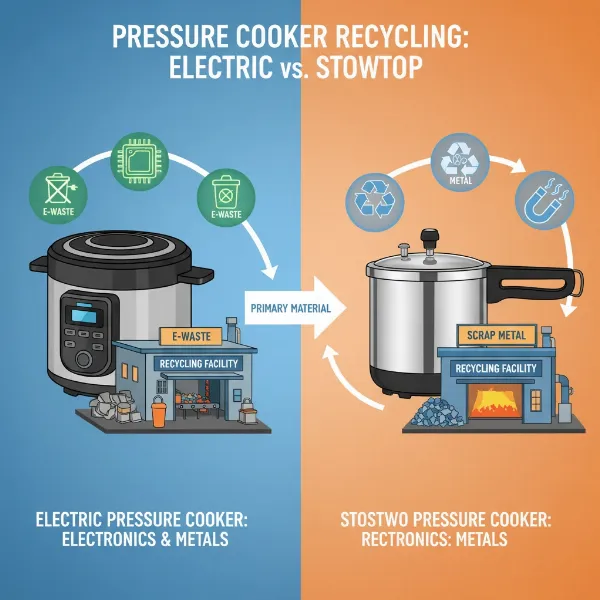 Visual comparison of electric pressure cooker e-waste and stovetop pressure cooker metal recycling
Distinguishing Features and Recycling Implications of Each Type
The primary distinction lies in the presence of electronic components. Manual pressure cookers are predominantly metal and can often be taken to a local scrap metal facility once non-metal parts are removed. Electric pressure cookers, however, demand e-waste recycling channels. While both contain recyclable metals, the integrated electronics in electric models necessitate a more specialized and environmentally sound disposal method. Attempting to recycle an electric pressure cooker through regular curbside programs can contaminate other recyclables and lead to environmental damage.
The Unique Disposal Challenges of Pressure Cookers Versus Other Kitchen Appliances
While many kitchen appliances share common materials, pressure cookers present unique disposal considerations due to their robust construction and, for electric models, integrated electronics. Understanding these differences is crucial for responsible recycling.
Material Complexity and Safety Considerations
Pressure cookers are built to withstand high internal pressures, often featuring thick-gauge metals and intricate locking mechanisms. This construction means they contain a significant amount of high-quality metal, primarily stainless steel or aluminum, which is highly recyclable. However, these sturdy builds can make disassembly more challenging than, say, a toaster. Furthermore, older or damaged units might pose minor safety risks due to sharp edges or potential residual pressure, necessitating careful handling before and during any attempt at disassembly. Always ensure the unit is unplugged and fully depressurized before proceeding.
Environmental Impact of Improper Disposal
The improper disposal of any appliance, including pressure cookers, contributes to landfill overflow and environmental pollution. When electronic pressure cookers are discarded in general waste, their internal components, containing various metals, plastics, and potentially small amounts of hazardous materials, can leach into the soil and groundwater. Recycling, conversely, allows for the recovery of valuable resources like steel (which constitutes about 75% of the average appliance’s weight) and copper, reducing the need for virgin raw materials and conserving energy.
Maximizing Resource Recovery through Recycling
Recycling pressure cookers, especially electric models, is a prime example of maximizing resource recovery. Instead of being discarded, the metals can be melted down and reformed into new products. The electronic components can be processed to extract precious metals and other valuable materials, minimizing waste and supporting a circular economy. This meticulous separation and reclamation ensure that the materials continue their life cycle, lessening our environmental footprint.
Key Components and Their Recyclability: A Pressure Cooker Breakdown
Understanding the individual components of your pressure cooker and their specific recycling pathways is fundamental to proper disposal. Here’s a breakdown:
| Component | Primary Material | Recycling Method | Notes |
|---|---|---|---|
| Inner Pot | Stainless Steel | Scrap Metal Recycling | Often the most valuable and easily recyclable part. |
| Outer Casing (Manual) | Stainless Steel, Aluminum | Scrap Metal Recycling | High metal content, typically accepted by metal recyclers. |
| Outer Casing (Electric) | Plastic, Metal | E-waste Recycling (with electronics) | Often integrated with electronics; should go to e-waste or be carefully separated if only plastic. |
| Lid (Metal part) | Stainless Steel, Aluminum | Scrap Metal Recycling | Ensure all rubber/plastic seals and valves are removed first. |
| Handles & Knobs | Heat-resistant Plastic | General Waste (unless specified) | Often not recyclable through standard programs; check local guidelines. |
| Sealing Ring/Gasket | Silicone, Rubber | General Waste | Not typically recyclable. |
| Pressure Release Valves | Metal, Plastic | Disassemble: Metal for Scrap | Small parts, may require careful separation. |
| Electronic Control Panel | Circuit Board, Plastic | E-waste Recycling | Contains various metals and plastics; specific e-waste processing required. |
| Power Cord | Copper (insulated) | E-waste Recycling | Contains valuable copper; accepted at e-waste facilities. |
| Heating Element | Metal, Ceramic | E-waste Recycling | Integrated with electronics; best handled by e-waste specialists. |
Choosing the Right Disposal Path for Your Broken Pressure Cooker
Deciding how to dispose of your broken pressure cooker involves more than just finding a trash can. It requires assessing its condition, understanding local regulations, and exploring all available options to make an environmentally sound choice.
Assessing the Extent of Damage and Repair Potential
Before considering recycling, evaluate if your pressure cooker can be repaired. A broken handle, a faulty gasket, or a simple electrical connection issue might be fixable, extending the appliance’s life. If the core functional components are severely damaged or the cost of repair outweighs replacement, then recycling becomes the most viable option. For electric models, if the heating element or circuit board is fried, repair is often complex and costly.
Understanding Local Recycling Regulations and Facilities
Recycling guidelines vary significantly by location. It’s crucial to check with your local waste management services or municipal recycling centers. They can provide specific information on whether they accept small appliances, e-waste, or bulky metal items. Websites like Earth911.com offer searchable databases to find recycling centers near you that accept various materials. Some communities offer bulky waste collection days or special drop-off events for electronics and appliances.
Identifying Materials for Separate Recycling Streams
For both manual and electric pressure cookers, separating materials can optimize recycling.
- Metal Components: Stainless steel inner pots, metal lids (after removing plastic/rubber parts), and stovetop cooker bodies can often be taken to local scrap metal recycling facilities.
- Electronic Components (for electric models): The outer casing, control panel, wiring, and heating elements must be directed to an e-waste recycling program or facility.
- Plastic/Rubber Parts: Handles, gaskets, and non-recyclable plastic bases typically belong in general waste if local recycling programs don’t accept them.
Prioritizing Safety During Disassembly and Disposal
Safety is paramount when handling a broken appliance. Always ensure your electric pressure cooker is completely unplugged and has cooled down for several hours before attempting any disassembly or transport. For manual pressure cookers, confirm all pressure has been safely released. Use appropriate tools if you choose to separate components, and wear protective gloves to guard against sharp edges. If you’re unsure about disassembling, it’s safer to take the entire unit to a designated e-waste or appliance recycling center.
Exploring Brand Take-Back Programs and Expert Assistance
Some manufacturers and retailers offer take-back or trade-in programs for old appliances. Companies like Best Buy, for example, have extensive recycling programs for electronics and home appliances, often accepting items regardless of where they were purchased. While some services might involve a fee, they ensure proper, responsible recycling. Contacting the pressure cooker’s manufacturer directly might also reveal specific recycling initiatives or guidance for their products.
Safe Handling and Disassembly Practices for Recycling
Properly preparing your broken pressure cooker for recycling involves careful handling and, for those comfortable, systematic disassembly. These steps ensure safety and maximize the efficiency of the recycling process.
Initial Safety Steps Before Disassembly
Before touching your broken electric pressure cooker, ensure it is completely unplugged from the power source and has had ample time to cool down. This is critical to prevent electric shock or burns from residual heat. For stovetop models, verify that all pressure has been released and the unit is at room temperature. Place the pressure cooker on a stable, flat surface with good lighting.
Ensuring All Pressure is Released Safely
For any pressure cooker, even a broken one, it’s essential to confirm that no residual pressure remains. If the unit failed while under pressure, exercise extreme caution. Generally, a broken pressure cooker that is no longer functional should not retain pressure, but it’s a good practice to double-check. Visually inspect the pressure indicator or valve to ensure it’s in the “down” or “open” position, indicating zero pressure.
Systematic Disassembly for Material Separation
If you’re confident and have the right tools (screwdrivers, pliers), you can carefully disassemble your pressure cooker to separate materials.
- Remove Non-Metal Parts: Start by detaching plastic handles, knobs, and rubber gaskets or sealing rings. These are generally not recyclable through standard metal or e-waste streams and may need to be discarded with general household waste.
- Separate Inner Pot: The stainless steel or aluminum inner pot is almost always easily removable and highly recyclable as scrap metal.
- Disassemble Outer Casing: For electric models, carefully remove the screws holding the outer casing together. Inside, you’ll find wiring, circuit boards, and the heating element. These electronic components are considered e-waste and should be kept together for specialized recycling. The metal parts of the outer shell can be separated for scrap metal recycling, while plastic parts go to general waste unless a local program specifies otherwise.
- Power Cord: The power cord, containing valuable copper, should be kept with the e-waste components for electric models.
Preparing Components for Recycling or Repurposing
Once separated, organize the materials:
- Metals: Place all clean metal components (inner pot, main body parts of stovetop models) into a designated bin for scrap metal.
- Electronics: Collect all electronic parts (circuit boards, wiring, control panels) and the power cord in a separate container for e-waste recycling.
- Non-Recyclables: Discard plastic handles, rubber gaskets, and any other non-recyclable parts in your regular trash.
Ensure all food residue is cleaned from metal parts before recycling or repurposing.
Innovative Ways to Repurpose and Reclaim Pressure Cooker Parts
Before resorting to full recycling, consider repurposing or reclaiming functional parts of your broken pressure cooker. This can give new life to components and reduce waste even further.
Creative Uses for the Inner Pot
A stainless steel or aluminum inner pot, especially if undamaged, is highly versatile. It can be repurposed for various uses around the house or garden:
- Planter: Makes an excellent, durable planter for herbs or small flowers.
- Storage Container: Ideal for storing pet food, bulk dry goods, or even toys.
- Compost Bin: A smaller, indoor compost collector for kitchen scraps.
- Bucket: A robust bucket for cleaning or gardening tasks.
Ideas for Outer Shells and Lids
Even the outer shell and lid, particularly from stovetop models, can find new purpose:
- Lids as Serving Trays: A clean metal lid can serve as a rustic serving tray or a decorative base.
- Outer Shell as Tool Caddy: The sturdy base of a stovetop model can be cleaned and used to hold gardening tools or cleaning supplies.
- Craft Projects: Artistic individuals might find inspiration in using the unique shapes and materials for sculpture or other craft projects.
Salvaging Functional Components for Repair or Hobbyists
For electric pressure cookers, specific parts might still be functional even if the main unit is broken. Components like the steam release handle, certain pressure switches, or even entire lids (if compatible with another base) could be salvaged. Online communities and marketplaces often have individuals looking for specific parts for repairs or hobby projects. Listing these parts as “broken for parts” on platforms like Freecycle.org can connect you with enthusiasts who can give them a second life.
Donation and Resale of Usable Parts
If your pressure cooker has a specific part that remains in good, working condition (e.g., a perfect inner pot, a functional sealing ring that’s universally compatible), consider donating it to local community groups or offering it for resale. This not only prevents waste but also helps others who might need a replacement part without buying a whole new unit.
Common Disposal Dilemmas and Expert Solutions for Pressure Cookers
Navigating the disposal of a broken pressure cooker can present several challenges. Here are some common dilemmas and expert solutions to help you through the process.
“My City Doesn’t Have Appliance Recycling.”
Solution: Check if your city has specific “bulky waste” collection services or hazardous waste events that accept electronics or appliances. If not, expand your search to nearby towns or counties, as some regional facilities may be accessible. Large retailers like Best Buy offer recycling programs that accept a wide range of electronics and home appliances, often regardless of where they were purchased. Earth911.com is an excellent resource for finding local recycling options by entering your material and zip code.
“What About the Plastic Parts and Gaskets?”
Solution: Unfortunately, many small plastic components, such as handles, knobs, and rubber gaskets, are not typically accepted in standard curbside recycling programs due to their composition or size. If your local facility explicitly states they don’t accept them, these parts will likely need to be disposed of with regular household trash after being separated from the recyclable metal and electronic components.
“Is My Electric Pressure Cooker Considered E-waste?”
Solution: Yes, absolutely. Any appliance with a plug, battery, or cord, including electric pressure cookers, falls under the category of electronic waste (e-waste). This means it contains circuit boards, wiring, and other electronic components that require specialized processing. Never put an electric pressure cooker in your regular curbside recycling bin, as it can contaminate other materials and render them unrecyclable. Seek out dedicated e-waste recycling centers, often found at municipal facilities, transfer stations, or participating retail stores.
“Can I Make Money from Recycling My Old Pressure Cooker?”
Solution: While it’s unlikely you’ll get rich, you can sometimes earn a small amount, especially from larger, heavier manual pressure cookers that yield a good amount of scrap metal. Scrap metal yards pay by weight. For electric models, the valuable components (like copper wiring) are harder to extract for individual profit without proper tools and knowledge. Some retailers offer trade-in programs for working electronics for store credit, but this typically doesn’t apply to broken units. Focusing on responsible disposal rather than profit is often the more practical approach for a single broken appliance.
Conclusion
Disposing of a broken pressure cooker responsibly is a small but significant step towards environmental stewardship. By understanding the different materials that comprise your appliance—from the steel pot to the intricate electronic components—you can ensure it avoids the landfill and its valuable resources are reclaimed. Whether opting for careful disassembly and material separation for scrap metal, utilizing dedicated e-waste facilities for electric models, or exploring retailer take-back programs, your efforts contribute to a healthier planet.
Don’t let your broken kitchen companion become just another piece of trash. Take the initiative to find the right recycling path and give its materials a second life. How will you choose to make a positive impact with your next appliance disposal?
Frequently Asked Questions
What should I do with the inner pot of my broken pressure cooker?
The inner pot, typically made of stainless steel or aluminum, is highly recyclable. Remove it from the main unit and take it to a local scrap metal recycling facility. Ensure it’s clean of food residue before disposal.
Can I put my electric pressure cooker in my regular recycling bin?
No, you should never place an electric pressure cooker in your regular curbside recycling bin. Electric pressure cookers are considered e-waste due to their electronic components and must be processed through specialized e-waste recycling programs to prevent contamination and reclaim valuable materials.
Where can I find a recycling center for small appliances or e-waste?
You can find recycling centers by contacting your local waste management service or using online search tools like Earth911.com. Many major electronics retailers also offer in-store take-back or haul-away programs for small appliances and e-waste.
Is it safe to disassemble my broken pressure cooker myself?
If you are comfortable and have the right tools, you can disassemble it. Always ensure the unit is unplugged and completely cool. Be cautious of sharp edges and separate materials like metal from plastic and electronics. If unsure, take the intact unit to a professional recycling facility.
What are the benefits of recycling a broken pressure cooker?
Recycling a broken pressure cooker prevents valuable materials like steel, aluminum, and copper from ending up in landfills. It reduces the demand for new raw materials, conserves energy, and minimizes environmental pollution from hazardous components found in e-waste.