Imagine you’re deep into preparing a delicious meal, the aromas filling your kitchen, when suddenly your electric pressure cooker flashes an cryptic error code like C6 or E3. Panic might set in, but don’t worry – you’re not alone. As an Admin of pressurecookerguides.com and a technician with over a decade of hands-on experience, I’ve seen these issues countless times. This guide will walk you through the common causes of C6 and E3 errors and provide actionable steps to get your trusty appliance back in working order safely and efficiently.
Understanding Pressure Cooker Error Codes
Modern electric pressure cookers are marvels of kitchen technology, designed with numerous sensors and safety mechanisms to ensure safe and efficient operation. When something goes awry—be it a simple user oversight, a minor malfunction, or a component failure—these smart appliances communicate the problem through error codes. These codes are not meant to intimidate but to alert you to an underlying issue, helping you diagnose and often resolve the problem without needing a professional. Ignoring them can sometimes lead to further damage or unsafe conditions, so understanding what your pressure cooker is trying to tell you is the first step towards a quick fix.
Deciphering the C6 Error Code and Its Solutions
The C6 error code is primarily associated with Instant Pot models, though other brands may have similar codes for related issues. When your Instant Pot displays C6, C6L, or C6H, it’s typically signaling a problem with its pressure sensor.
What Does C6 Mean?
|
Our Picks for the Best Pressure cooker in 2026
As an Amazon Associate I earn from qualifying purchases.
|
||
| Num | Product | Action |
|---|---|---|
| 1 | Stove Top 304 Stainless Steel Pressure Cooker, One-hand Easy Handle Lid, 3 PSI Setting, 6 Safety Systems, Dishwasher Safe, Olla de Presion, Works for All Cooktops (8.5 QT) |

|
| 2 | Our Place Dream Cooker - 6 Qt Ceramic Nonstick Multicooker & Pressure Cooker with Touchscreen Controls & Auto Steam Release - 4 Modes: Pressure Cook, Sauté/Sear, Slow Cook & Warm - Steam |
|
| 3 | Instant Pot Duo 7-in-1 Electric Pressure Cooker, Slow Cooker, Rice Cooker, Steamer, Sauté, Yogurt Maker, Warmer & Sterilizer, Includes App with Over 800 Recipes, Stainless Steel, 8 Quart |
|
| 4 | CHEF iQ Smart Pressure Cooker with WiFi and Built-in Scale - Easy-to-Use 10-in-1 Multicooker with 500+ Guided Recipes - Rice Cooker, Slow Cooker, Instant Meals for Foodies - 6 Quart - Family Size |
|
| 5 | Instant Pot Duo 7-in-1 Electric Pressure Cooker, Slow Cooker, Rice, Steamer, Sauté, Yogurt Maker, Warmer & Sterilizer, Includes App With Over 800 Recipes, Stainless Steel, 6 Quart |
|
| 6 | Our Place Dream Cooker - 6 Qt Ceramic Nonstick Multicooker & Pressure Cooker with Touchscreen Controls & Auto Steam Release - 4 Modes: Pressure Cook, Sauté/Sear, Slow Cook & Warm - Blue Salt |
|
| 7 | COSORI Pressure Cooker 6QT, Stainless Steel, 9-in-1 Multi Cooker, 12 Safety Features, Ceramic Inner Pot, Rice, Slow Cook, Sous Vide, Saute, 1100W |
|
| 8 | Instant Pot Duo 7-in-1 Mini Electric Pressure Cooker, Slow Rice Cooker, Steamer, Sauté, Yogurt Maker, Warmer & Sterilizer, Includes Free App with over 1900 Recipes, Stainless Steel, 3 Quart |
|
| 9 | COMFEE' 9-in-1 Electric Pressure Cooker, 14 Presets Instant Multi Cooker Olla de Presion Non-Stick Pot Yogurt Maker Rice Cooker Slow Cooker Sauté Steamer 6 Quarts Black |
|
| 10 | Our Place Dream Cooker - 6 Qt Ceramic Nonstick Multicooker & Pressure Cooker with Touchscreen Controls & Auto Steam Release - 4 Modes: Pressure Cook, Sauté/Sear, Slow Cook & Warm - Spice |
|
Generally, a C6 error indicates a faulty pressure sensor. This sensor is crucial for accurately monitoring the internal pressure of the cooker, ensuring both safety and proper cooking. If the sensor is malfunctioning, the pot cannot correctly regulate or detect pressure, leading to the error display. Specifically, C6L might point to a low-pressure sensor issue, while C6H suggests a high-pressure sensor problem. In some instances, the C6 error can also surface if the appliance is running too hot, which often stems from the pressure sensor’s inability to register conditions accurately.
Common Causes of C6 Error
Several factors can trigger a C6 error:
- Faulty or Damaged Pressure Sensor: This is the most common and direct cause. The sensor itself might have failed due to age or defect.
- Food Debris or Gunk: Tiny food particles or grease can accumulate on the pressure sensor contacts, obstructing its ability to function correctly.
- Overheating: While C6 is primarily a sensor issue, an underlying overheating condition can exacerbate or contribute to the sensor’s malfunction.
- Loose Connections: Internal wiring connecting the sensor to the control board might become loose over time.
Step-by-Step Fixes for C6 Error
Before attempting any fix, always unplug your pressure cooker from the power outlet and allow it to cool completely.
- Cool Down and Reset: Unplug the pot and let it cool for at least 10-30 minutes. Ensure it has good airflow around it and is not placed on a hot surface or near a stove. Plug it back in and try again.
- Clean the Pressure Sensor: This often requires opening the bottom of your pressure cooker. Locate the pressure sensor, which usually consists of small metal plates. Carefully clean any visible food debris or gunk from these contacts using a soft brush, like a toothbrush. Gently pressing down on the sensor while cleaning can help ensure all surfaces are free of residue.
- Check Internal Connections: If you are comfortable with minor appliance repair, you might check the wire connections to the pressure sensor and control board. Ensure they are secure and free from corrosion.
- Sensor Replacement: If cleaning and resetting don’t resolve the issue, the pressure sensor itself might need to be replaced. This is often a DIY fix, with replacement parts costing around $10. You’ll typically need a Torx T15 screwdriver and a standard cross-head screwdriver to access and replace the faulty component.
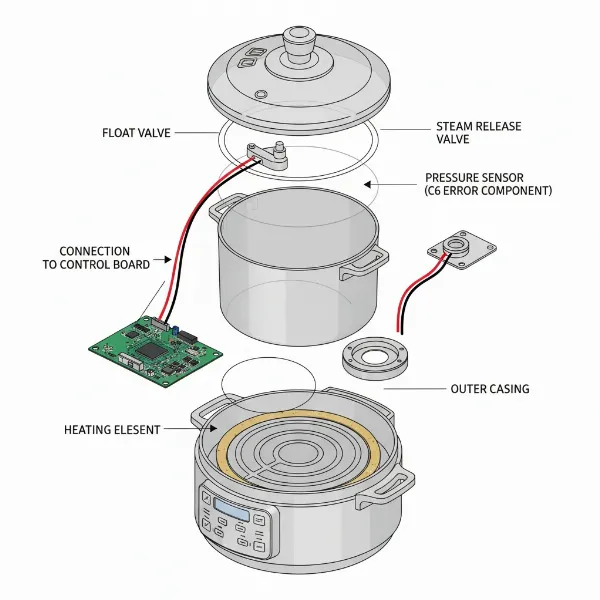 An exploded view of an electric pressure cooker showing the location of the pressure sensor for C6 error.
When to Seek Professional Help for C6
If you’ve tried the troubleshooting steps and the C6 error persists, or if you’re uncomfortable opening your appliance, it’s best to contact the manufacturer’s customer service or a qualified appliance repair technician. In some cases, a persistent C6 error might indicate a manufacturer’s defect or a more complex internal issue beyond a simple sensor replacement.
Resolving the E3 Error Code in Your Pressure Cooker
The E3 error code is a common signal across various electric pressure cooker brands, including Power Pressure Cooker XL, Zavor, and Ninja Foodi. This code generally points to an issue related to overheating or the appliance’s overheat protection system.
What Does E3 Indicate?
An E3 error primarily signifies that your pressure cooker is overheating or has triggered its overheat protection mechanism. It can also indicate that the appliance’s internal sensor is not functioning correctly, or that the lid is not properly sealed.
Primary Reasons for E3 Error
The E3 error can stem from several common operational issues:
- Insufficient Liquid: A frequent cause of overheating is not having enough liquid in the cooking pot. If the pot runs dry, it can quickly overheat.
- Improper Lid Sealing: If the lid is not sealed correctly, or the sealing gasket is damaged or misplaced, steam can escape prematurely, leading to a loss of pressure and eventual overheating.
- Faulty Sensor: A damaged or dirty internal temperature/pressure sensor can send incorrect readings, causing the cooker to overheat or trigger the E3 code even when conditions are normal.
- Overfilling: While less common for E3, overfilling the pot can sometimes interfere with proper heating and pressure regulation, leading to errors.
- Blocked Vents/Improper Clearance: Blocked steam release valves, float valves, or obstructed air vents around the heating element can lead to trapped heat and overheating.
Practical Solutions to Clear E3 Error
As with any error, unplug your pressure cooker and allow it to cool down completely before troubleshooting.
- Check Liquid Levels: If you were pressure cooking, ensure there was enough liquid according to your recipe and the cooker’s minimum requirements. If it ran dry, add more liquid, stir, and restart after cooling.
- Inspect the Sealing Gasket and Lid:
- Remove the lid and examine the large rubber sealing gasket. Make sure it’s properly seated in its groove, clean, and free from any damage or cracks. Replace if worn or damaged.
- Ensure the lid is closed and locked correctly. For pressure cooking, the steam release valve must be in the “Seal” position. For non-pressure settings, it should be in “Release.”
- Clean Sensors and Connections:
- Carefully clean any visible food debris or condensation from the pressure or temperature sensors, typically found on the underside of the lid or within the cooker’s base. Use a soft, damp cloth.
- Check for loose wire connections to the pressure sensor and control board; gently wiggle connections to ensure they are secure.
- Reduce Contents: If you suspect you’ve overfilled the cooker, remove some food or liquid to ensure it’s below the maximum fill line.
- Ensure Proper Ventilation: Make sure the cooker’s external vents are not blocked and there’s adequate clearance around the unit for airflow. This is especially important for multi-cookers like Ninja Foodi when air frying.
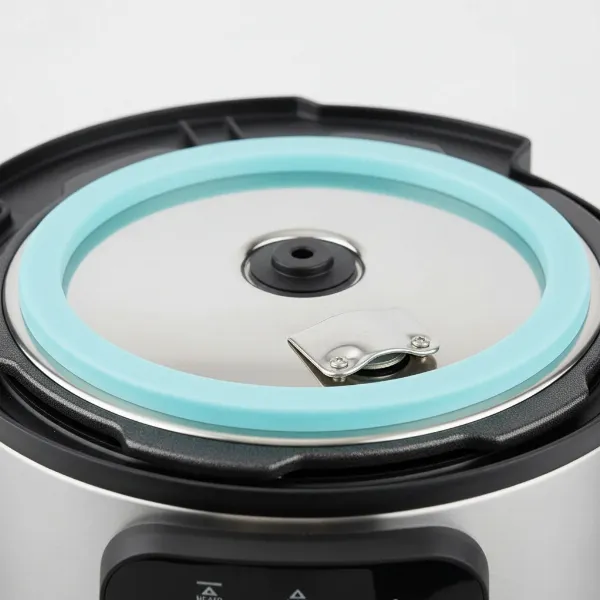 A close-up view of an electric pressure cooker lid, emphasizing the proper placement and condition of the sealing gasket to prevent E3 errors.
Preventing E3 Error in the Future
- Always use the recommended amount of liquid for pressure cooking.
- Regularly inspect and clean the sealing ring, steam release valve, and float valve.
- Ensure the lid is always closed and sealed correctly before starting.
- Do not overfill your pressure cooker.
- Keep the external housing and internal heating element area clean.
C6 vs. E3: Key Differences and Similarities
While both C6 and E3 are common pressure cooker error codes, they typically point to different core issues.
C6 (Primarily Instant Pot): Usually indicates a faulty pressure sensor. This is often a hardware problem requiring cleaning, reconnection, or replacement of the sensor itself. It suggests the cooker cannot accurately measure the pressure.
E3 (More General): Generally signals an overheating condition. This is often an operational issue related to insufficient liquid, improper lid sealing, or blockages, but can also stem from a malfunctioning temperature sensor. It suggests the cooker is getting too hot or cannot regulate its temperature correctly.
However, there’s overlap: a dirty or faulty sensor (like the pressure sensor for C6, or a temperature sensor for E3) can contribute to both types of errors by providing incorrect data to the cooker’s control system. Both errors also emphasize the importance of ensuring proper sealing and cleanliness.
General Troubleshooting and Maintenance Tips for Pressure Cookers
Proactive care and a methodical approach can save you a lot of headache.
Safety First: Essential Steps Before Troubleshooting
- Unplug the Appliance: Always disconnect your pressure cooker from the power source before performing any inspection or cleaning.
- Allow to Cool: Let the cooker cool down completely. Attempting to open or work on a hot, pressurized appliance is dangerous.
- Release Pressure: Ensure all internal pressure has been released before attempting to open the lid.
- Consult Your Manual: Your pressure cooker’s user manual is an invaluable resource, often providing specific troubleshooting steps for its unique error codes.
Preventive Maintenance to Avoid Errors
Regular maintenance is key to prolonging your pressure cooker’s life and preventing error codes.
- Clean After Every Use: Thoroughly clean the inner pot, lid, sealing ring, and steam release valve after each use.
- Inspect Components: Periodically check the sealing ring for cracks or deformities, the anti-block shield, and the float valve for any blockages.
- Proper Storage: Store your pressure cooker with the lid inverted or slightly ajar to prevent the sealing ring from compressing and losing its elasticity.
- Avoid Abrasive Cleaners: Use mild soap and water to clean components to prevent damage to sensitive parts.
When to Contact Customer Support or Consider Replacement
There comes a point when DIY fixes might not be enough or advisable.
- Persistent Errors: If an error code repeatedly appears despite following all troubleshooting steps, it could indicate a deeper internal problem.
- Visible Damage: If you notice smoke, burning smells, or significant damage to electrical components, discontinue use immediately.
- Cost of Repair: For older models, the cost of replacement parts or professional repair might exceed the cost of a new unit.
- Manufacturer Defects: Some errors, like certain C6 instances, may be due to manufacturer defects, in which case contacting customer service is essential for warranty claims.
Expert Insights on Pressure Cooker Longevity and Care
“Understanding your pressure cooker’s error codes is like listening to its heartbeat. Addressing these signals promptly ensures not just safety, but also extends the life of your appliance, transforming potential frustration into culinary triumph.” – Adrian Chen, Appliance Repair Specialist
Regular, diligent cleaning and knowing what each error code signifies can truly empower you as a home cook. It’s not just about fixing a problem, but about fostering a better, safer relationship with your kitchen tools.
Conclusion
Encountering error codes like C6 or E3 on your pressure cooker can be a momentary setback, but it’s rarely a sign of total failure. By understanding that C6 often points to a pressure sensor issue, while E3 typically indicates overheating or a sealing problem, you’re well-equipped to diagnose and apply effective solutions. Remember the golden rules: unplug, cool down, inspect, clean, and only attempt repairs you’re comfortable with. With these practical tips and a commitment to preventive maintenance, your pressure cooker will continue to be a reliable partner in your culinary adventures, ensuring countless delicious and safe meals. What error code have you encountered recently, and how did you resolve it?
Frequently Asked Questions
What does a C6 error on an Instant Pot typically indicate?
A C6 error on an Instant Pot usually indicates a faulty pressure sensor, preventing the appliance from accurately measuring or regulating internal pressure. Common fixes involve cooling the unit, cleaning the sensor, or replacing the sensor if it’s damaged.
How can I prevent the E3 error from appearing on my electric pressure cooker?
To prevent the E3 error, ensure you always add sufficient liquid, properly seal the lid, regularly clean and inspect the sealing ring, and avoid overfilling the pot. Additionally, keep the appliance’s vents clear for proper airflow.
Is it safe to continue using a pressure cooker after an error code appears?
No, it is generally not safe to continue using a pressure cooker once an error code appears. Error codes are safety warnings; you should immediately unplug the unit, allow it to cool, and troubleshoot the issue before attempting to use it again.
When should I consider my pressure cooker beyond repair?
Consider your pressure cooker beyond repair if the troubleshooting steps don’t resolve the issue, if repair costs outweigh the price of a new unit, or if there is significant visible damage to essential components, such as wiring or the heating element.
Are C6 and E3 errors universal across all pressure cooker brands?
While the underlying issues (pressure sensor failure, overheating) are common, the specific error codes like C6 and E3 are often brand-specific. Always consult your appliance’s user manual for precise meanings and troubleshooting steps related to its unique codes.