Welcome to the world of high-speed, nutrient-rich cooking, where precision meets performance. If you’re leveraging the power of an induction cooktop, you understand the value of efficiency and advanced technology in your kitchen. But to truly maximize these benefits, you need a pressure cooker designed to work seamlessly with your induction hob. This guide cuts through the noise, offering an expert perspective on selecting, using, and maintaining the best pressure cookers specifically engineered for induction cooktops, transforming your culinary journey into a safer, faster, and more rewarding experience.
What is a Pressure Cooker?
A pressure cooker is an airtight pot that cooks food quickly by creating a high-pressure steam environment. This elevated pressure raises the boiling point of water beyond its standard 212°F (100°C), allowing food to cook at higher temperatures and significantly reducing cooking times. It traps steam, which builds pressure, forcing liquid and moisture into the food, resulting in incredibly tender meats, perfectly cooked grains, and vibrant vegetables in a fraction of the usual time. This ingenious kitchen appliance revolutionizes meal preparation, making it a favorite for busy households and gourmet chefs alike.
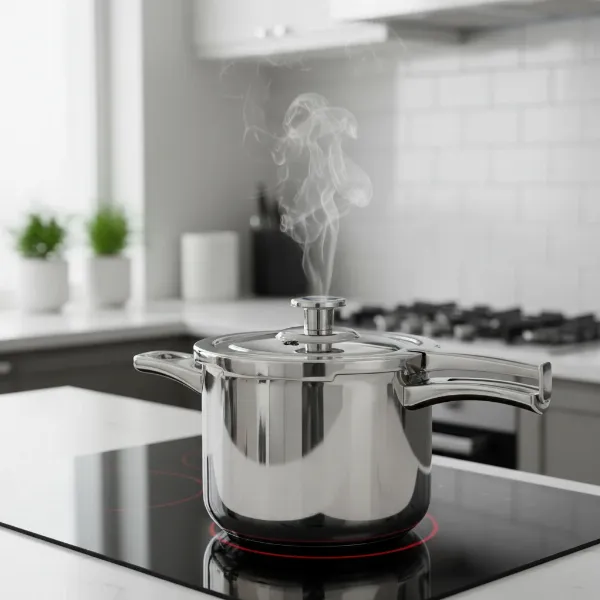 modern stainless steel pressure cooker releasing steam on induction hob
The Evolution of Pressure Cookers: From Classic to Contemporary
The concept of pressure cooking dates back to the 17th century, with Denis Papin inventing the “steam digester” in 1679. This early iteration was a rudimentary device demonstrating the principle of cooking with steam under pressure.
From Classic Stovetop to Modern Electric
|
Our Picks for the Best Pressure cooker in 2026
As an Amazon Associate I earn from qualifying purchases.
|
||
| Num | Product | Action |
|---|---|---|
| 1 | COMFEE' 9-in-1 Electric Pressure Cooker, 14 Presets Instant Multi Cooker Olla de Presion Non-Stick Pot Yogurt Maker Rice Cooker Slow Cooker Sauté Steamer 6 Quarts Black |

|
| 2 | COSORI Pressure Cooker 6QT, Stainless Steel, 9-in-1 Multi Cooker, 12 Safety Features, Ceramic Inner Pot, Rice, Slow Cook, Sous Vide, Saute, 1100W |
|
| 3 | Instant Pot Duo 7-in-1 Electric Pressure Cooker, Slow Cooker, Rice Cooker, Steamer, Sauté, Yogurt Maker, Warmer & Sterilizer, Includes App with Over 800 Recipes, Stainless Steel, 8 Quart |
|
| 4 | Stove Top 304 Stainless Steel Pressure Cooker, One-hand Easy Handle Lid, 3 PSI Setting, 6 Safety Systems, Dishwasher Safe, Olla de Presion, Works for All Cooktops (8.5 QT) |
|
| 5 | Instant Pot Duo 7-in-1 Electric Pressure Cooker, Slow Cooker, Rice, Steamer, Sauté, Yogurt Maker, Warmer & Sterilizer, Includes App With Over 800 Recipes, Stainless Steel, 6 Quart |
|
| 6 | Our Place Dream Cooker - 6 Qt Ceramic Nonstick Multicooker & Pressure Cooker with Touchscreen Controls & Auto Steam Release - 4 Modes: Pressure Cook, Sauté/Sear, Slow Cook & Warm - Blue Salt |
|
| 7 | Instant Pot Duo 7-in-1 Mini Electric Pressure Cooker, Slow Rice Cooker, Steamer, Sauté, Yogurt Maker, Warmer & Sterilizer, Includes Free App with over 1900 Recipes, Stainless Steel, 3 Quart |
|
| 8 | Our Place Dream Cooker - 6 Qt Ceramic Nonstick Multicooker & Pressure Cooker with Touchscreen Controls & Auto Steam Release - 4 Modes: Pressure Cook, Sauté/Sear, Slow Cook & Warm - Steam |
|
| 9 | Our Place Dream Cooker - 6 Qt Ceramic Nonstick Multicooker & Pressure Cooker with Touchscreen Controls & Auto Steam Release - 4 Modes: Pressure Cook, Sauté/Sear, Slow Cook & Warm - Spice |
|
| 10 | CHEF iQ Smart Pressure Cooker with WiFi and Built-in Scale - Easy-to-Use 10-in-1 Multicooker with 500+ Guided Recipes - Rice Cooker, Slow Cooker, Instant Meals for Foodies - 6 Quart - Family Size |
|
Initially, pressure cookers were exclusively stovetop models, relying on external heat sources. These classic models, often made from robust aluminum or stainless steel, featured simple valve systems—like jiggle tops or weight-controlled mechanisms—to regulate pressure. They demanded more user interaction, requiring careful monitoring of heat and pressure levels.
The mid-20th century saw improvements in safety and design, making pressure cookers more accessible to home cooks. The late 20th and early 21st centuries ushered in the era of electric pressure cookers, epitomized by multi-cookers like the Instant Pot. These modern marvels integrate heating elements, sophisticated microprocessors, and numerous safety features, offering programmable settings and hands-free operation. While many stovetop models have also evolved with advanced safety locks and intuitive pressure indicators, the electric variants introduced unprecedented convenience and versatility, blurring the lines between a pressure cooker, slow cooker, rice cooker, and more.
Key Milestones in Pressure Cooker Technology
- 1679: Denis Papin invents the “steam digester,” laying the groundwork for pressure cooking.
- Early 20th Century: First domestic pressure cookers emerge, primarily as stovetop models.
- 1930s-1940s: Introduction of weighted-valve pressure cookers, increasing safety and reliability for home use.
- 1970s-1980s: Second and third-generation stovetop models feature spring-valve systems, offering more precise pressure control and quieter operation.
- Late 2000s-Present: The rise of electric multi-cookers, integrating smart technology, multiple cooking functions, and enhanced safety features, including induction-compatible internal heating for some models.
Popular Types of Pressure Cookers on the Market
Understanding the different types of pressure cookers is crucial, especially when looking for one compatible with induction cooktops. Primarily, pressure cookers fall into two main categories: stovetop and electric.
Stovetop Pressure Cookers (Gas, Electric, Induction)
Stovetop pressure cookers are traditional models that sit directly on a cooktop, drawing heat from an external source. For induction cooktops, these pressure cookers must have a magnetic base. They are highly efficient, reaching high pressures quickly, and often offer more fine-tuned control over pressure release.
- Pros:
- Typically reach higher pressures, leading to faster cooking times.
- Often more durable and long-lasting, especially stainless steel models.
- No internal electronics to malfunction.
- Generally more compact for storage than electric models.
- Many induction-compatible models feature advanced “sandwich” bases for excellent heat distribution.
- Cons:
- Requires manual heat adjustment and monitoring.
- Can be noisier (older models with jiggle tops).
- Less forgiving for beginners without proper instruction.
Electric Pressure Cookers
Electric pressure cookers, such as the popular Instant Pot, have an integrated heating element and are plug-and-play appliances. While some multi-cookers might advertise “induction-ready” features, this usually refers to their internal heating technology, not that the pot itself can be placed on an induction hob. However, the Instant Pot Pro series does offer inner pots that are stovetop and induction friendly.
- Pros:
- User-friendly with pre-programmed settings for various foods.
- “Set it and forget it” convenience with automatic pressure regulation.
- Multiple functions (slow cook, sauté, rice cooker, yogurt maker, etc.).
- Built-in safety mechanisms and quieter operation.
- Cons:
- Generally larger and take up more counter space.
- Can be slower to reach pressure compared to high-end stovetop models.
- Dependent on electricity, not suitable for areas with unstable power.
- Inner pot might not always be induction-compatible for separate stovetop use unless specified.
Distinguishing and Pros/Cons of Each Type
The primary distinction for induction users lies in whether the pressure cooker itself sits on the induction hob (stovetop model) or if it’s a self-contained unit (electric). Stovetop induction pressure cookers are prized for their speed, control, and direct interaction with the induction hob’s efficient heating. Electric models offer unparalleled convenience and versatility, making them a kitchen powerhouse in their own right, even if their main cooking pot isn’t used directly on an induction surface.
Pressure Cookers vs. Other Cooking Methods
Pressure cooking stands out from conventional methods like boiling, steaming, or oven baking due to its unique combination of speed, nutrient retention, and energy efficiency.
Faster Cooking Times
The most immediate benefit of a pressure cooker is its remarkable speed. By elevating the boiling point of water, pressure cookers reduce cooking times by up to 70%. For instance, tough cuts of meat that might take hours to braise in an oven can be fork-tender in under an hour. Dry beans, typically requiring overnight soaking and long simmering, are ready in minutes. This speed is particularly amplified on an induction cooktop, which heats up incredibly fast and offers precise temperature control, getting your pressure cooker to optimal pressure even quicker.
Better Nutrient Retention
Traditional cooking methods, especially boiling, can cause water-soluble vitamins and heat-sensitive nutrients to leach out or degrade. Pressure cooking, with its minimal liquid usage and shorter cooking times, excels at preserving these vital nutrients. The sealed environment also minimizes oxidation, further protecting delicate vitamins and maintaining food’s natural colors and flavors. This means healthier, more flavorful meals for you and your family.
Energy Efficiency
Pressure cookers are significantly more energy-efficient than conventional cooking. Their sealed design prevents steam and heat from escaping, requiring less energy to reach and maintain cooking temperatures. This is compounded by faster cooking times. When paired with an induction cooktop, which only heats the pot directly and wastes very little energy, the combination creates an incredibly energy-efficient cooking system, translating to lower utility bills and a smaller environmental footprint.
Top Pressure Cookers for Induction Cooktops
Choosing the right pressure cooker for your induction hob means focusing on base material, heat distribution, safety, and capacity. Here’s a comparison of some of the best models currently available that excel on induction cooktops.
| Product Name | Capacity | Material & Base | Key Features | Price Range | Rating |
|---|---|---|---|---|---|
| WMF Perfect Plus Pressure Cooker | 6.5 Quart | Cromargan Stainless Steel with TransTherm Base | Patented TransTherm universal base for even heating, removable handle for easy cleaning, two fixed adjustable cooking settings, TÜV tested safety. Ideal for durability and precision. | High | 4.8/5 Stars |
| Fagor Duo Pressure Cooker/Canner | 10 Quart | 18/10 Stainless Steel with Disk Sandwich Base | Large disk sandwich base for even heating, straight sides for better conduction, suitable for light pressure canning, multiple safety features. Excellent for larger families or batch cooking. | Mid-High | 4.7/5 Stars |
| Prestige Deluxe Alpha Induction Base | 10 Liter | Stainless Steel with “Unique Alpha Base” | Improved steel disc on bottom for induction, ergonomic handles, unique pressure indicator, safety valve, and pressure release valve. A reliable entry-level to mid-range option. | Mid | 4.5/5 Stars |
| Kuhn Rikon Duromatic Stainless-Steel | 8 Quart | Thick Stainless Steel with Aluminum Core | Spring-loaded valve for quiet operation and precise pressure, short straight sides for efficient heat transfer, extremely durable. A premium choice for long-term investment. | High | 4.9/5 Stars |
| Hawkins Contura Hard Anodized Induction | 3L, 5L | Hard Anodized Aluminum with Magnetic Base | Extra thick base with AISI 430 grade magnetic stainless steel plate, unique rounded body for easy stirring and cleaning, suitable for all cooktops. An affordable and efficient option. | Low-Mid | 4.4/5 Stars |
| T-fal Clipso Stainless Steel | 8 Quart | Stainless Steel with Encapsulated Base | One-hand system for opening/closing, encapsulated base for even heat distribution, multiple pressure settings (10/15 PSI), dishwasher safe. Good value with high customer reviews. | Low-Mid | 4.6/5 Stars |
| Instant Pot Pro (Inner Pot Only) | 6 Quart | Premium Cookware Grade Stainless Steel | (Internal heating of Electric PC, but inner pot is stovetop/induction compatible). Features stay-cool silicone handles, 5 programmable settings. Offers flexibility to use on induction hob separately. | Mid | 4.7/5 Stars |
| Silit Sicomatic® T-Plus | 2.5L | Silargan® Functional Ceramic with Steel Core | Made in Germany, 30-year warranty on ceramic surface, color-coded doneness indicator, three adjustable cooking settings, one-hand control, removable lid handle. High-quality and durable. | High | 4.8/5 Stars |
“The secret to an outstanding induction pressure cooker lies not just in its magnetic base, but in the intelligent engineering of its heat distribution. An even, robust base is paramount for truly efficient and consistent cooking.” – Admin, pressurecookerguides.com
Buying Guide: How to Choose the Right Pressure Cooker for Induction
Selecting the ideal pressure cooker for your induction cooktop involves several considerations to ensure it meets your specific cooking needs and delivers optimal performance.
1. Determine Your Usage Needs
Before diving into models, consider how you’ll use your pressure cooker.
- Number of People: A 3-4 liter capacity is suitable for 1-2 people, while 6-8 liters is perfect for families of 3-5. For larger families or batch cooking/canning, 10 liters or more would be appropriate.
- Types of Dishes: If you mostly cook grains and vegetables, a smaller, quicker-heating model might suffice. For frequent preparation of tough meats or large batches of soup, a larger, more robust cooker with higher pressure capabilities is better.
2. Choose the Right Capacity
As mentioned, capacity is directly related to your household size and cooking habits. A pressure cooker should ideally be filled no more than two-thirds full for most foods, and only half full for foods that expand (like beans or rice). Overfilling is a safety hazard. Consider if you’ll be using it for canning, which typically requires larger capacities (20+ quarts for proper canning).
3. Material Matters: Stainless Steel, Aluminum, or Hard-Anodized
For induction compatibility, the base material is critical.
- Stainless Steel: The most common and recommended material for induction. It is non-reactive, durable, easy to clean, and inherently magnetic. Look for 18/8 or 18/10 stainless steel for quality. Many feature a “sandwich base” (stainless steel exterior, aluminum core, stainless steel interior) for superior heat distribution.
- Aluminum: Pure aluminum is not magnetic and will not work on an induction hob. However, some aluminum pressure cookers come with a bonded stainless steel or magnetic base plate specifically designed for induction cooktops. Hard-anodized aluminum with an induction-compatible base offers durability and excellent heat conductivity while often being lighter than pure stainless steel.
- Cast Iron: While magnetic and induction-compatible, cast iron pressure cookers are rare due to their immense weight and different heat properties which are less ideal for pressure cooking.
4. Essential Safety Features
Safety is paramount when dealing with pressure. Look for these features:
- Locking Lid: Prevents opening until all pressure is safely released.
- Multiple Pressure Release Valves: Includes a main operating valve, a secondary safety valve (often a spring-loaded pop-up indicator), and sometimes an emergency pressure release window or gasket.
- Pressure Indicator: Visually shows when pressure has built up inside the cooker.
- Overpressure Plug: A small, meltable plug that will release excess pressure in extreme cases.
- Cool-Touch Handles: Important for safe handling, especially with hot stovetop models.
5. Reputable Brand and Warranty
Investing in a well-known brand like WMF, Fagor, Kuhn Rikon, Prestige, or T-fal ensures quality and access to customer support and spare parts. Check the warranty details for both the pot and specific components like sealing rings and valves, as these are wear-and-tear items.
How to Use Your Induction Pressure Cooker Safely and Effectively
Using a pressure cooker, especially on an induction cooktop, is straightforward once you understand the basic principles and safety guidelines.
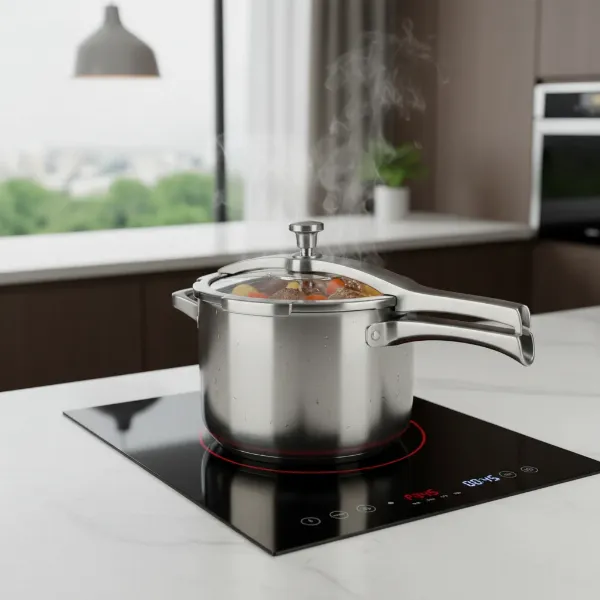 a pressure cooker cooking on a modern induction stovetop kitchen setting
1. Preparation Before Cooking
- Read the Manual: Every pressure cooker has unique features and safety instructions. Familiarize yourself with your specific model.
- Check Components: Ensure the sealing ring is properly seated, all valves are clear and free of food debris, and the lid closes securely.
- Add Liquid: Always add the minimum required liquid, typically at least 1/2 to 1 cup, as indicated by your recipe or manual. This liquid is essential to create the steam needed for pressure.
- Do Not Overfill: Fill the cooker no more than two-thirds full for most foods, and only half full for foods that expand (like rice, beans, or grains).
2. Adjusting Pressure and Cooking Time
- High vs. Low Pressure: Most recipes call for high pressure. Some models offer different pressure settings, allowing for more delicate foods to be cooked at lower pressure.
- Induction Heat Setting: Place the pressure cooker on an induction burner that matches or is slightly smaller than the base of the pot. Turn the heat to high. Induction cooktops heat rapidly, so the pressure cooker will reach full pressure quickly.
- Maintain Pressure: Once the pressure indicator shows full pressure, reduce the induction hob’s heat to the lowest setting that maintains a steady pressure. This prevents overheating and keeps the pressure consistent.
- Timer: Start timing only after full pressure is reached.
3. Safe Pressure Release Methods
There are three primary ways to release pressure safely:
- Natural Release (NPR): Remove the cooker from heat and let the pressure dissipate on its own. This is ideal for foamy foods (beans, grains) and large cuts of meat, as it prevents sudden changes in pressure that can tear apart delicate foods and allows for further tenderization.
- Quick Release (QPR): For faster depressurization, use the steam release valve according to your manual’s instructions. This is suitable for vegetables and delicate items to prevent overcooking. Be cautious of the hot steam escaping.
- Cold Water Release (CWR – for Stovetop only): This method involves running cold water over the lid of the pressure cooker. Only use this method if explicitly allowed by your manufacturer, and never submerge the cooker in water. This is usually not recommended for modern cookers.
4. Cleaning and Maintenance
- Cool Down: Always allow the pressure cooker to cool down completely before cleaning.
- Disassemble: Remove the sealing ring, pressure valves, and any other removable parts for thorough cleaning.
- Hand Wash/Dishwash: Many stainless steel pots are dishwasher-safe, but check your manual. Sealing rings and lid handles (especially those with integrated valves) should typically be hand-washed with warm, soapy water to preserve their integrity.
- Inspect: Regularly inspect the sealing ring for cracks or stiffness and replace it annually or as needed. Ensure all steam vents are clear.
Delicious and Easy Meals with Your Induction Pressure Cooker
The versatility of an induction pressure cooker opens up a world of culinary possibilities, making complex dishes simple and quick.
Hearty Stews and Braises
Pressure cookers excel at transforming tough cuts of meat into fall-apart tender stews and braises in a fraction of the time. Think beef bourguignon, lamb tagine, or classic pot roast, all infused with deep flavors.
Nourishing Soups
From creamy tomato soup to robust chicken noodle, pressure cookers develop rich broths and cook ingredients efficiently. Lentil soup, often a long simmer, becomes a speedy weeknight meal.
Wholesome Porridges and Grains
Achieve perfectly cooked grains like rice, quinoa, and farro, or creamy oatmeal and congee, without constant stirring. The consistent pressure ensures even cooking and reduces the chance of burning.
Flavorful Braised Dishes
Whether it’s succulent short ribs or aromatic chicken adobo, the pressure cooker tenderizes and infuses flavors deeply, creating restaurant-quality meals at home.
Common Pressure Cooker Issues and How to Troubleshoot
Even with the best induction pressure cooker, you might encounter a few common issues. Here’s how to address them:
- No Pressure Build-Up:
- Check Lid Seal: Ensure the lid is properly closed and sealed.
- Sealing Ring: The sealing ring might be incorrectly placed, worn, or damaged. Replace if necessary.
Insufficient Liquid: There might not be enough liquid to create steam. Add more if your recipe allows. - Valve Issues: The pressure release valve or safety valve might be blocked or improperly seated. Clean and check.
- Steam Leaking:
- This usually points to a faulty or improperly seated sealing ring. Inspect and replace if needed.
- Ensure the lid is clean and free of food particles around the rim.
- Food Undercooked:
- Not Enough Cooking Time: You might have released pressure too soon or set the timer incorrectly.
- Insufficient Pressure: The cooker might not have reached full pressure or maintained it consistently. Check heat setting and valve.
- Old Gasket: A worn gasket can lead to slight pressure loss.
- Burning Smell/Food Sticking:
- Not Enough Liquid: Always ensure the minimum liquid requirement is met.
- High Heat: The heat on your induction hob might be too high after pressure is reached, causing scorching. Reduce heat to the lowest setting required to maintain pressure.
- Stuck Food: Certain ingredients, especially thick sauces or tomato-based items, can stick to the bottom. Deglaze the pot thoroughly before pressure cooking.
Conclusion
Embracing an induction pressure cooker is more than just buying a new kitchen gadget; it’s an investment in culinary efficiency, health, and convenience. From drastically cutting down cooking times to meticulously preserving nutrients and saving energy, these robust appliances, especially those designed for your induction cooktop, stand as a testament to modern cooking innovation. By understanding the core mechanics, choosing the right model, and following essential safety and maintenance practices, you unlock a world where delicious, wholesome meals are no longer a lengthy endeavor but a swift, enjoyable experience.
Are you ready to transform your cooking routine with the power of an induction pressure cooker?
Frequently Asked Questions
What makes a pressure cooker induction compatible?
An induction-compatible pressure cooker must have a flat base made from a ferromagnetic material, typically stainless steel or a multi-ply “sandwich” base with a stainless steel exterior and an aluminum core. This allows the induction hob’s magnetic field to generate heat directly within the pot.
Can all stainless steel pressure cookers be used on induction cooktops?
Not all stainless steel is ferromagnetic. While many are, always look for explicit “induction compatible” labeling or check the manufacturer’s specifications. A simple magnet test can also confirm if the base is magnetic.
Is it safe to use an older pressure cooker on an induction hob?
If an older pressure cooker has a flat, magnetic base and is in good working condition with intact safety features, it may be safe to use. However, older models might lack modern safety mechanisms, so exercise caution and ensure its base is truly induction-compatible.
What is the ideal capacity for an induction pressure cooker for a family of four?
For a family of four, a pressure cooker with a capacity of 6 to 8 liters (approximately 6 to 8 quarts) is generally ideal. This size allows for cooking main courses, stews, and side dishes without overfilling.
How do I maintain the sealing ring of my induction pressure cooker?
To maintain the sealing ring, remove it after each use and wash it with warm, soapy water. Allow it to air dry completely before reinserting it. Inspect it regularly for cracks, stickiness, or stiffness, and replace it annually or if any wear is visible to ensure a proper seal and safe operation.