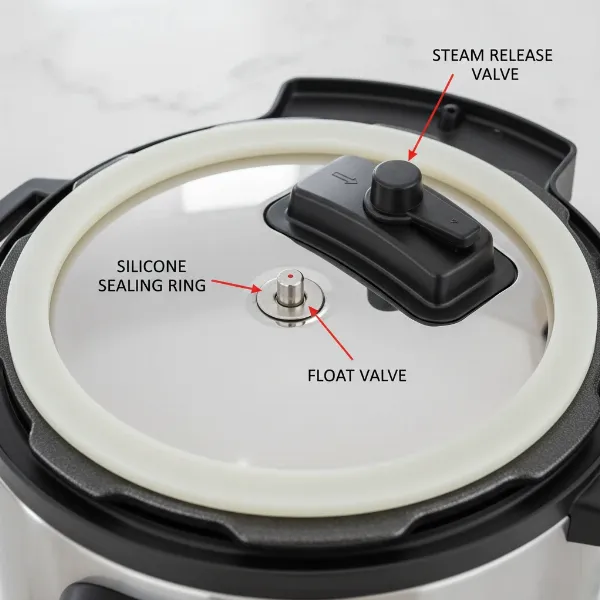
Imagine your pantry shelves lined with jars of homegrown vegetables and savory meats, preserved at their peak freshness. This isn’t just a dream for avid gardeners or bulk shoppers; it’s a reality made possible with the right pressure canner. Far more than just a quick cooking pot, a true pressure canner is an indispensable tool for safely preserving low-acid foods, transforming your kitchen into a hub of self-sufficiency and delicious meals year-round. If you’re ready to unlock the art of safe home canning for everything from crisp green beans to tender beef stew, understanding the best pressure canners is your first crucial step.
What is a Pressure Canner?
A pressure canner is a specialized, heavy-duty pot designed to reach temperatures well above the boiling point of water. This high-temperature environment is essential for safely preserving low-acid foods like most vegetables, meats, poultry, and seafood. Unlike a water bath canner, which is only suitable for high-acid foods such as fruits and pickles, a pressure canner creates an internal environment hot enough (typically 240-250°F or 10-15 PSI) to destroy harmful bacteria, including Clostridium botulinum, which thrives in low-acid, oxygen-free conditions and produces dangerous toxins. It’s a distinct appliance from a regular pressure cooker, although some canners can also function as large pressure cookers.
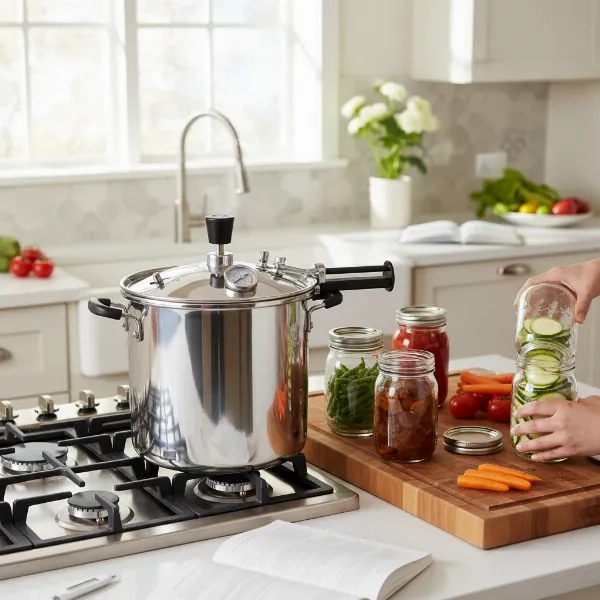 Modern pressure canner safely preserving low-acid foods like vegetables and meats.
History of Pressure Canning
The concept of preserving food with heat dates back centuries, but pressure canning as we know it today began to take shape with Denis Papin’s “digester” in the late 17th century. This early device was the precursor to the modern pressure cooker, demonstrating the power of steam under pressure.
From Classic to Contemporary Canners
|
Our Picks for the Best Pressure cooker in 2026
As an Amazon Associate I earn from qualifying purchases.
|
||
| Num | Product | Action |
|---|---|---|
| 1 | Instant Pot Duo 7-in-1 Mini Electric Pressure Cooker, Slow Rice Cooker, Steamer, Sauté, Yogurt Maker, Warmer & Sterilizer, Includes Free App with over 1900 Recipes, Stainless Steel, 3 Quart |

|
| 2 | CHEF iQ Smart Pressure Cooker with WiFi and Built-in Scale - Easy-to-Use 10-in-1 Multicooker with 500+ Guided Recipes - Rice Cooker, Slow Cooker, Instant Meals for Foodies - 6 Quart - Family Size |
|
| 3 | Our Place Dream Cooker - 6 Qt Ceramic Nonstick Multicooker & Pressure Cooker with Touchscreen Controls & Auto Steam Release - 4 Modes: Pressure Cook, Sauté/Sear, Slow Cook & Warm - Blue Salt |
|
| 4 | COMFEE' 9-in-1 Electric Pressure Cooker, 14 Presets Instant Multi Cooker Olla de Presion Non-Stick Pot Yogurt Maker Rice Cooker Slow Cooker Sauté Steamer 6 Quarts Black |
|
| 5 | Instant Pot Duo 7-in-1 Electric Pressure Cooker, Slow Cooker, Rice, Steamer, Sauté, Yogurt Maker, Warmer & Sterilizer, Includes App With Over 800 Recipes, Stainless Steel, 6 Quart |
|
| 6 | Our Place Dream Cooker - 6 Qt Ceramic Nonstick Multicooker & Pressure Cooker with Touchscreen Controls & Auto Steam Release - 4 Modes: Pressure Cook, Sauté/Sear, Slow Cook & Warm - Steam |
|
| 7 | Our Place Dream Cooker - 6 Qt Ceramic Nonstick Multicooker & Pressure Cooker with Touchscreen Controls & Auto Steam Release - 4 Modes: Pressure Cook, Sauté/Sear, Slow Cook & Warm - Spice |
|
| 8 | COSORI Pressure Cooker 6QT, Stainless Steel, 9-in-1 Multi Cooker, 12 Safety Features, Ceramic Inner Pot, Rice, Slow Cook, Sous Vide, Saute, 1100W |
|
| 9 | Stove Top 304 Stainless Steel Pressure Cooker, One-hand Easy Handle Lid, 3 PSI Setting, 6 Safety Systems, Dishwasher Safe, Olla de Presion, Works for All Cooktops (8.5 QT) |
|
| 10 | Instant Pot Duo 7-in-1 Electric Pressure Cooker, Slow Cooker, Rice Cooker, Steamer, Sauté, Yogurt Maker, Warmer & Sterilizer, Includes App with Over 800 Recipes, Stainless Steel, 8 Quart |
|
Early pressure canners were often robust, cast-iron vessels, designed for durability. Over time, advancements in material science led to lighter, yet equally sturdy, aluminum models. The focus continually shifted towards enhancing safety and ease of use, making home canning accessible to more households.
Key Milestones in Pressure Canning
Significant milestones include the introduction of reliable pressure gauges in the early 20th century, which allowed for precise control over the canning process. The development of safety valves and locking lids further minimized risks associated with high-pressure environments. Most importantly, continuous research and guidelines from organizations like the USDA have provided scientifically tested methods, ensuring the safety and quality of home-canned foods. These guidelines dictate specific processing times and pressures, which are vital for eliminating spoilage organisms and harmful bacteria.
Popular Types of Pressure Canners on the Market
When selecting a pressure canner for preserving vegetables and meat, you’ll primarily encounter two main categories: stovetop models and the emerging electric variants. Each comes with its own set of advantages and considerations.
Stovetop Pressure Canners (Gas, Electric Coil, Smooth-top)
These are the traditional and most widely recommended canners for their reliability and capacity. They require an external heat source, like your kitchen stove.
- Weighted Gauge Canners: These use a weighted regulator that jiggles or rocks gently when the desired pressure is reached. They are known for their simplicity and accuracy, as the weight directly controls the pressure. Many weighted gauge canners do not require annual calibration.
- Dial Gauge Canners: Featuring a visible dial that shows the internal pressure, these allow for more precise adjustments. They are particularly useful at higher altitudes, where pressure adjustments are often necessary. However, dial gauges typically require annual calibration to ensure accuracy.
- Combination/Dual Gauge Canners: Some high-end models offer both a weighted gauge and a dial gauge, providing the benefits of both systems for maximum accuracy and ease of monitoring.
- Distinguishing Features: Stovetop canners are often made from heavy-gauge aluminum or stainless steel. Aluminum is lighter and conducts heat quickly, while stainless steel is very durable, often induction-compatible, and resistant to staining.
Electric Pressure Canners
Electric pressure canners are self-contained units with their own heating element and pressure regulation system. They offer convenience, especially for those without suitable stovetops.
- Presto Precise Digital Pressure Canner: This model stands out as the first and currently only electric pressure canner endorsed by the USDA for safely processing low-acid foods, including meat and vegetables. It simplifies the canning process with digital controls and automatically adjusts for altitude.
- Important Distinction: It is crucial to understand that most standard electric pressure cookers or multi-cookers (like Instant Pots) are not safe for pressure canning low-acid foods. They often do not reach or consistently maintain the necessary high temperatures and pressures required to eliminate dangerous bacteria, leading to potential food safety risks. Always use a dedicated, USDA-approved pressure canner for this purpose.
Pros and Cons of Each Type
| Type | Pros | Cons |
|---|---|---|
| Stovetop (Weighted) | Very reliable, no calibration needed, often budget-friendly, simple operation. | Less precise for incremental pressure adjustments, may require more active heat management to maintain steady pressure, can be heavy. |
| Stovetop (Dial) | Precise pressure monitoring, ideal for altitude adjustments, widely available. | Requires annual calibration, potential for gauge inaccuracy if not maintained. |
| Stovetop (Dual) | Best of both worlds: precision of dial, reliability of weight, enhanced safety monitoring. | Can be more expensive, still requires calibration for the dial. |
| Electric (Digital) | User-friendly, automatic altitude adjustment (on approved models), no stovetop required, precise control. | Limited capacity compared to some stovetop models, typically higher initial cost, currently only one USDA-approved model (Presto Precise). |
Note: Prices are approximate and can vary based on retailer and promotions.
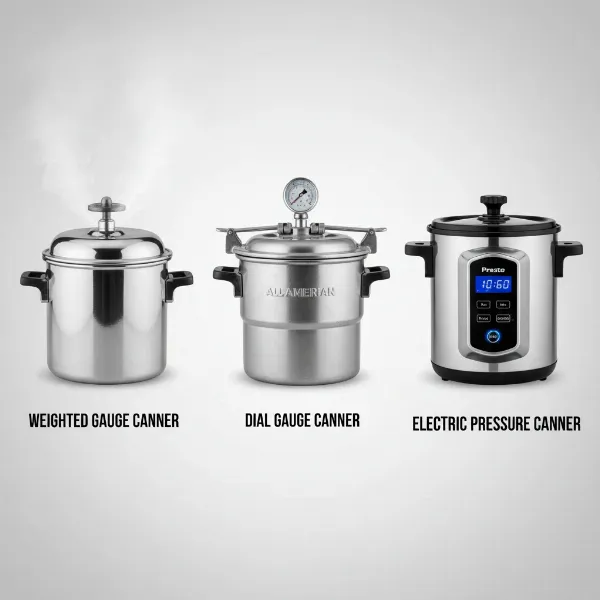 Visual comparison of weighted, dial, and electric pressure canners.
Pressure Canning Versus Other Cooking Methods
Pressure canning stands apart from other food preservation techniques and cooking methods due to its unique ability to preserve low-acid foods safely and efficiently.
Faster Cooking and Processing
Pressure canners significantly reduce cooking and processing times. The elevated internal pressure raises the boiling point of water, meaning foods cook at a much higher temperature than they would in an open pot or even a standard steamer. For canning, this translates to shorter processing times compared to other methods that might attempt to achieve similar results, ensuring proper sterilization within a reasonable timeframe. For instance, processing meat in a pressure canner takes a fraction of the time it would to slowly cook it to the same level of tenderness in an oven or slow cooker.
Better Nutrient Retention
While any cooking process can impact nutrient content, pressure canning is often cited for its ability to better preserve certain vitamins and minerals. The shorter cooking times at higher temperatures can minimize the degradation of heat-sensitive nutrients. Additionally, because food is sealed in jars during processing, fewer water-soluble vitamins are lost through leaching into surrounding water, as might happen with prolonged boiling or steaming methods. This means your canned vegetables and meats can retain more of their inherent nutritional value.
Energy Efficiency
By reaching higher temperatures more quickly and containing steam efficiently, pressure canners can be more energy-efficient than other methods. Less heat escapes into the kitchen, and the reduced cooking duration means less energy consumption overall. This makes it an environmentally conscious choice for preserving large batches of food, especially compared to the continuous energy draw of dehydrators or the long-term energy needs of freezers.
Comparison Table: Top Pressure Canners for Canning Today
Selecting the right pressure canner is crucial for safety and success. Here’s a look at some of the best models widely available, catering to different needs and preferences.
| Product Name | Capacity (Quarts/Jars) | Type | Key Features | Stovetop Compatibility | Price Range |
|---|---|---|---|---|---|
| Presto 16-Quart Aluminum Pressure Canner and Cooker | 16 Qt (7-quart jars, 20-pint jars) | Weighted/Dial | Durable aluminum, comes with a rack, suitable for most stovetops. | Gas, Electric Coil | $130 – $180 |
| All American 915 15.5-Quart Pressure Cooker Canner | 15.5 Qt (7-quart jars, 10-pint jars) | Weighted/Dial | Heavy-duty cast aluminum, metal-to-metal seal (no gasket), dual gauge. | Gas, Electric Coil | $350 – $450 |
| All American 921 21.5-Quart Pressure Cooker Canner | 21.5 Qt (7-quart jars, 19-pint jars) | Weighted/Dial | Larger version of 915, same robust features, ideal for large batches. | Gas, Electric Coil | $400 – $550 |
| Presto 23-Quart Induction Compatible Pressure Canner | 23 Qt (7-quart jars, 20-pint jars) | Weighted/Dial | Heavy-duty aluminum with stainless steel-clad base for induction. | Gas, Electric Coil, Induction | $160 – $250 |
| Presto Precise Digital Pressure Canner | 12 Qt (5-quart jars, 8-pint jars) | Electric/Digital | USDA-approved, automatic pressure/temperature control, no altitude adjustment. | N/A (Self-contained) | $280 – $350 |
Note: Prices are approximate and can vary based on retailer and promotions.
Buying Guide: How to Choose a Suitable Pressure Canner
Choosing the right pressure canner is paramount for safety, efficiency, and satisfaction. Consider these factors to find your perfect canning companion.
Determine Your Canning Needs
Begin by assessing how often you plan to can and the typical batch size. Do you have a large garden yielding abundant produce, or are you looking to preserve smaller quantities of specific ingredients? Will you primarily be canning vegetables, meats, or both? Your frequency and volume will guide your capacity and feature requirements.
Select the Right Capacity
Pressure canners are measured in quarts and indicate how many standard canning jars they can process at once.
- Smaller Households/Beginners (10-16 Quarts): Typically hold 4-7 quart-sized jars or 10-18 pint jars. Good for smaller batches or if storage space is limited.
- Larger Households/Serious Canners (20-25 Quarts+): Can hold 7 quart-sized jars or 18-20+ pint jars, often stacked. Essential for processing large harvests efficiently.
Canner Material: Stainless Steel vs. Aluminum
- Aluminum: Often lighter, heats up quickly, and generally more affordable. Heavy-gauge aluminum canners are durable and excellent conductors of heat.
- Stainless Steel: More expensive, heavier, but extremely durable and resistant to scratching and staining. Stainless steel-clad bases are necessary for induction stovetops. Consider the overall weight, especially when full, if portability is a concern.
Essential Safety Features
Safety is non-negotiable in pressure canning.
- UL or ETL Listing: Always look for a canner that is UL (Underwriters Laboratories) or ETL listed, as this signifies it has been independently tested for safety standards.
- Pressure Gauge: Ensure it’s clear and easy to read. Weighted gauges are reliable and don’t require calibration, while dial gauges offer precision but need annual checks. Dual gauges provide the best of both.
- Vent Pipe and Safety Valves: These are critical for releasing excess steam and preventing overpressure, which is a key safety mechanism.
- Lid Locking Mechanism: A secure lid that locks into place and cannot be opened until the pressure has safely dropped is fundamental.
Reputable Brands and Warranty
Stick with established brands known for quality and safety in the canning community, such as Presto and All American. These companies typically offer good customer support, readily available replacement parts, and reliable warranties, providing peace of mind for your investment.
Stovetop Compatibility and Altitude Considerations
Ensure your chosen canner is compatible with your stovetop. Most aluminum canners work on gas and electric coil stoves. For glass-top or induction stoves, you’ll need a canner with a flat, induction-compatible (magnetic) base. Also, consider your altitude; weighted gauges simplify altitude adjustments, while dial gauges require careful monitoring. The Presto Precise Digital Canner, being self-regulating, automatically adjusts for altitude.
Safe and Effective Pressure Canning Techniques
Pressure canning can seem daunting at first, but by following precise steps and safety guidelines, you can ensure your home-canned foods are delicious and safe.
Preparation Before You Begin
- Inspect Your Equipment: Before each use, thoroughly check your pressure canner. Ensure the lid gasket (if applicable) is pliable and free of cracks, the vent pipe is clear, and the pressure gauge (if dial type) is functioning and calibrated. Inspect jars for cracks or chips and wash them thoroughly.
- Gather Ingredients: Select fresh, high-quality ingredients. Prepare your vegetables and meats according to a tested recipe from a reliable source like the USDA National Center for Home Food Preservation.
- Jar Preparation: While jars don’t need to be sterilized for pressure canning, they should be clean and hot (e.g., in hot water) to prevent thermal shock when filled with hot food. Lids should be new and heated according to the manufacturer’s directions.
Adjusting Pressure and Cooking Time
Each recipe will specify the required pressure (in PSI – pounds per square inch) and processing time.
- Venting: Before sealing the canner, you must allow steam to vent steadily for 10 minutes. This eliminates air from the canner, ensuring the internal temperature accurately reflects the pressure.
- Building Pressure: Once vented, apply the pressure regulator (weight or lid lock) and increase heat to build pressure inside the canner. Monitor your gauge (dial or weighted) closely.
- Maintaining Pressure: Once the target pressure is reached, adjust the heat to maintain a steady pressure. Fluctuations can compromise food safety. Begin timing only when the correct pressure is consistently maintained.
Safely Releasing Pressure
When the processing time is complete, turn off the heat and allow the canner to cool naturally.
- Natural Release: Never try to force cool a pressure canner or open it prematurely. The pressure must drop to zero naturally, and the canner should sit for an additional 10 minutes to stabilize before attempting to open the lid. Forcing it open can cause severe burns and damage your food.
- Opening the Canner: Once the pressure is at zero and the lock has disengaged, carefully remove the lid, tilting it away from your face to avoid residual steam.
Cleaning and Storage
Remove the hot jars and place them on a towel or cooling rack, ensuring they are not exposed to cold drafts. Allow them to cool undisturbed for 12-24 hours. Once cool, check seals. If any jars haven’t sealed, refrigerate and consume promptly. Wash your canner thoroughly with warm, soapy water after each use and store it in a dry place. Remove any gaskets or removable parts for separate cleaning and drying to prevent mildew.
Delicious and Easy Recipes for Your Pressure Canner
Your pressure canner opens up a world of home-preserved goodness. Here are some classic and satisfying recipes perfect for beginners and seasoned canners alike. Always refer to a tested, USDA-approved recipe for specific processing times and pressures, as these can vary based on food type, jar size, and altitude.
Hearty Stews and Meats
Pressure canning meats like beef, chicken, or venison allows you to have ready-to-eat protein for quick meals. Cubed beef, chicken pieces, or even ground meat can be pre-cooked or raw-packed into jars with a little broth or water, then processed. The result is incredibly tender, flavorful meat perfect for adding to casseroles, tacos, or enjoying on its own.
Comforting Soups
You can create delicious, shelf-stable soups. Think chicken noodle soup with broth, chicken, and vegetables, or a robust beef vegetable soup. Remember to can only the low-acid components (meat, most vegetables, broth) in your pressure canner. High-acid ingredients like tomatoes can be added later upon opening.
Wholesome Chili and Baked Beans
Canning chili or baked beans is a game-changer for busy weeknights. Prepare your favorite chili recipe (ensure all low-acid ingredients are suitable for pressure canning) or a batch of savory baked beans, then process them in pint or quart jars. They’ll be ready to heat and serve whenever hunger strikes.
Garden-Fresh Vegetables
Preserving your garden’s bounty has never been easier. Green beans, corn, carrots, peas, and potatoes can all be safely canned in a pressure canner. Pack them into jars with hot water or broth, leaving appropriate headspace, and process according to USDA guidelines. You’ll enjoy garden-fresh flavors long after the growing season ends.
Common Pressure Canning Issues and How to Troubleshoot Them
Even with the best equipment and careful preparation, you might encounter minor hiccups. Knowing how to troubleshoot common issues can save your batch and boost your confidence.
Losing Pressure During Processing
This is one of the most common issues. If the pressure drops below the recommended PSI at any point during processing, you must immediately bring the canner back up to the correct pressure and restart the timing from the beginning.
- Cause: Inconsistent heat source, drafts, or a faulty gasket/seal.
- Fix: Ensure a steady heat supply, avoid opening windows nearby, check your gasket for damage, and confirm the lid is securely locked.
Siphoning (Liquid Loss from Jars)
Siphoning occurs when liquid is drawn out of the jars during processing. While common, excessive siphoning can lead to unsealed jars or food spoilage due to insufficient liquid coverage.
- Cause: Rapid changes in pressure, under-filling jars (insufficient headspace), or opening the canner too quickly.
- Fix: Ensure you leave the correct amount of headspace (usually 1 inch) in jars. Allow the canner to cool completely and naturally depressurize before opening. Avoid rapid temperature changes during the cooling process.
Lids Not Sealing
Discovering unsealed jars after processing can be disheartening.
- Cause: Improper jar preparation (chips on rim, dirty rims), old or damaged lids, incorrect processing time/pressure, or siphoning.
- Fix: Always use new lids. Ensure jar rims are clean and free of any food particles or chips before applying lids. Double-check your processing steps for accuracy. If a jar doesn’t seal, refrigerate and consume within a few days.
Gasket Issues (for Canners with Gaskets)
If your canner uses a rubber gasket, issues can arise.
- Cause: Dried out, cracked, or improperly seated gasket.
- Fix: Regularly inspect the gasket for any signs of wear. Ensure it’s clean and properly seated before each use. Some gaskets benefit from a light coating of vegetable oil to maintain flexibility. Replace gaskets annually or if any damage is noticed. (Note: All American canners have a metal-to-metal seal and do not use a gasket).
“Safe pressure canning is an art and a science. Don’t fear the pressure; respect the process and always follow tested guidelines for peace of mind and delicious results.” – Admin, pressurecookerguides.com
Conclusion
Embracing pressure canning empowers you to take control of your food supply, stock your pantry with wholesome meals, and savor the flavors of the season year-round. From selecting the robust All American for its legendary durability to the innovative Presto Precise Digital for its ease of use, the right pressure canner transforms the task of preserving vegetables and meats into a rewarding experience. Prioritizing safety through proper technique and equipment selection ensures that every jar you seal is a testament to quality and culinary confidence. Are you ready to embark on your canning journey and fill your home with the bounty of your efforts?
Frequently Asked Questions
Can I use a regular pressure cooker for canning vegetables and meat?
No, it is generally not recommended to use a regular pressure cooker for canning low-acid foods like vegetables and meat. Dedicated pressure canners are designed to reach and consistently maintain the higher temperatures and pressures required to safely eliminate harmful bacteria, a capability that most standard pressure cookers cannot guarantee.
What is the difference between a weighted gauge and a dial gauge on a pressure canner?
A weighted gauge uses weights that jiggle or rock to indicate when the correct pressure has been reached, making it simple and reliable without needing calibration. A dial gauge features a visible needle that displays the internal pressure, allowing for more precise monitoring but requiring annual calibration to ensure accuracy.
How do I adjust for high altitude canning?
For stovetop pressure canners, high altitudes require an increase in processing pressure to ensure food safety. Recipes will provide specific adjustments for weighted and dial gauge canners. The Presto Precise Digital Pressure Canner is unique as it automatically adjusts for altitude, simplifying the process.
Is electric pressure canning safe?
Yes, electric pressure canning can be safe, but only with specific models that have been tested and approved for home canning low-acid foods by the USDA. Currently, the Presto Precise Digital Pressure Canner is the only electric model that meets these stringent guidelines. Standard electric pressure cookers are not safe for canning.